Insights into 4D Genome from Leveraging Hi-C Technology with Elastic Network Models
Explore chromatin dynamics using Gaussian Network Model and Hi-C data. Gain insights into gene co-expression, transcriptional regulation, and cell differentiation through 4D genome analysis.
rhAmpSeq CRISPR Analysis Tool Tutorial
Learn to analyze CRISPR experiments using IDT's rhAmpSeq™ tool. Explore features for efficient data interpretation and result visualization in genome editing projects.
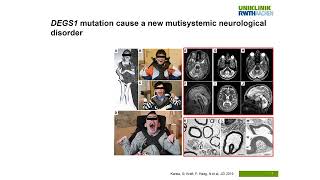
The Power of Whole Exome Sequencing to Unravel the Cause of Rare Disease
Explore whole exome sequencing's potential in rare disease research, focusing on case studies and advanced techniques for uncovering genetic causes.
The Future of Personalized Genomics: Advancing Hematology Research with NGS
Explore next-generation sequencing's role in advancing hematology research and personalized genomics for improved patient outcomes.
How to Optimize CRISPR Genome Editing in Primary T Cells
Optimize CRISPR genome editing in primary T cells with improved methods for cell culture, delivery, and knock-in rates using HDR donors and enhancing reagents.

Custom CRISPR Solutions for High-Throughput Workflows in Drug Discovery
Discover high-throughput CRISPR genome editing techniques for research and drug discovery, focusing on arrayed synthetic guide RNA libraries and custom solutions.

Beyond the Impossible - A Story of Resilience and Triumph
Inspirational journey of a young author with Spinal Muscular Atrophy, showcasing resilience, family support, and achievements despite challenges, proving that the impossible can become possible.
Deciphering the Mysteries of Human Genomes
Explore the intersection of biology, technology, and medicine in rare genetic disease research. Discover how Python aids in unraveling genomic mysteries and advancing healthcare.
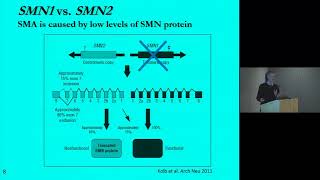
Human-to-Mouse-to-Human in Spinal Muscular Atrophy - From Research to Clinical Practice
Discover the journey of becoming a physician scientist through groundbreaking research on Spinal Muscular Atrophy, exploring translational medicine from human studies to mouse models and back.
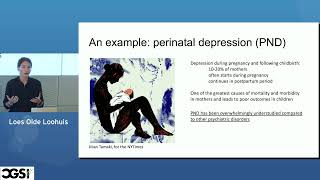
Using Biobanks to Study People That Are Not in It - CGSI 2024
Discover innovative approaches to extend biobank research benefits beyond direct participants, exploring methodologies for broader population health insights and applications.
Promises and Pitfalls of Scaling in Population Genetic Simulations
Explore the complexities of population genetic simulations, focusing on scaling methodologies, their potential benefits, and inherent limitations in computational genomics research.
Introduction to R for Data Analysis - 2024
Gain insights into R programming fundamentals for medical and population genetics data analysis through expert-led discussions of essential concepts and practical applications.
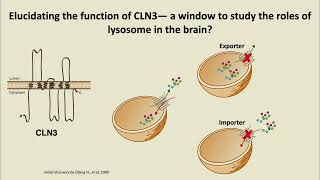
Lysosome Function in Brain Health and Disease - From Tool Development to Novel Biology
Explore lysosome function in brain health, focusing on metabolic processes, choline pathways, and novel discoveries about lysosomal proteins and their role in neurological diseases.
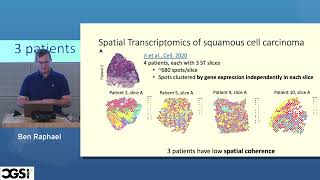
Alignment, Integration, and Modeling of Spatial Transcriptomics Data
Explore alignment, integration, and modeling techniques for spatial transcriptomics data, focusing on innovative approaches to analyze gene expression patterns in tissue samples.
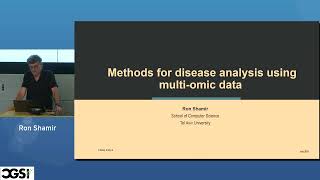
Methods for Disease Analysis Using Multiomic Data
Explore advanced methods for analyzing diseases using multiomic data, focusing on clustering algorithms, cancer subtyping, and driver gene prioritization.
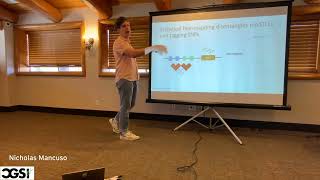
Computationally Scalable Approaches for Characterizing Genetic Architectures in Diverse Ancestries
Explore computationally scalable methods for characterizing genetic architectures across diverse ancestries, focusing on fine-mapping and heritability estimation techniques.
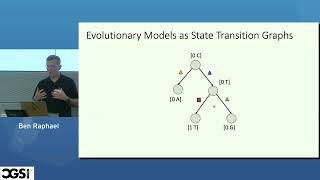
Evolutionary Models for Cancer and Lineage Tracing - CGSI 2023
Explore evolutionary models for cancer and lineage tracing, focusing on tumor phylogeny inference and CRISPR-Cas9 lineage tracing approaches.
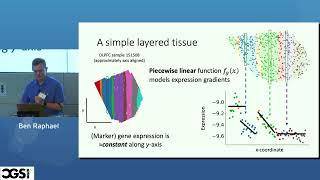
Models and Methods for Spatial Transcriptomics - CGSI 2023
Explore models and methods for spatial transcriptomics, focusing on alignment, integration, and modeling of gene expression variation in spatially resolved data.
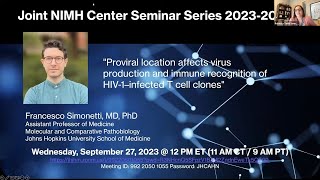
Proviral Location Affects Virus Production and Immune Recognition of HIV-1-Infected T Cell Clones
Explore how proviral location impacts HIV-1 virus production and immune recognition in T cell clones, presented by Dr. Francesco Simonetti.
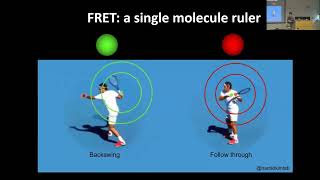
Light, CRISPR, and DNA Repair
Explore cutting-edge bioengineering research on CRISPR technology and DNA repair mechanisms, featuring insights from Dr. Taekjip Ha of Johns Hopkins University.
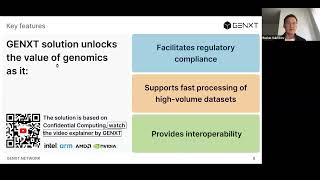
Confidential Computing in Genomics - GENXT Cross Database DNA Matching
Explore secure genomic data analysis using Confidential Computing for cross-database DNA matching, enabling privacy-compliant collaborative research in precision medicine.