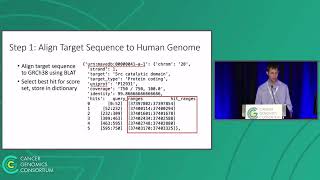
Mapping Variants from Multiplex Assays of Variant Effect to Human Reference Sequences
Learn to map variants from multiplex assays of variant effect (MAVEs) to human reference sequences, enhancing accuracy in clinical cancer genomics and improving patient diagnosis and treatment.
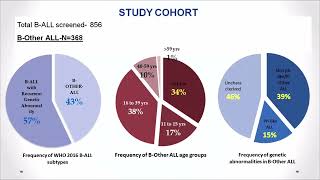
Clinical, Cytogenetic and Genomic Profiling of B-Other Acute Lymphoblastic Leukemia - An Indian Cohort Study
Explore clinical, cytogenetic, and genomic profiling of B-Other Acute Lymphoblastic Leukemia in an Indian cohort study. Gain insights into cancer genomics and its impact on accurate diagnosis and treatment.
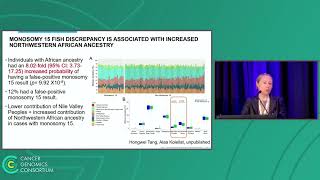
Reduced Performance of Centromere 15 Probe in Association with African Ancestry
Explore the impact of African ancestry on centromere 15 probe performance in cancer genomics, enhancing diagnostic accuracy for diverse patient populations.
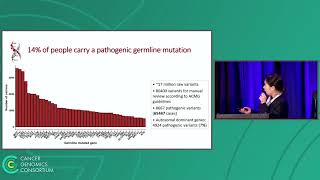
Association Between Clonal Hematopoiesis and Inherited Cancer Susceptibility Genes
Explore the link between clonal hematopoiesis and inherited cancer susceptibility genes in this concise presentation from the 2022 CGC Annual Meeting.
Polygenic Means to Test and Refine Depression Disease Models
Explore polygenic methods for testing and refining depression disease models, focusing on phenotype integration, symptom differences, genetic heterogeneity, and epistasis in complex traits.
The Functional Architectures of Human Diseases and Complex Traits: From Polygenicity to Variant Function
Explore functional architectures of human diseases and complex traits, focusing on polygenicity and variant function in genomics research.

Confounding in Biobanks: Challenges and Implications
Explore confounding factors in biobank research and their impact on genetic studies, focusing on educational attainment and height analyses.
Dissecting the Contribution of the Repeatome to Complex Traits
Explore the impact of repetitive DNA sequences on complex traits through genome-wide association studies, focusing on short tandem repeats and their role in human phenotypes and gene expression.

Predicting the Epigenome from DNA Sequence - Are We There Yet?
Explore predicting epigenomes from DNA sequences using deep learning methods. Discover limitations, data analysis techniques, and latest research in computational genomics.
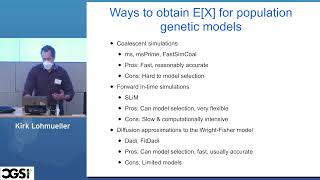
The Poisson Random Field Model in Population Genetics
Explore the Poisson Random Field model's applications in population genetics, gaining insights into its theoretical foundations and practical implications.
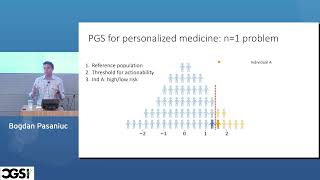
Personalized Genomic Medicine Using Large-Scale Biobanks Linked with Medical Records
Explore personalized genomic medicine using large-scale biobanks and medical records. Learn about leveraging genomic diversity for discovery and promoting precision health research in diverse populations.

Lessons from the Largest Genome-Wide Association Study of Human Height
Explore insights from the largest genome-wide association study on human height, examining genetic variants, heritability, and the impact of rare variations on this complex trait.
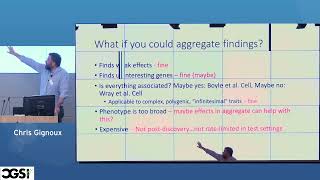
Applying Polygenic Scores at Biobank Scale - CGSI 2022
Explore applying polygenic scores at biobank scale, examining reporting standards, reproducibility, health disparities, and clinical applications in genomic risk prediction.
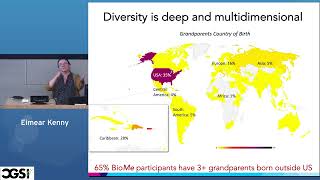
Population Genetics in an Era of Genomic Health
Explore population genetics' role in genomic health, focusing on electronic health records, personalized medicine, and genetic disease identification in specific populations.
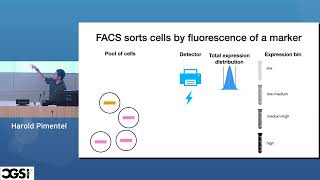
Inference Methods for High-Throughput CRISPR Screens - CGSI 2022
Explore inference methods for high-throughput CRISPR screens, focusing on regulatory gene discovery in human T cells and the architecture of immune networks.

How Genetics Can Help Untangle Institutionalized Health Inequity
Explore how genetic research can address health inequities, focusing on case studies involving racial disparities in medical diagnoses and treatment decisions.
Removing Biases from Molecular Representations via Information Maximization
Explore InfoCORE, an innovative approach to remove batch effects in drug screening data, enhancing molecular representations for improved property prediction and molecule-phenotype retrieval.
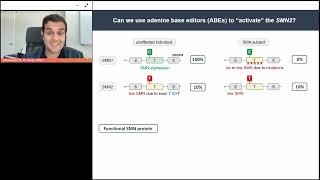
A Permanent Genetic Treatment for Spinal Muscular Atrophy Using Base Editors
Explore cutting-edge base editing techniques for treating spinal muscular atrophy, focusing on SMN2 gene modification to restore SMN protein levels and potentially provide a long-lasting cure.
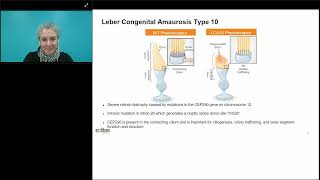
Assessing CRISPR On-Target Editing and Structural Changes with UDiTaS Using Tagify Reagents
Explore CRISPR editing assessment using UDiTaS™ and Tagify™ reagents. Learn about quantitative methods for measuring structural changes and small indels in genomic editing outcomes.
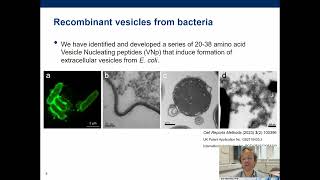
High-yield Vesicle Packaged Recombinant Protein Production from E. Coli
Explore high-yield vesicle packaged recombinant protein production from E. coli with Dr. Dan Mulvihill. Gain insights into microbial cell biology and innovative bacterial technologies for biotechnology applications.
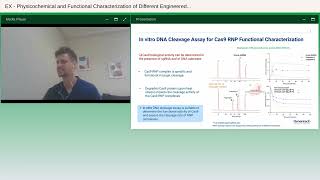
Physicochemical and Functional Characterization of Different Engineered Cas9 Variants and CRISPR-Cas9 Ribonucleoprotein Complexes
Explore advanced gene-editing technology, focusing on CRISPR-Cas9 variants and ribonucleoprotein complexes for therapeutic applications in challenging disease areas.