Gout in the Asian Population - Risk Factors, Symptoms, and Management
Explore gout's impact on Asian populations, including risk factors, symptoms, diagnosis, and management strategies. Learn about treatment options and lifestyle changes for better health outcomes.
Alcohol-Induced Facial Flushing and Health Implications
Explore the genetic cause of alcohol-induced facial flushing, its prevalence among Asians, and associated health risks. Learn about ongoing research and public health initiatives addressing this condition.
Recurrent Miscarriage - Stanford's Multispecialty Approach
Stanford's multispecialty approach to recurrent miscarriage explores genetic, hematologic, uterine, and male factors. Learn about causes, treatments, and innovative solutions for couples facing repeat pregnancy loss.
What's Next in Virus Detection and Vaccine Tech?
Explore cutting-edge virus detection methods, including wearable devices, and learn about vaccine technologies. Gain insights into the future of viral testing, telehealth, and precision health.

Identifying Microbiome Markers of Progression of Alzheimer's Disease - Fall 2020
Explore microbiome markers in Alzheimer's progression, focusing on genome analysis, sequencing techniques, and the microbiome's role in neuroinflammatory events and disease onset.

Solving Medical Mysteries at the Stanford Center for Undiagnosed Diseases
Explore Stanford's innovative approach to solving complex medical cases using advanced diagnostics, expert clinicians, and cutting-edge research in the Undiagnosed Diseases Network.
Update on Celiac Disease
Comprehensive overview of celiac disease, covering its history, prevalence, pathophysiology, diagnosis, and management, with insights into related conditions like non-celiac gluten sensitivity.
Huntington's Disease - Stages and Therapies
Comprehensive overview of Huntington's disease, covering diagnosis, progression, and multidisciplinary treatment approaches, with insights from Stanford's Center of Excellence.

Finding Familial High Cholesterol Before You Know You Have It
Explore genetic predisposition to high LDL cholesterol, its underdiagnosis, and new research for early detection and treatment of familial hypercholesterolemia (FH) to prevent premature heart attacks.

Dr. Jane Chueh on Prenatal Screening and Diagnosis
Explore advancements in prenatal genetic screening and diagnosis, including noninvasive tests, ultrasounds, and blood tests, to make informed decisions during pregnancy.
Euan Ashley and His Patient Leilani Graham Discuss Heart Disease, Genetics, and Patient Stories
Explore heart disease, genetics, and patient advocacy through a compelling conversation between a renowned professor and his resilient patient, offering insights into precision medicine and medical mysteries.
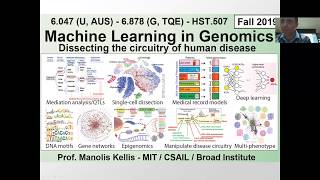
Machine Learning in Genomics - Fall 2019
Comprehensive exploration of computational biology techniques, from dynamic programming to deep learning, applied to genomics, epigenomics, and systems biology. Covers cutting-edge topics like single-cell genomics and genome engineering.
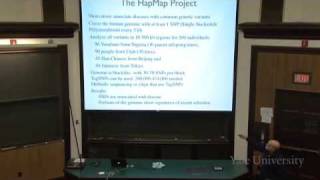
The Origin and Maintenance of Genetic Variation - Lecture 6
Explore genetic diversity's origins through mutations, selection, and recombination. Discover how population size impacts evolution and genetic variation maintenance in different scenarios.

Neutral Evolution - Genetic Drift and Molecular Clocks
Explore genetic drift and neutral evolution, understanding how random changes in genes can impact species over time without affecting reproductive success.
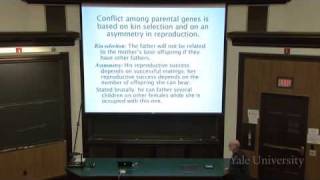
Genomic Conflict in Evolution, Ecology and Behavior - Lecture 10
Explore genomic conflicts within cells, organisms, and between species. Learn about meiosis fairness, uniparental inheritance, and evolutionary strategies to resolve conflicts in sexual species.

Species and Speciation - Principles of Evolution, Ecology and Behavior
Explore the process of speciation, including definitions, mechanisms, and stages. Learn about reproductive isolation, ecological specialization, and genetic factors in species divergence.
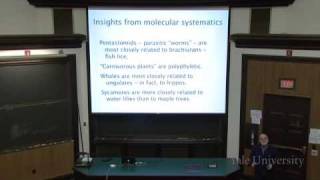
Phylogeny and Systematics - Principles of Evolution, Ecology and Behavior
Explore genetic analysis techniques for constructing accurate evolutionary trees, understanding common ancestry, and avoiding misleading analogies in phylogenetic grouping.

Malaria - The Case of Italy and Its Global Impact
Explore malaria's profound impact on human biology, society, and global health disparities. Discover its etiology, symptoms, and the mosquito theory of transmission in this comprehensive historical overview.
Comparative Methods: Trees, Maps, and Traits in Evolution, Ecology, and Behavior
Explore genetic analysis methods connecting phylogeny to geography, tracing human migration and evolution. Learn about ancestral traits and their impact on fundamental biological concepts.

The Nature of Evolution: Selection, Inheritance, and History - Lecture 1
Explore evolutionary biology's key concepts: natural selection, adaptation, genetic drift, and life's history, from its origins to major evolutionary milestones over 3.7 billion years.

Basic Transmission Genetics - Principles of Evolution, Ecology and Behavior
Explore DNA structure, replication, Mendel's laws, and mutations in this comprehensive overview of genetic transmission and its role in evolution and organism development.