
Selection Signatures - Introduction to Genomics Theory - Genomics 101
Learn about selection signatures in genomics, including genetic hitchhiking, types, detection methods, and analysis across populations. Ideal for beginners interested in SNP data and genomic concepts.

Structure Tutorial
Learn to use Structure software for population admixture analysis using SNP data. Covers data preparation, project setup, analysis execution, and result visualization with a goat genotype example.
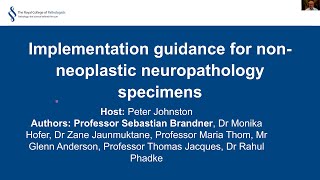
Implementation Guidance for Non-Neoplastic Neuropathology
Guidance on handling non-neoplastic neuropathology specimens, covering challenges, infrastructure, diagnostic aspects, and technical considerations for various biopsy types.

Ecological Opportunity and Adaptive Radiation of Fanged Frogs in Southeast Asia
Explore rapid speciation and evolution of fanged frogs in Southeast Asia, focusing on morphological diversity, ecological adaptations, and unique reproductive strategies.

Genetics With Dr. Brooks
Explore genetics fundamentals, incomplete dominance, viral mechanisms, and real-world applications with Dr. Brooks in this engaging 35-minute session.

ABO Blood Group System - Blood Types and ABO Antigens
Comprehensive exploration of ABO blood group system, covering antigen types, genetic factors, and biochemical processes involved in determining blood types. Ideal for medical students and healthcare professionals.

DNA Structure - DNA Function - Cell Biology
Comprehensive exploration of DNA structure and function, covering nucleotides, base pairing, genetic information storage, and cellular organization. Ideal for biology students and enthusiasts.

Cell Cycle and Genes - Mitosis and Meiosis
Comprehensive exploration of cell cycle stages, mitosis, and meiosis, covering key processes like DNA replication, chromosome segregation, and cell division in eukaryotes and prokaryotes.

Race, Ethnicity, and Clinical Utility in Cancer Genetics - Webinar - Ambry Genetics
Explores racial and ethnic differences in cancer genetic testing results for breast cancer patients, highlighting opportunities to improve testing utility in populations facing health inequalities.

Diagnosis, Management, and Genetics of hATTR Amyloidosis - Webinar - Ambry Genetics
Comprehensive overview of hATTR amyloidosis, covering diagnosis, management, and genetic aspects. Experts discuss clinical presentations, genotype-phenotype correlations, and genetic counseling challenges for patients and families.

Exome Sequencing for Congenital Anomalies or Neurodevelopmental Disorders - Webinar - Ambry Genetics
Explore exome sequencing for congenital anomalies and neurodevelopmental disorders, comparing testing methods, discussing clinical implementation, and examining diagnostic yields for various patient populations.

Using Structural Biology to Support Variant Assessment - Webinar - Ambry Genetics
Explore structural biology's role in variant assessment, focusing on biophysical methods to evaluate protein function disruption and reclassify variants of unknown significance.

New Directions in Access to Genetic Counseling Information for Precision Medicine - Webinar
Exploring digital tools for efficient dissemination of genetic counseling information in precision medicine, addressing challenges in access and timely updates for clinicians and patients.

Validation of RNA Genetic Testing for Use in a Clinical Diagnostic Setting - Ambry Genetics
Explore advancements in RNA genetic testing for clinical diagnostics, covering molecular biology, targeted approaches, and case studies demonstrating increased diagnostic yield in tumor suppressor genes.

Gene Specific Cancer Associations and Sensitivity of Genetic Testing Criteria
Explore gene-specific cancer risks, prevalence of pathogenic variants, and sensitivity of testing criteria for BRCA1/2 and Lynch syndrome based on a large multigene panel cohort study.

A Systematic Framework for the Interpretation of Copy Number Variants - Webinar - Ambry Genetics
Explore a systematic framework for interpreting copy number variants in genetic testing. Learn about proposed updates to guidelines, evidence-based evaluation, and improving interlaboratory consistency.

Genetic Testing for Breast Cancer Susceptibility - Webinar - Ambry Genetics
Explore hereditary cancer genetics, testing technologies, and implications for breast and gynecologic cancers. Learn about key genes, risk factors, and the impact on medical management.
Inherited Cardiomyopathies - Genetic Heart Disease
Explore inherited cardiomyopathies, their genetic components, and management implications. Learn about diagnostic criteria, genetic testing, and clinical approaches for various heart conditions.

Familial Hypercholesterolemia - Genetic High Cholesterol - Webinar - Ambry Genetics
Explore genetic high cholesterol: symptoms, diagnosis, genetics, testing, and treatment. Learn about familial hypercholesterolemia and its impact on cardiovascular health.

Transcription and mRNA Processing - Biomolecules - MCAT - Khan Academy
Explore transcription and mRNA processing, including RNA polymerase, promoters, terminators, introns, and exons. Learn key concepts for MCAT preparation in biomolecules and gene expression.

DNA Replication and RNA Transcription and Translation
Explore DNA replication, RNA transcription, and translation in this concise video. Learn key concepts of gene expression and regulation essential for understanding molecular biology.