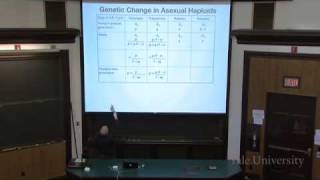
How Selection Changes the Genetic Composition of Population - Principles of Evolution, Ecology and Behavior
Explore genetic systems, their impact on evolution, and how selection alters population genetics. Learn about adaptive genetic change rates and the math behind genetic shifts in populations.

The Expression of Variation - Reaction Norms - Lecture 8
Explore reaction norms in evolution and ecology, examining how genotypes produce varied phenotypes across environments, population differences, and developmental constraints.

Genetic Engineering: DNA Technology and Gene Expression Control - Lecture 4
Explore advanced DNA technologies: RNA silencing, molecular cloning, PCR, and mutation detection. Learn about controlling gene expression and applications in genetic engineering and biomedical research.

Genetic Engineering - From DNA Structure to Protein Synthesis
Explore DNA structure, synthesis, transcription, and translation. Learn about genetic code, protein synthesis, and RNA interference as potential disease treatments.

Why Are People Different? Understanding Personality and Intelligence - Lecture 13
Explore theories on personality and intelligence differences, including measurement methods, genetic and environmental influences, and their impact on individual and group variations.
Update on the Management of Localized Renal Tumors
Comprehensive overview of localized renal tumor management, covering detection, diagnosis, genetic factors, imaging techniques, biopsy procedures, and treatment approaches for medical professionals.

Editing Embryos - Private Choices and Public Goods - Jonathan Anomaly, Hayek Lecture Series
Explore ethical implications of genetic editing technologies, coordination challenges, and potential government interventions in shaping future generations' traits and cognitive diversity.
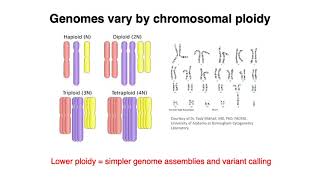
Introduction to Genomics
Comprehensive exploration of genomics, covering DNA sequencing, genome assembly, gene editing, epigenomics, RNA-seq, chromatin organization, interaction networks, and genetic variation analysis.

The Challenges of Dealing with Posttraumatic Stress Disorder
Comprehensive exploration of PTSD, covering development, course, treatments, neural factors, and global impact. Includes recent research and approaches to address PTSD worldwide.
Glow in the Dark - Using Fluorescence to Observe DNA in a Living Cell
Explore how fluorescence microscopy reveals DNA's spatial reorganization in living cells, uncovering its role in gene expression control and DNA repair mechanisms.
The Evolutionary Causes of Quantitative Genetic Variation
Explore the genetic architecture of quantitative traits, examining how mutation, selection, and drift shape heritable variation. Gain insights into missing heritability and interpret genome-wide association studies findings.
DNA, Love, and Gender
Explore epigenetics: how environment alters DNA, impacting behavior, health, and even love. Discover the role of RNA molecules in understanding complex epigenetic phenomena and their potential applications.
Nicole Creanza on Cultural Evolution in Humans and Songbirds
Exploring gene-culture co-evolution in humans and songbirds, examining how geography, genetics, behavior, and technology interact to shape evolutionary patterns and cultural innovations.
How on Earth Can Aliens Survive? Concept and Case Study
Explore evolutionary robustness, its breakdown, and implications for complex diseases. Delve into concepts like shifting balance theory and cultural evolution in this thought-provoking seminar.
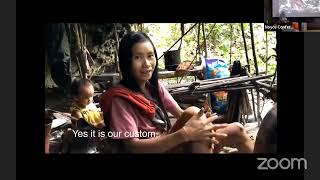
Averting Extinction: Lessons from Borneo's Last Hunter-Gatherers
Explore the unique culture of Borneo's Cave Punan, their message stick communication system, and efforts to preserve their ancestral forests and biodiversity in the face of deforestation and modernization.
The Origin of Life - From Chemistry to Information Theory
Explore the enigma of life's origin through information theory and complexity, examining the transition from chemistry to biology and its implications for life in the universe.
The Jumping Genome - Changing Ideas about Heredity and Evolution
Explore the evolution of genetics, from Mendel's pea experiments to modern genomics, including McClintock's revolutionary "jumping gene" discovery and its impact on our understanding of heredity and evolution.
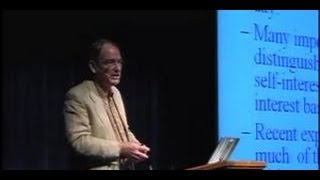
A Cooperative Species - Evolutionary Origins of Human Altruism - Lecture 1
Explore the evolutionary origins of altruistic cooperation, challenging traditional notions of 'selfish genes' and Homo economicus through archaeological, genetic, and climatic evidence.
Evolution in Action: A 50,000 Generation Experiment
Explore a groundbreaking 50,000-generation experiment revealing evolutionary processes in action, offering insights into adaptation, genetic changes, and long-term population dynamics.

On the Evolution of Sex and the Advantages of Recombination - 2013 Science Board Symposium
Explore the evolution of sex and recombination advantages with Sarah Otto. Delve into epistasis, costs, finite population effects, and analytical models in this comprehensive examination of sexual reproduction.
Cultural Contingency and Gene-Culture Coevolution - 2013
Explore gene-culture coevolution and its impact on human evolution, examining how cultural practices interact with genetic inheritance to shape populations over time.