Yes, Generative Models Are The New Sparsity
Explore how generative models revolutionize data compression and signal processing, offering new perspectives on sparsity and optimization in machine learning.
Generating High-Fidelity HI Maps Using Score-Based Diffusion Models - Sultan Hassan
Exploring score-based diffusion models to generate high-fidelity HI maps, discussing applications in astrostatistics and machine learning for galaxy formation and evolution studies.
The Case for Alien AI
Exploring the potential of diverse, "alien" AI to revolutionize scientific discovery and societal progress, challenging our perspectives on artificial intelligence and human knowledge.
Teaching Neural Networks a Sense of Geometry
Explore Topological Data Analysis (TDA) and its intersection with machine learning to enhance neural networks' geometric reasoning abilities across various applications.
LLMOps: Quantization Models and Inference with ONNX Generative Runtime
Explore ONNX runtime GPU support for inference with generative models, including Phi3-mini quantization and conversion techniques.

Statistical Rethinking 2023 - Modeling Events
Explore statistical modeling for events, covering discrimination, mediation, generative models, and generalized linear models. Learn to analyze and compute interventions, with a bonus on survival analysis.
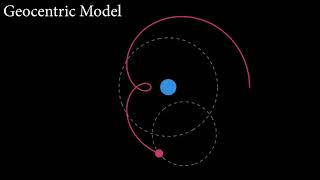
Statistical Rethinking 2023 - Geocentric Models
Explore geocentric models in statistical thinking, covering Gaussian distributions, workflows, generative models, and analysis techniques for improved statistical reasoning.

Statistical Rethinking 2023 - The Garden of Forking Data
Explore Bayesian statistics through the "Garden of Forking Data" metaphor. Learn about generative models, probability, testing, and posterior distributions for improved statistical reasoning and prediction.

Statistical Rethinking 2022 - Modeling Events
Explore statistical modeling of events, covering generative models, generalized linear models, logistic regression, and binomial regression. Learn to analyze gender applications and calculate marginal causal effects.
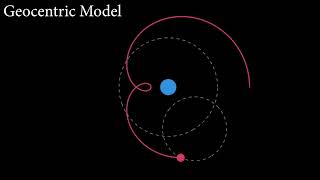
Statistical Rethinking 2022 - Geocentric Models
Explore Bayesian linear regression, covering model language, generative and statistical approaches, validation, and posterior predictions for a comprehensive understanding of statistical modeling.
Bayesian Inference in Generative Models
Explore approximate Bayesian inference methods, including sampling-based techniques and variational inference, with hands-on exercises in implementing algorithms and using probabilistic programming languages.

Deep Learning of Dynamical Systems for Mechanistic Insight and Prediction in Psychiatry
Explore deep learning techniques for analyzing dynamical systems in psychiatry, uncovering mechanisms, and predicting outcomes using neural and behavioral data from various sources.
Likelihood Training of Schrödinger Bridge Using Forward-Backward SDEs Theory
Explore likelihood training of Schrödinger Bridge using Forward-Backward SDEs theory for deep generative modeling, offering mathematical flexibility and optimization principles.
SDEs Are All You Need for Latent Variable Models
Explore stochastic differential equations for latent variable models, focusing on applications in probabilistic AI and machine learning.

Comparing Probability Distributions with Conditional Transport
Explore conditional transport as a new divergence for comparing probability distributions, with applications in generative modeling and resistance to mode collapse.
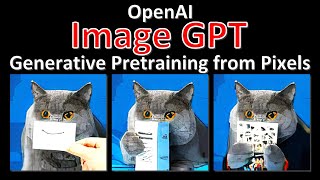
Image GPT- Generative Pretraining from Pixels - Paper Explained
Exploring generative pretraining for image processing, adapting NLP techniques to visual tasks. Discusses model architecture, experiments, and potential applications in computer vision.
Singing Synthesis Beyond Human-Level Naturalness: Not What You Think
Explore singing synthesis surpassing human naturalness, challenging perceptions of quality evaluation and implications for future system designs in vocal synthesis research.
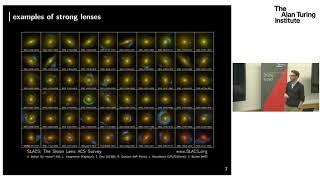
Exploring the Cosmos with Deep Learning
Explore how deep learning revolutionizes cosmology, from detecting gravitational lenses to generating galaxy images and modeling cosmic structures, addressing challenges in modern astronomical surveys.
Machine Learning for Determining Protein Structure and Dynamics from Cryo-EM Images
Explore machine learning techniques for analyzing cryo-EM images to determine protein structure and dynamics, focusing on the cryoDRGN algorithm and its applications in structural biology.

Harmonic Self-Conditioned Flow Matching for Multi-Ligand Docking and Binding Site Design
Explore advanced AI techniques for protein-ligand binding structure generation and binding site design, improving drug discovery and molecular interaction modeling.
Chemically Transferable Generative Backmapping of Coarse-Grained Proteins
Explore innovative machine learning techniques for generative backmapping of coarse-grained proteins, focusing on transferability, reliability, and efficiency in molecular simulations.