
One Bite at a Time
Efficient techniques for anonymizing PII data, archiving old data, and performing garbage collection in databases. Learn to create procedures for updating large datasets while maintaining performance and avoiding blocking operators.

Deep Dive - Harbor - Enterprise Cloud Native Artifact Registry
Explore Harbor's evolution as a cloud-native registry, its support for various artifacts, and future roadmap. Learn about key features, community updates, and upcoming enhancements in artifact management.

Scala Goes Native
Explore Scala Native: a new ahead-of-time compiler and lightweight runtime for Scala, expanding its horizons beyond JVM and enabling native development with improved performance.
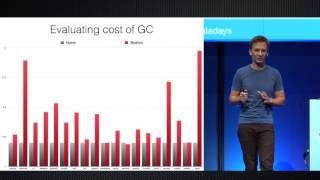
Fast Startup and Low Latency - Pick Two
Explore Scala Native for lightweight system programming, enabling fast startup and low latency without JVM complexities. Learn about its features, garbage collection, and performance benchmarks.
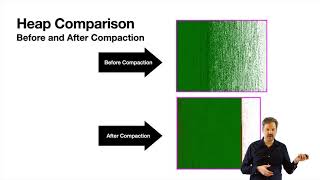
Automatic GC Compaction in MRI
Explore automatic GC compaction in Ruby 2.7, its implementation challenges, and techniques like read barriers and concurrent GC. Learn about memory optimization and performance improvements in Ruby applications.

The Bug that Forced Me to Understand Memory Compaction
Explore Ruby's memory management, from heap allocation to garbage collection and memory compaction, through a bug-solving journey in a gem maintenance story.
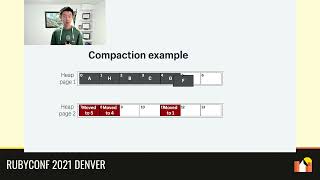
Railsbench - Rdoc Generation - Microbenchmarks - Proposal to Enable VWare Resizing Objects - Shrinking RVALUE
Explore Ruby's memory optimization project to improve performance by moving system heap memory into Ruby heap memory, reducing allocations and enhancing CPU cache efficiency.

Scaling Rails with JRuby in 2022
Explore JRuby's benefits for scaling Rails applications, including improved performance, resource efficiency, and true parallel threading on the Java Virtual Machine.
Using JRuby - What, When, How, and Why
Explore JRuby: its compatibility, benefits, and real-world applications. Learn about JVM advantages, installation, Rails integration, and performance benchmarks for informed Ruby development decisions.

Controlling the Go Runtime
Explore techniques to control the Go runtime, including garbage collection, goroutine management, and affinity. Learn new methods for better runtime control and their practical applications.

Pardon the Interruption - Loop Preemption in Go 1.14
Explore Go 1.14's innovative asynchronous preemption, eliminating performance issues in tight loops and enabling efficient goroutine scheduling without overhead.

Low Level JavaScript
Explore low-level JavaScript features for memory-efficient, GC pause-free coding. Learn about pointers, structs, and heap allocation for predictable performance and WebGL interfacing.
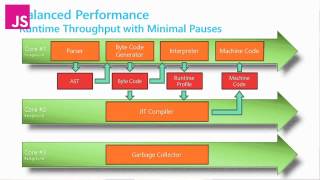
What Does Chakra Do with Your JavaScript?
Explore Chakra's internals: profiling interpreter, type system, optimizing compiler, and garbage collector. Gain insights into JavaScript performance in IE10.
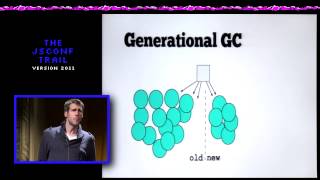
JavaScript Compilation Techniques - Wasn't JavaScript Supposed to Be Slow?
Explore JavaScript compilation techniques, performance optimization strategies, and advanced concepts like static scope, unboxing, garbage collection, and hidden classes.

Speed is Awesome, but Low Latency is Sublime
Explore the importance of low latency in JavaScript for mobile devices, focusing on techniques like incremental marking and concurrent compilation to enhance user experience.

Effectively Managing Memory at Gmail Scale
Explore effective memory management techniques for large-scale web apps, focusing on Gmail's optimization strategies and using Chrome DevTools Heap Profiler for performance enhancement.

JavaScript Level 9000
Explore advanced JavaScript concepts from JIT compiler perspective, including garbage collection, data types, optimizations, and game engine applications. Gain deep insights into JS performance.

The Hitchhiker's Guide to All Things Memory in Javascript
Explore JavaScript's memory management and garbage collection to optimize code performance. Gain insights into under-the-hood operations for writing efficient programs.

Performance Profiling for V8
Dive deep into V8's inner workings to identify and fix JavaScript performance issues. Learn about memory leaks, cache misses, garbage collection, and deoptimizations using Chrome's profiling tools.

A Cartoon Intro to WebAssembly
Explore WebAssembly's speed and potential through cartoons, understanding its basics, performance benefits, and why it's considered the future of web development.

Caging the SpiderMonkey - Ensuring Safe JS Bindings in Servo
Explore challenges and solutions in integrating SpiderMonkey with Servo, focusing on Rust's type system for enforcing safety rules and developing a custom compiler plugin for error verification.