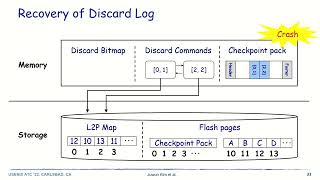
IPLFS - Log-Structured File System without Garbage Collection
Explore an innovative log-structured file system that eliminates garbage collection, improving performance and efficiency in storage management through infinite partitions and interval mapping.
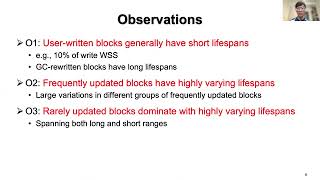
Separating Data via Block Invalidation Time Inference for Write Amplification Reduction in Log-Structured Storage
Innovative data placement algorithm for log-structured storage that reduces write amplification by inferring block invalidation times, improving I/O throughput and storage efficiency.
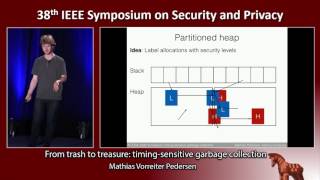
From Trash to Treasure - Timing-Sensitive Garbage Collection
Explores timing-sensitive information leaks via garbage collection, demonstrating attacks and proposing a secure automatic memory management design to prevent such vulnerabilities.
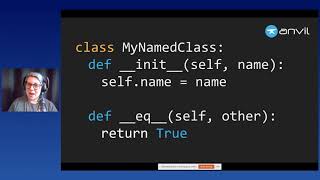
Pointers? In My Python? It's More Likely Than You Think
Explore CPython's memory management, object lifetimes, and pointer behavior. Gain insights into 'is' vs '==', deepcopy, and garbage collection for better Python programming and debugging skills.
Into the Deep Waters of API Machinery
Explore Kubernetes API intricacies: namespace deletion issues, REST mapping challenges, and garbage collection mechanisms. Gain insights into common problems and their solutions.
Generational ZGC and Beyond
Explore advancements in Java's ZGC, including generational garbage collection and future improvements, for enhanced performance and efficiency in memory management.
Java Renaissance
Explore Java's renaissance with insights on JDK 21, OpenJDK projects, and innovative features like virtual threads, data-oriented programming, and improved performance, shaping the future of this enduring platform.
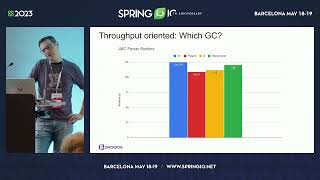
Mastering GC - Tame the Beast and Make It Your Best Ally
Explore advantages and limitations of various Java Garbage Collectors, learn how to choose and tune the right GC for different application types, and optimize performance.
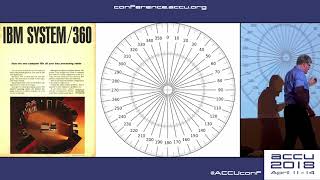
C++ Today - The Beast is Back
Explore C++'s resurgence, its historical significance, and why it remains the top choice for performance-driven software engineering in modern computing environments.
Snek - A Python-Inspired Language for Tiny Embedded Computers
Explore Snek, a Python-inspired language for tiny embedded computers, designed for teaching robotics to middle schoolers. Learn about its implementation, features, and classroom integration.

Memory Management with MMTk - Lessons Learned from Replacing Ruby's Garbage Collector
Explore MMTk, a runtime-agnostic garbage collection framework, and its integration into Ruby's interpreter. Learn about optimizing memory management in programming languages and the challenges of implementing advanced GC algorithms.
Demystifying Memory Leaks in JavaScript
Explore Node.js internals, profilers, and garbage collection to identify and fix memory leaks, ensuring safer, faster, and more efficient JavaScript applications.
Chasing Performance Phantoms
Explore hidden performance culprits in code and learn techniques to detect and eliminate them, focusing on VM pauses, garbage collection, and ecosystem factors.
Why Is Python Slow?
Explore Python's performance, comparing it to other languages, and learn optimization techniques and future improvements for faster execution.
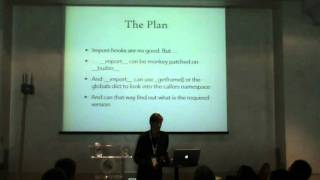
Years of Bad Ideas
Explore unconventional Python techniques, from spiking to interpreter warfare, in this talk on experimental programming ideas and their potential pitfalls.
PyPy Status Talk - No No, PyPy Is Not Dead
Explore PyPy's latest developments, including JIT compiler, garbage collection, NumPy, Python 3 compatibility, CFFI, and STM research, showcasing its continued evolution and performance improvements.
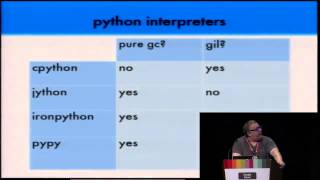
Python's Infamous GIL
Explore Python's Global Interpreter Lock: its history, benefits, drawbacks, and potential removal. Gain insights into multithreading challenges and GIL's impact on Python performance.
Knowing Your Garbage Collector
Explore Python's garbage collection mechanisms, including reference counting and cycle detection in CPython, and the MiniMark GC in PyPy. Gain insights into memory management and potential issues.
Go to Python
Explore combining Go and Python: learn to create Python extension modules using Go, covering data sharing, callbacks, and garbage collection. Discover the advantages of this powerful combination.
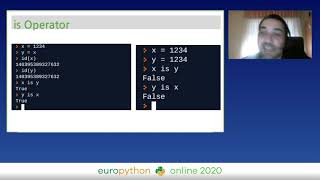
Python Memory Management 101
Explore Python's memory allocation, garbage collection, and reference counting. Learn to configure the gc module and implement best practices for efficient memory management.
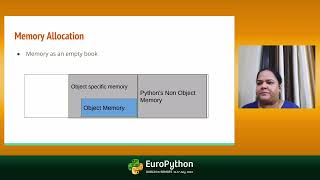
Memory Problems, Did Collector Forget to Clean the Garbage?
Explore Python memory management, common errors, and optimization techniques. Learn about CPython's allocation, garbage collection, and practical ways to improve code efficiency.