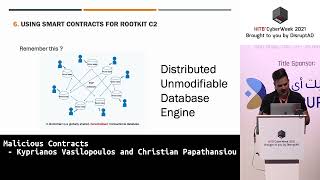
Malicious Contracts
Explore the potential of smart contracts as anonymous rootkit C2 infrastructure, demonstrating their immutability, anonymity, and scalability for controlling infected devices remotely.
Meander - Declarative Explorations at the Limits of FP
Explore declarative data manipulation in functional programming using Meander, a Clojure library inspired by logic programming and term rewriting for complex data transformations.
Building Haskell Programs with Fused Effects
Explore fused-effects library for Haskell: a powerful, flexible alternative to monad transformers, offering improved expressiveness without performance loss. Learn its history, benefits, and practical applications.
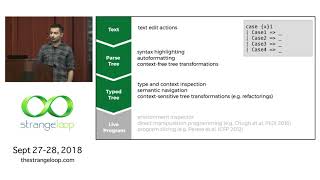
Hazel - A Live Functional Programming Environment with Typed Holes
Explore Hazel, a web-based environment for functional programming with typed holes, enabling continuous type-based services and live debugging during development of incomplete programs.
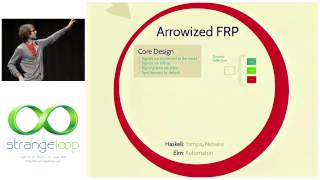
Controlling Time and Space - Understanding the Many Formulations of FRP
Explore diverse formulations of Functional Reactive Programming, their historical and theoretical connections, and how Elm's FRP variation enables features like hot-swapping and time-traveling debugging.
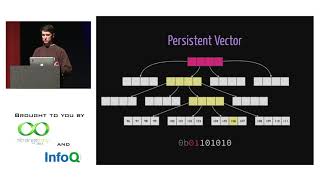
Functional Vectors, Maps, and Sets in Julia
Explore functional data structures in Julia: implementing persistent vectors, hash maps, and sets. Learn optimizations for improved performance in this hands-on coding session.
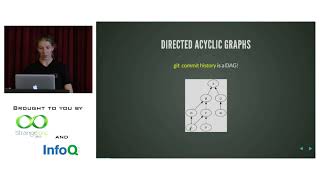
Category Theory - An Abstraction for Anything
Explore category theory's foundations, applications in programming, and powerful abstractions. Learn to recognize category-theoretical patterns and apply them to your projects.
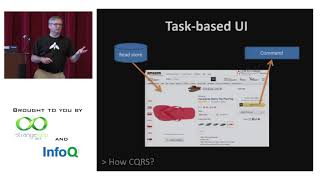
CQRS with Erlang
Explore CQRS implementation in Erlang, highlighting its advantages for distributed systems and eventual consistency. Learn how Erlang's features complement CQRS principles.
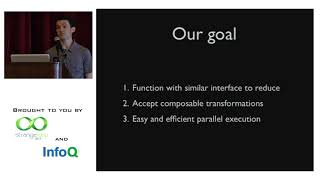
Dissecting Clojure Reducers
Explore Clojure Reducers through live coding, uncovering functional abstractions and performance improvements for parallel solutions. Learn from ground-up implementation and real-world examples.
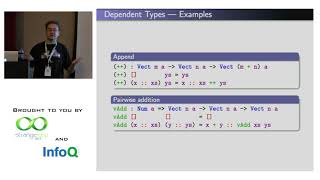
Scala vs Idris - Dependent Types, Now and in the Future
Exploring dependent types in Scala and Idris: current capabilities, limitations, and future possibilities. Demonstrates rich type systems' potential for program verification and static constraint capture in functional programming.
BODOL, or How to Accidentally Build Your Own Language
Explore language design principles and prototype development using functional programming, inspired by Clojure and Haskell. Learn about BODOL, a unique toy language combining Lisp and Haskell features.
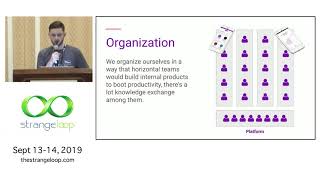
Empowering People to Build a Digital Bank
Explore how a digital bank built and scales its microservices architecture, focusing on cloud-based infrastructure, Kubernetes deployment, and custom tooling for high reliability and fast development cycles.
Universal Reason
Explore building universal ReactJS apps with ReasonML, a typed language compiling to JavaScript. Learn language basics, library bindings, and full-stack development for modern web applications.
Onyx-Native, Information Flow Models and Scientific Computing
Explore Onyx-Native library for modernizing legacy scientific computing systems, focusing on information flow models and their application to complex, long-lived codebases like NOAA's ASOS Ingest System.
Point-Free or Die - Tacit Programming in Haskell and Beyond
Explore tacit programming in functional languages, its benefits, drawbacks, and applications. Learn eta-reduction, develop intuition, and examine its use in libraries and specialized languages.
PureScript & Pux - A Safer, More Expressive Way to React
Discover PureScript and Pux: a powerful alternative to Elm for React development, offering gradual adoption, hot reloading, and advanced typing features while maintaining compatibility with existing components.
How to Get Started With Functional Programming
Explore functional programming concepts and learn how to transition from object-oriented to functional paradigms for more reliable and readable code.
Probabilistic Programs Which Make Common Sense
Explore probabilistic programming as a step towards machines with common sense. Learn about Sigma, a language for functional probabilistic models, and its applications in automated reasoning and inference.
Clojure in Unity 3D - Functional Video Game Development
Integrating Clojure with Unity 3D for game development, enabling REPL-based live coding, optimizing macros, and persistent data structures. Explore new possibilities in AI, logic programming, and game state management.
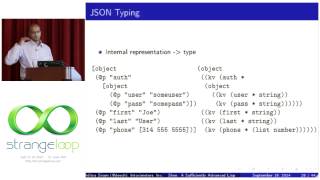
Shen - A Sufficiently Advanced Lisp
Explore Shen, a powerful Lisp with macro system, Prolog, and advanced type system. Demo showcases seamless integration of functional, logic, and imperative styles in web development.
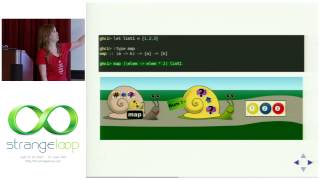
Coder Decoder - Functional Programmer Lingo Explained, with Pictures
Demystifies functional programming jargon using Haskell examples and visuals. Explores concepts like currying, lenses, and monads, demonstrating their application in a simple web app.