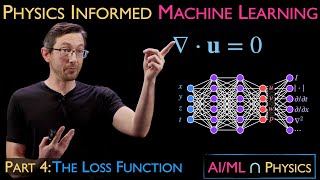
Crafting a Physics-Informed Loss Function for AI/ML in Physics - Part 4
Explores designing physics-informed loss functions in AI/ML, including case studies on fluid dynamics, sparse modeling, and equivariant loss, to enhance model performance and incorporate physical constraints.
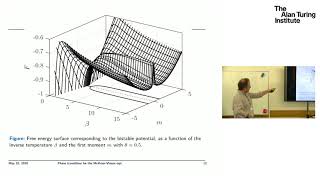
Phase Transitions for Mean Field Limits of Noisy Interacting Agents
Explore phase transitions in mean field limits of noisy interacting agents, examining complex systems modeling and statistical approaches for accurate predictions in various scientific fields.
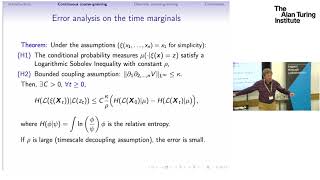
Coarse-Graining Stochastic Dynamics
Explore techniques for simplifying complex stochastic systems through coarse-graining, enabling practical computation and accurate prediction in various scientific fields.
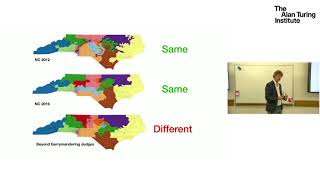
Understanding the Geopolitical Structure of the USA
Explore statistical approaches for analyzing geopolitical structures in the USA, combining data analysis with complex systems modeling to uncover crucial features and patterns.
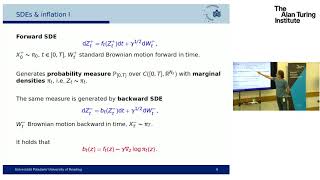
Learning Models by Making Them Interact
Explore new approaches to data-driven modeling of complex systems, combining statistical inference, high-throughput computation, and physical laws for more accurate predictions in various scientific fields.
Score Matching via Differentiable Physics
Explore score matching via differentiable physics for inverse problems. Learn about combining physics operators with stochastic differential equations to generate plausible trajectories towards given end states.
Simulating Universes
Explore computational simulations of cosmic structure formation, revealing the Universe's evolution through dark matter dynamics, galaxy formation, and comparison with observations.
Grow Your Own Planet
Explore how simulations advance our understanding of the Universe, from basic orbits to complex gas flows. Learn about state-of-the-art hydrodynamics programs and their applications in astronomy.
Mechanical Planet - The Future of Industry, Technology and the Environment
Exploring the Fourth Industrial Revolution's impact on industry, technology, and the environment, focusing on digital transformation, IoT, and sustainable manufacturing practices.
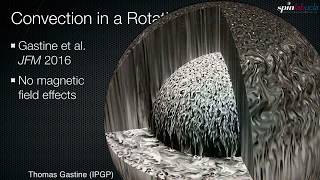
A Primer on Core Dynamics
Explore Earth's core dynamics, from fundamental principles to advanced concepts like quasigeostrophic flow and rotating convection, uncovering the mysteries of our planet's interior.

Fidelity and The Single Cell
Live discussion on virology topics including antiviral strategies, polymerase fidelity, and single-cell biology, featuring insights from experts in the field at ASM Microbe 2019.
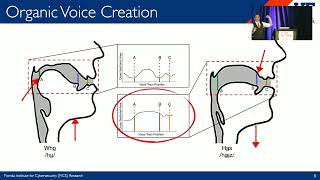
Who Are You - I Really Wanna Know - Detecting Audio DeepFakes Through Vocal Tract Reconstruction
Explore innovative audio deepfake detection using vocal tract reconstruction. Learn how fluid dynamics and articulatory phonetics can identify impossible anatomical arrangements in synthesized speech.

Mysteries of the Mathematical Universe
Explore mathematical mysteries, from prime numbers to infinity, with experts discussing breakthroughs, challenges, and the profound impact of math on understanding our universe and solving real-world problems.
Using Maths to Save the Planet
Discover how mathematical modeling predicts ocean pollution patterns, enabling targeted cleanup efforts and environmental protection. Learn to apply these problem-solving techniques to various real-world challenges.
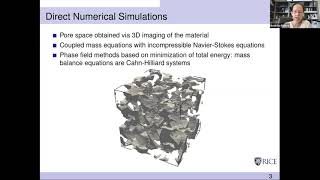
Bound-Preserving Numerical Solutions of Variable Density Two-Phase Flows
Explore efficient numerical methods for solving phase-field models in pore-scale flows, focusing on bound-preserving solutions and applications in energy and environmental sciences.
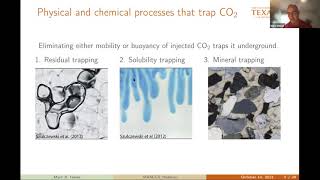
Solutal Convection in Porous Media
Explore solutal convection in porous media, challenging conventional theories with experimental findings and numerical simulations to understand flux patterns and mixing processes.
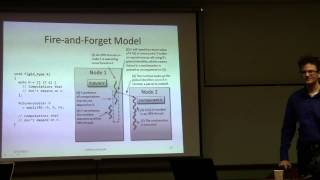
Octopus - A Policy-Driven Framework for CFD Simulations
Explore a policy-driven framework for computational fluid dynamics, emphasizing flexibility and performance in scientific simulations using modern C++ techniques.
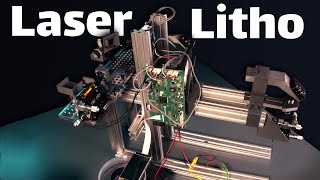
DIY Laser Lithography - Micron Resolution
Explore DIY laser lithography for microfabrication, including techniques, equipment, and results. Learn about maskless photolithography and its applications in creating intricate patterns at micron resolution.
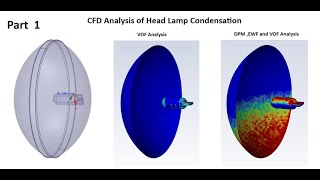
CFD Analysis of Head Lamp Condensation - VOF Approach
Explore condensation in headlamps using VOF evaporation-condensation approach in CFD analysis. Learn advanced techniques for automotive lighting design.
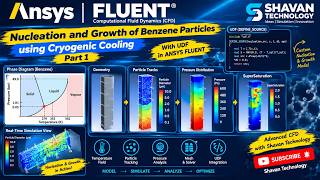
Cryogenic Cooling - Crystallization and Growth Using DPM Ansys Fluent - Part 1 - CFD Analysis
Explore benzene vapor transformation into particles through cryogenic cooling and crystallization using DPM in Ansys Fluent CFD analysis.
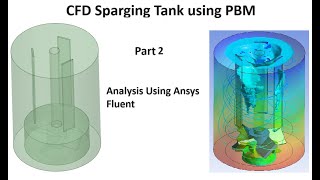
Bubble Analysis: Sparging Tank Analysis Part 2 Using PBM - Ansys Fluent
Analyze sparging tank bubble behavior using Ansys Fluent PBM, focusing on departure and agglomeration processes in this advanced simulation tutorial.