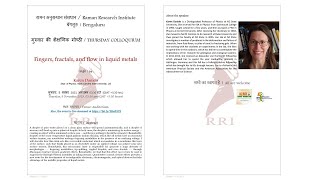
Fingers, Fractals, and Flow in Liquid Metals
Explore fascinating patterns and behaviors of liquid metals through an examination of finger formations, fractal structures, and flow dynamics in metallic substances.
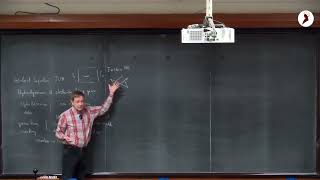
Hydrodynamics of Lattice Gases - Lecture 1
Dive into fundamental principles of lattice gas hydrodynamics through advanced statistical physics concepts, exploring theoretical frameworks and mathematical models in particle systems.
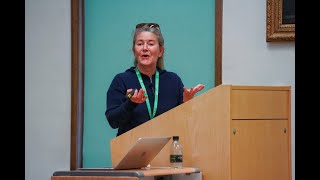
Control of Water Waves by Metamaterial-Based Devices
Explore innovative metamaterial-based devices for controlling water waves, presented by Dr. Agnes Maurel in this Kirk Lecture at the Isaac Newton Institute.
Extraordinary Waves and Math: From Beaches to Photonics - Rothschild Lecture
Explore extraordinary waves, from historical solitary waves to modern solitons, and their applications in water, rogue waves, photonics, and cellular automata.
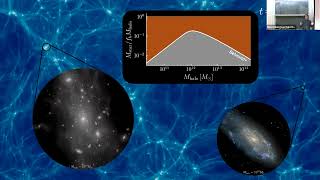
Bridging the Divide: A Multi-Scale Approach to Galaxy Formation
Explore groundbreaking research on galaxy formation through multi-scale simulations, examining how small-scale atomic processes and large-scale cosmic phenomena shape galactic evolution and structure formation.
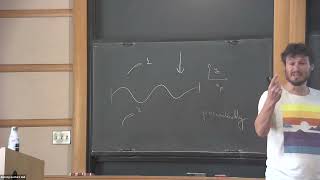
Evolution of Coherent Structures in Incompressible Flows
Delve into advanced mathematical analysis of fluid interfaces and vortex filaments, exploring gravity Stokes interfaces, Muskat problem, and vortex behavior in Navier-Stokes equations.
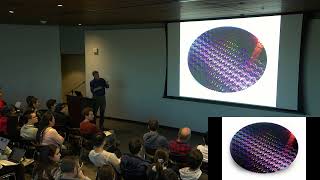
Soft Bioelectronic Systems as Neural Interfaces - Advanced Optoelectronic Integration with Brain and Nervous System
Explore advanced optoelectronic systems for neural interfaces, focusing on miniaturized electronics and their applications in deep brain stimulation, monitoring, and neuroscience research.
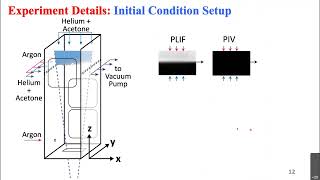
Simultaneous Measurements of Concentration and Velocity Fields at a Shock-Accelerated Interface
Explore simultaneous measurements of concentration and velocity fields at shock-accelerated interfaces in high-energy-density science experiments.
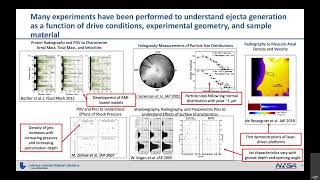
Experimental Observations of Laser-Driven Tin Ejecta Microjet Interaction
Explore laser-driven tin ejecta microjet interactions through experimental observations in high energy density science.
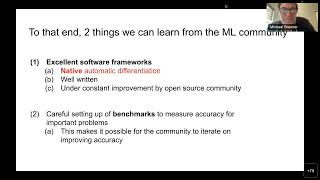
Scientific Uses of Automatic Differentiation - DDPS
Explore automatic differentiation's scientific applications beyond machine learning. Discover innovative approaches in PDEs, self-assembly, fluid dynamics, and protein modeling using large-scale optimization.
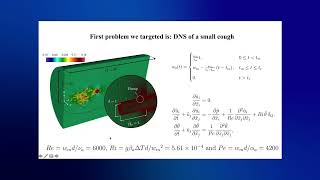
Quantifying the Potential of Covid-19 Transmission Across Scales
Explore Covid-19 transmission modeling across scales, from high-resolution simulations of respiratory aerosols to broader exposure assessment tools, aiding in pandemic mitigation strategies.
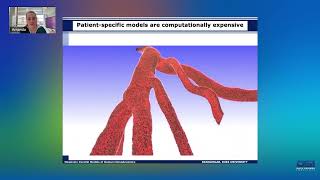
Using Data Science to Advance the Impact of Vascular Digital Twins in Medicine
Explore high-resolution digital twins of vascular anatomy to inform disease treatment. Learn how data science and physics-based modeling combine to address personalized medicine challenges.
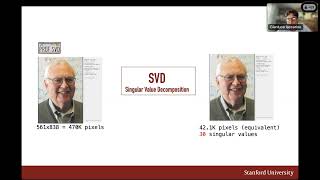
AutoEncoders for Aerodynamic Predictions
Explore autoencoders for aerodynamic predictions, focusing on flow past wing geometries. Learn about non-linear compression, latent representations, and uncertainty quantification in data-driven modeling.
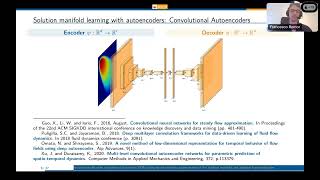
Intrusive Model Order Reduction Using Neural Network Approximants
Explore innovative neural network-based techniques for efficient reduced-order modeling of complex parametric partial differential equations, focusing on intrusive and interpretable methodologies.
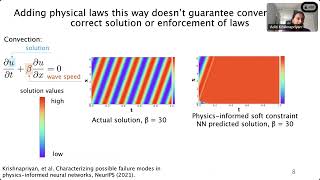
Bridging Numerical Methods and Deep Learning with Physics-Constrained Differentiable Solvers
Explore machine learning strategies for neural PDE solvers, focusing on self-supervised learning and simulation-in-the-loop approaches to enhance spatiotemporal modeling across various systems.
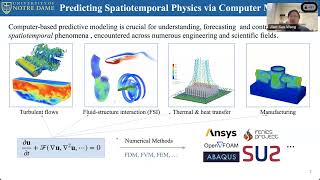
Neural Differentiable Physics: Unifying Numerical PDEs and Deep Learning for Data-Augmented Computational Physics
Explore Neural Differentiable Physics, unifying numerical PDEs and deep learning for enhanced computational modeling of complex physical systems. Learn innovative SciML approaches integrating physics principles with AI.
Koopman Operator Theory Based Machine Learning of Dynamical Systems
Explore Koopman Operator Theory for machine learning of dynamical systems, covering applications in fluid dynamics, power grids, network security, and more.
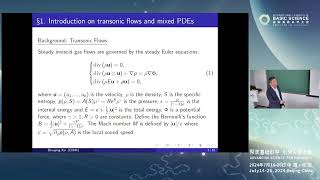
Smooth Transonic Flows and Mixed Type Equations - ICBS 2024
Explore smooth steady transonic flows in compressible Euler equations, focusing on mixed types, degeneracy, and challenges in proving existence for flows with rotations and non-zero vorticities.
Wavelet-inspired Nash's Iteration - Lecture 4
Explore wavelet-inspired Nash's iteration in fluid dynamics, focusing on advanced mathematical techniques for analyzing Euler and Navier-Stokes equations.
CFD Automation - AirShaper Course
Automate Computational Fluid Dynamics processes using AirShaper's innovative techniques. Enhance efficiency and accuracy in fluid flow simulations.

Fluid Equations: From Leray to Ladyzhenskaya and Beyond
Explore incompressible fluid theory, from Leray's weak solutions to Ladyzhenskaya's contributions, and recent findings on Navier-Stokes equations and turbulence.