Computational Fluid Dynamics
This course looks at all the aspects theoretical, numerical, and application aspects of computational fluid dynamics. Computational fluid dynamics (CFD) has become an essential tool in the analysis and design of thermal and fluid flow systems in a wide r…
Viscous Fluid Flow
Comprehensive exploration of viscous fluid dynamics, covering fundamental concepts, flow types, boundary layers, and turbulence. Equips learners with analytical skills for complex fluid systems.
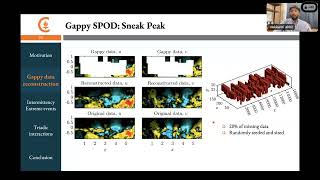
Data-Driven Techniques for Analysis of Turbulent Flows
Explore data-driven techniques for analyzing turbulent flows, including SPOD extensions, gappy-data reconstruction, and bispectral mode decomposition. Gain insights into coherent structures and nonlinear interactions in fluid dynamics.
Heading Towards Turbulence by Rama Govindarajan
Explore fluid dynamics, from laminar to turbulent flow, and the challenges in understanding transition. Learn about ongoing research and applications in this fascinating field.
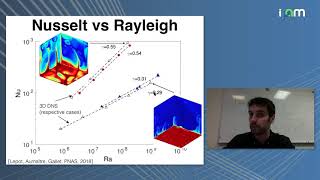
Heat Transport Efficiency Beyond the So-Called 'Ultimate' Regime
Explores innovative approaches to thermal convection, challenging traditional Rayleigh-Bénard models with radiative heating techniques to achieve more efficient heat transport in turbulent flows.

The Fascinating World of Turbulent Flows by Samriddhi Sankar Ray
Explore the complex world of turbulent flows, their ubiquitous presence in nature, and their impact on small particles. Discover why turbulence remains an unsolved problem in physics and its significance in various natural processes.
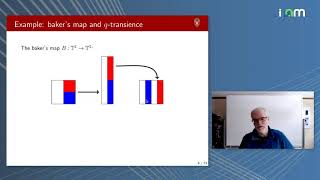
On Mix-Norms and the Rate of Decay of Correlations
Explores mix-norms and correlation decay rates in complex flows, discussing q-recurrence, q-transience, and their implications for measuring mixing intensity in various systems.
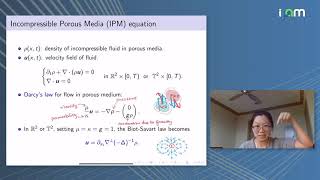
Small Scale Formations in the Incompressible Porous Media Equation
Explore small scale formations in incompressible porous media equations, including infinite-time growth of Sobolev norms and potential finite-time blow-up scenarios.
Modelling and Controlling Turbulent Flows Through Deep Learning
Explore deep learning applications in fluid mechanics, including flow prediction and control using CNNs, autoencoders, and GANs. Learn about non-intrusive sensing and transfer learning in turbulent flows.
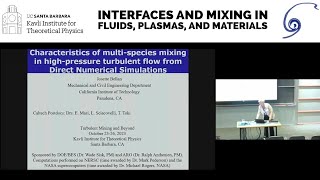
Characteristics of Multi-Species Mixing in High-Pressure Turbulent Flow - Josette Bellan
Explores multi-species mixing in high-pressure turbulent flow through direct numerical simulations, discussing key characteristics and implications for fluid dynamics research.
The Impact of Flow and Flow-Oriented Swimming on the Capacity to Aggregate
Explore how fluid flows and rheotaxis affect group formation in cells and animals, revealing optimal strategies for aggregation in dynamic environments.
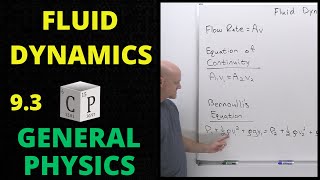
Fluid Dynamics in General Physics - Lesson 9.3
Explore fluid dynamics concepts, from laminar vs turbulent flow to Bernoulli's equation, with practice problems and real-world applications like the Venturi Effect.
Facing Challenges in Computational Fluid Mechanics with Lattice Boltzmann Methods
Explore advanced fluid flow simulation and optimization using Lattice Boltzmann Methods. Learn integrative approaches combining numerical simulation, HPC, and mathematical optimization techniques.

Laminar and Turbulent Flows - Part 3 - Lecture 32
Explore laminar and turbulent flows, delving into advanced concepts and applications in fluid dynamics.

Meta-Learning Dynamics Forecasting Using Task Inference
Explore meta-learning dynamics forecasting using task inference to improve generalization across heterogeneous domains in deep learning models for predicting complex systems.
Laminar and Turbulent Flows - Part 1 - Lecture 32
Explore laminar and turbulent flows, understanding velocity, Reynolds experiment, and typical flow regimes. Gain insights into fluid dynamics concepts.

Anomalous Dissipation and the Strong Onsager Conjecture - Part 5: Intermittent Pressure
Explore anomalous dissipation and the Strong Onsager Conjecture, focusing on intermittent pressure in turbulent flows. Delve into energy transfer mechanisms and mathematical descriptions of turbulence.
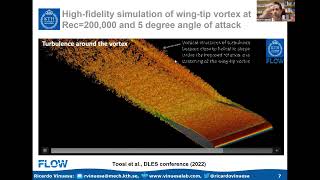
Modelling and Controlling Turbulent Flows through Deep Learning
Explore deep learning applications in modeling and controlling turbulent flows, from flow reconstruction to reinforcement learning for flow control, with insights on CNN architectures and transfer learning.

Anomalous Dissipation and the Strong Onsager Conjecture - Part 4: Error Estimates
Explore error estimates in anomalous dissipation and the Strong Onsager Conjecture, delving into mathematical descriptions of turbulent flows and energy transfer between scales.

Anomalous Dissipation and the Strong Onsager Conjecture - Part 3: From Fourier Series to Wavelet Series
Explore advanced concepts in turbulent flows, focusing on anomalous dissipation and the Strong Onsager Conjecture. Delve into mathematical techniques transitioning from Fourier to wavelet series analysis.