
Stability of Seabed Slopes - Automated Design Using OPTUM GX
Explore automated seabed slope stability design with OPTUM GX software, featuring time-saving Python plugins and the Au2RoxTM plugin for complex scopes.
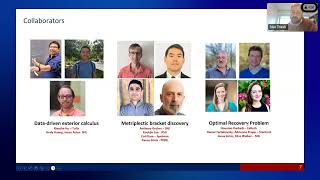
A Data-Driven Finite Element Exterior Calculus
Explore data-driven finite element exterior calculus for developing reduced-order models of multiphysics systems, combining machine learning with traditional finite element methods for robust surrogate modeling.
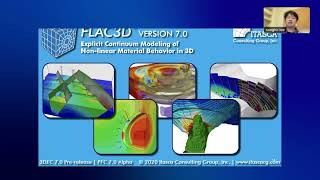
LAGHOST: Development of Lagrangian High-Order Solver for Tectonics
Explore LAGHOST, a Lagrangian high-order solver for tectonic simulations. Learn about its features, benchmarks, and applications in modeling geological processes like normal fault evolution.
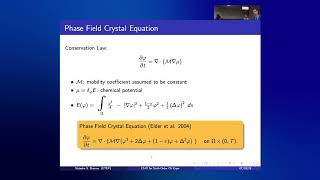
Continuous Interior Penalty Method Framework for 6th Order Cahn-Hilliard Equations
Explore unconditionally stable numerical methods for sixth-order Cahn-Hilliard equations, focusing on crystal growth and microemulsion systems. Gain insights into complex physical phenomena modeling.
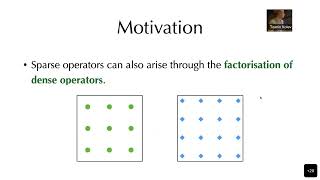
FSSpMDM - Accelerating Small Sparse Matrix Multiplications by Run-Time Code Generation
Explore code generation strategies for accelerating small sparse matrix multiplications in high-order finite element solvers, focusing on performant operator kernels for prismatic and hexahedral elements.
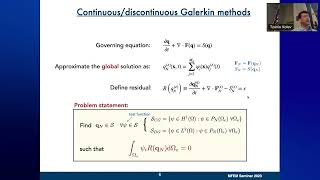
Using High-Order Element-based Galerkin Methods to Capture Hurricane Intensification
Explore high-order element-based Galerkin methods for capturing hurricane intensification, including multirate time integration and multi-modeling frameworks for improved atmospheric modeling.
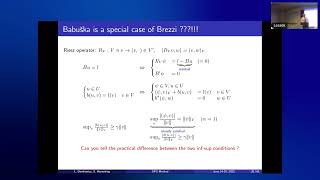
Full Envelope DPG Approximation for Electromagnetic Waveguides
Explore advanced finite element analysis for electromagnetic waveguides, focusing on stability and convergence of full envelope DPG approximation in optical amplifier simulations.
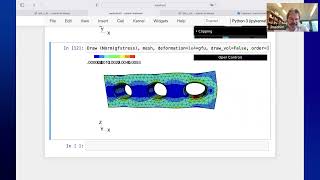
The Netgen/NGSolve Finite Element Software - Overview and Applications
Explore Netgen/NGSolve finite element software: overview, Python scripting, teaching applications, and recent developments in matrix-valued elements, GPU utilization, and time-dependent problems.
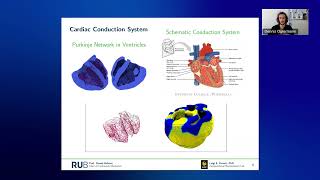
Computing Meets Cardiology: Making Heart Simulations Fast and Accurate
Explore advanced computational techniques for simulating heart function, focusing on efficient ECG calculations and electromechanical models using MFEM for improved cardiac disease understanding and treatment.
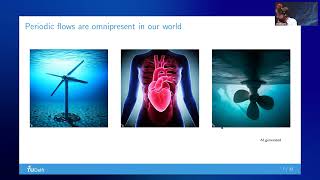
Computation and Reduced Order Modelling of Periodic Flows
Explore efficient computation and reduced order modeling techniques for periodic flows using MFEM, focusing on space-time domain solutions and hyper-reduced POD Galerkin models.
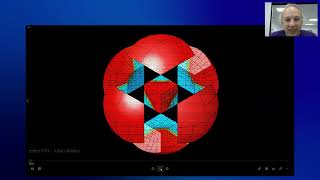
MFEM Workshop 2022 - Wrap-Up and Simulation Contest Winners
Explore MFEM Workshop 2022 highlights, including simulation contest winners showcasing advanced scientific visualizations in epilepsy research, heat sink optimization, and electromagnetic field modeling.
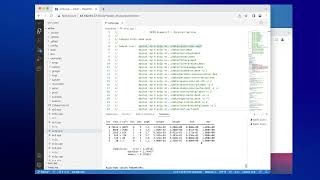
MFEM in the Cloud: AWS Tutorial for Scalable Finite Element Applications
Learn to use MFEM in the cloud for scalable finite element discretization application development with step-by-step instructions and hands-on demonstration.
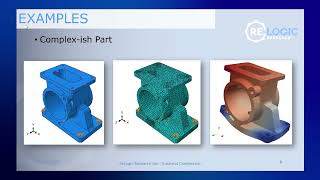
Accelerated Deployment of MFEM Based Solvers in Large Scale Industrial Problems
Explore MFEM-based Minerva platform for industrial-scale simulations, integrating with commercial software and enhancing solver capabilities for large-scale design and optimization problems.
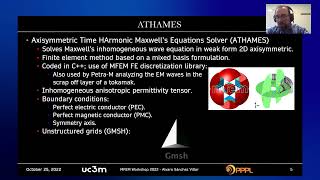
MFEM Application to EM-Wave Simulation in ECR Space Plasma Thrusters
Explore EM-wave simulation in ECR space plasma thrusters using MFEM. Learn about Maxwell equations, cold-plasma approximation, and finite element discretization for space propulsion applications.
MFEM Workshop 2022 - Welcome and Overview
Explore MFEM's high-order mathematical calculations for scientific simulations, community updates, and development roadmap in this workshop overview.
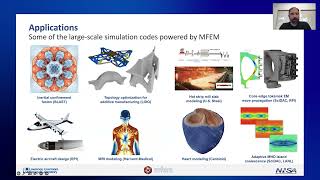
The State of MFEM - Workshop 2022
Explore MFEM's high-order mathematical calculations for scientific simulations, including key capabilities, examples, and future plans. Learn about the project's growth and recent software release.
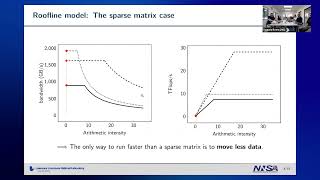
Empowering MFEM Using libCEED - MFEM Workshop 2023
Explore MFEM's enhanced capabilities through libCEED integration, including support for simplices, mixed meshes, and p-adaptivity. Discover performance gains across various HPC architectures.
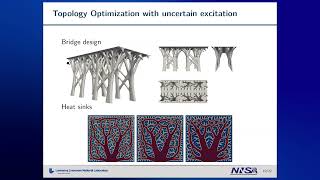
Scalable Design and Optimization with MFEM
Explore scalable design and optimization using MFEM for large-scale scientific simulations. Learn about topology and shape optimization algorithms, gradient-based techniques, and implementation strategies for industrial problems.
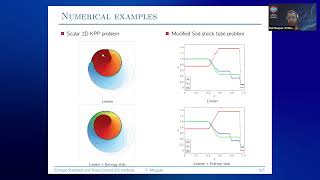
MFEM Workshop 2023 - Student Lightning Talks Part 1
Explore cutting-edge finite element research through student presentations on topics like µFEA, entropy stabilization, Maxwell's equations, and thermo-mechanical solves using MFEM.
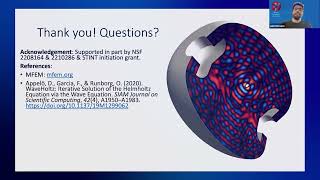
MFEM Workshop 2023 - Student Lightning Talks Part 2
Explore cutting-edge research in high-order mathematical calculations for scientific simulations through student presentations on neural networks, GPU acceleration, and Monte Carlo methods.
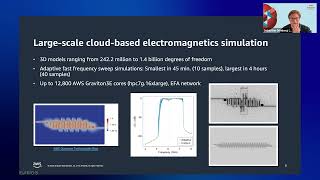
Palace: Parallel Large-scale Computational Electromagnetics - MFEM Workshop 2023
Explore Palace, a parallel finite element code for full-wave electromagnetics simulations, and its capabilities for large-scale 3D modeling in quantum computing hardware design.