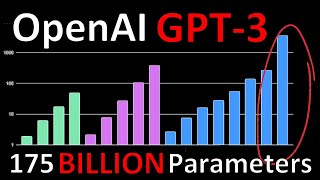
GPT-3 - Language Models Are Few-Shot Learners
Comprehensive analysis of GPT-3's capabilities, exploring its performance on various NLP tasks and discussing its potential impact on AI research and applications.
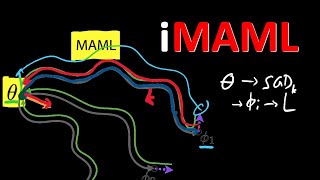
IMAML- Meta-Learning with Implicit Gradients
Explore an innovative approach to meta-learning that improves computational efficiency through implicit gradients, enabling faster adaptation to new tasks using prior knowledge.

HyperTransformer - Model Generation for Supervised and Semi-Supervised Few-Shot Learning
Explore HyperTransformer, a novel approach to few-shot learning using transformers to generate CNN weights. Learn about its architecture, advantages, and potential applications in machine learning.
GUI-Based Few Shot Classification Model Trainer - Demo
Discover how to efficiently train classification models using vector search, enabling rapid fine-tuning with minimal labeled data for improved accuracy and targeted results.
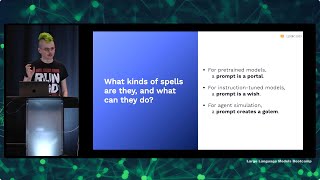
Learn to Spell - Prompt Engineering
Explore intuitions and techniques for effective prompt engineering, including decomposition, reasoning, and reflection, to unlock the full potential of language models.
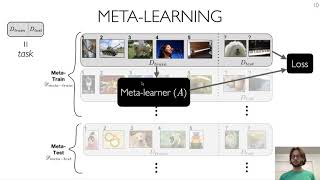
Transfer Learning Larochelle
Transfer learning techniques for deep learning, including few-shot learning, fine-tuning, and universal representations, with a focus on addressing limited labeled data challenges.
Flexible Neural Networks and the Frontiers of Meta-Learning
Explore cutting-edge approaches in meta-learning and flexible neural networks for rapid skill acquisition in AI agents, with applications in few-shot image classification and real-world scenarios.
Pieter Abbeel on Research Directions - Full Stack Deep Learning - November 2019
Explore cutting-edge deep learning methods with Professor Pieter Abbeel, covering few-shot learning, reinforcement learning, imitation learning, domain randomization, architecture search, and unsupervised learning.
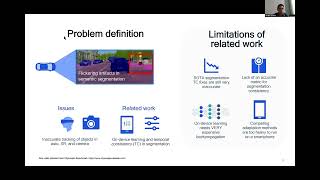
Enabling On-Device Learning at Scale
Explore on-device learning techniques for AI personalization, including few-shot learning, continuous learning, and federated learning, addressing privacy and efficiency challenges in edge computing.
Empowering Security with Generative AI - Fundamentals and Applications of GPT Models
Explore GPT models' potential in security research, covering semantic searching, few-shot learning, and code generation. Gain insights and inspiration for leveraging AI to empower security teams.
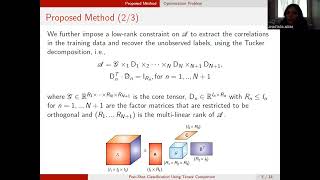
Few-Shot Classification Using Tensor Completion
Explore tensor-based modeling for enhanced classification performance, especially with limited training data, outperforming traditional methods.
Prompt Engineering Techniques for Microsoft Phi3-mini 128k Instruct
Explore prompt engineering techniques for Microsoft Phi3-mini 128k Instruct, including zero-shot, few-shot, CoT, and RAG approaches.
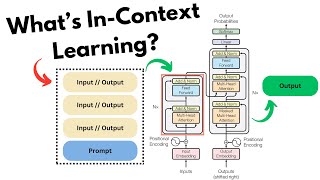
In-Context Learning in Deep Learning - How It Works in Large and Small Language Models
Explore in-context learning in LLMs: definition, significance, Bayesian framework, and implementation. Gain insights into this surprising capability of language models and its implications for AI.

Supercharging LLM Performance Without AI Training
Discover techniques to enhance large language model performance without additional training, focusing on innovative approaches and collaborative research findings.

SETFIT Few-Shot Learning for SBERT Text Classification - Part 43
Discover how SETFIT's few-shot learning approach revolutionizes text classification, outperforming GPT-3 while using SBERT Sentence Transformers for efficient processing with limited training data.

A Practical Approach for Few Shot Learning with SetFit - Haystack EU 2023
Explore SetFit for few-shot learning in classification and ranking, with a focus on legal research applications. Discover its potential to outperform GPT-3 in label-scarce settings.

Large Scale Multi-Microscope Datasets and Their Challenges in Medical AI
Explore groundbreaking research on multi-microscope datasets for malaria and leukemia detection, featuring innovative domain adaptation techniques and object detection methods to enhance early disease diagnosis.

The Prompt Report: Understanding Prompting Techniques and Taxonomy - Part 1
Explore systematic prompting techniques through an in-depth analysis of template structures, zero-shot methods, emotion prompting, and thought generation approaches for enhanced AI interactions.
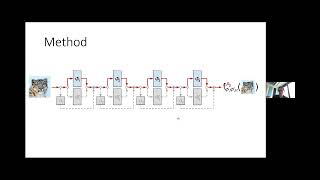
Neural Fine-Tuning Search for Few-Shot Learning
Explore advanced neural architecture search techniques for optimizing few-shot learning adaptation strategies, focusing on meta-training and meta-testing trade-offs in multi-domain contexts.
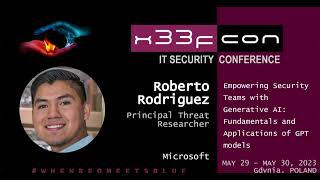
Empowering Security Teams with Generative AI: GPT Models - Lecture 12
Explore how GPT models and large language models can enhance security research through few-shot learning, code generation, and retrieval augmentation techniques for security teams.
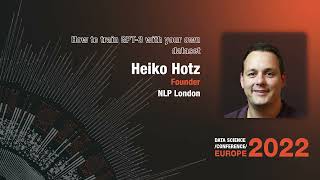
How to Train GPT-3 with Your Own Dataset
Discover practical techniques for customizing GPT-3 through dataset training, exploring real-world applications and methods to enhance model performance for specific use cases.