
Detecting Malware Even When It Is Encrypted
Innovative machine learning approach for detecting malware in encrypted HTTPS traffic using Bro IDS logs, without decryption. Focuses on behavioral features and connection 4-tuples for improved accuracy.

Toward Large-Scale Vulnerability Discovery Using Machine Learning - DefCamp - 2015
Explore machine learning techniques for large-scale vulnerability discovery in information security. Learn about data collection, crash analysis, prediction, and practical tools for implementing these methods.
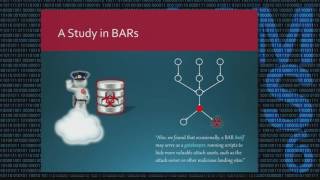
Lurking Malice in the Cloud - Understanding and Detecting Cloud Repository as a Malicious Service
Explore techniques for detecting malicious cloud repositories, analyzing their characteristics, and understanding their impact on cybersecurity. Learn about innovative approaches to identify and mitigate cloud-based threats.
Scalable Graph-based Bug Search for Firmware Images
Scalable graph-based approach for efficient bug detection in firmware images, improving vulnerability search speed and accuracy for IoT devices.
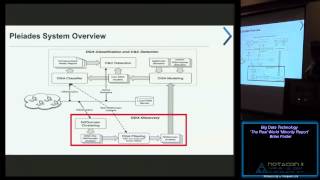
Big Data Technology - The Real World Minority Report
Explore big data's role in cybersecurity, including network analysis, domain reputation, and machine learning techniques for threat detection and prevention.

Simple Machine Learning
Explore basic machine learning approaches for classification in PHP, with real-world applications and practical demonstrations.
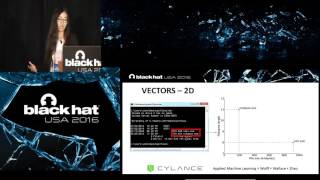
Applied Machine Learning for Data Exfil and Other Fun Topics
Explore machine learning applications in cybersecurity, including data exfiltration, network mapping, and botnet detection. Hands-on examples and tool demonstrations provided for practical implementation.

Reactive Machine Learning and Functional Programming
Explore reactive machine learning systems using functional programming principles. Learn to build responsive, resilient, and elastic applications with Scala, Akka, and Spark, focusing on architectural patterns and implementation.
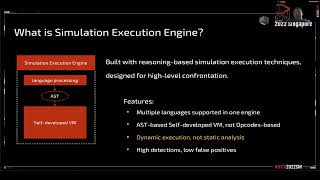
Simulating Execution in Malicious Text Detection
Innovative approach to malicious text detection using simulated execution, combining static and dynamic analysis techniques for improved accuracy and efficiency in identifying obfuscated threats.
Hunting for Malicious Infrastructure Using Big Data
Explore innovative machine learning techniques for detecting malicious infrastructure in HTTP responses, focusing on uniqueness and header order features to identify command and control servers.
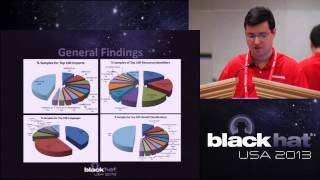
BinaryPig - Scalable Malware Analytics in Hadoop
Scalable malware analytics framework using Hadoop for processing large volumes of malware samples. Enables efficient feature extraction, machine learning, and data exploration for security researchers.

Humans vs. Machines in Malware Classification
Experimental study comparing human and machine approaches to malware classification, revealing insights into feature prioritization and decision-making processes for both novice and expert analysts.

Sorry, Could You Repeat That Again? - Speech Recognition with Python
Explore speech recognition systems and develop an isolated word recognition system in Python, with insights into real-world applications and advanced techniques.
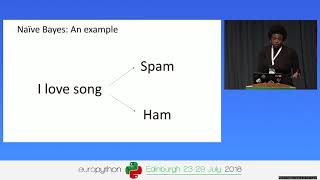
Building a Naive Bayes Text Classifier with scikit-learn
Learn to build a Naive Bayes text classifier using scikit-learn, exploring preprocessing techniques and feature extraction methods for effective spam detection in YouTube comments.
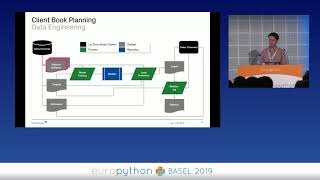
Building Data-Driven Client Relationship Management in Banking with Python
Transforming banking sales with Python: data-driven client management, machine learning pipelines, and automated processes for improved efficiency and personalized service.
Using EEG and Machine Learning to Perform Lie Detection
Explore lie detection using EEG and machine learning. Learn about data collection, Azure ML model building, and result analysis. Gain insights into brain-computer interfaces and their potential applications.

TensorFlow Tutorial - Neural Networks with Sequential and Functional API
Learn to build neural networks in TensorFlow 2.0 using Keras Sequential and Functional API. Covers model creation, layer feature extraction, and model summaries with hands-on MNIST dataset examples.
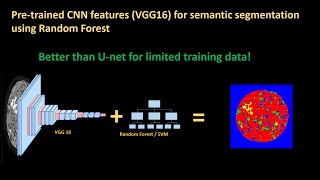
Pretrained CNN Features for Semantic Segmentation Using Random Forest
Explore semantic segmentation using VGG16 features and Random Forest, offering improved results for limited training data compared to U-net.

LLM-based Feature Extraction for Operational Optimization
Explore LLM-based feature extraction for operational optimization in AI applications. Learn how to leverage GPT-3.5 for efficient content understanding and improved accuracy in product development.

Convolutional Neural Networks
Explore convolutional neural networks for computer vision, covering feature extraction, convolution operations, and applications in autonomous navigation and medical imaging.

Convolutional Neural Networks
Explore convolutional neural networks for computer vision, covering feature extraction, convolution operations, and applications like object detection and self-driving cars.