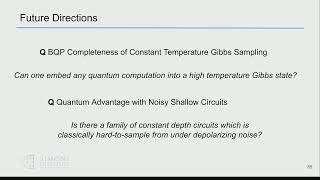
Quantum Computational Advantage With Constant-Temperature Gibbs Sampling
Explore quantum computational advantage through constant-temperature Gibbs sampling, examining thermalization processes and their implications for quantum systems and classical algorithms.
Building Resilient Services on Kubernetes
Learn best practices for building fault-tolerant applications on Kubernetes, eliminating HTTP 5xx errors, and maintaining high performance during deployments and upgrades. Ideal for developers seeking to enhance service resilience.
Fault Tolerance with the ZX-Calculus and Fusion Complexes: Tools for QEC Development
Unifying frameworks for quantum error correction: ZX calculus and fusion complexes connect hardware-specific models to abstract fault tolerance, aiding QEC design for various qubit technologies.
Signal, if You Can't - Error Correction in Fully Corrupted Networks
Explore signaling methods for performing computations in asynchronous networks with corrupted messages, focusing on error-correction techniques for damaged transmissions.
The Verification of a Distributed System - A Practitioner's Guide to Increasing Confidence in System Correctness
Explore techniques for verifying distributed systems, addressing challenges of partial failure and asynchrony to increase confidence in system correctness and reliability.
Interaction Protocols - It's All About Good Manners
Explore distributed systems as social groups, examining protocols for collaboration, fault tolerance, and effective communication. Learn how these rules enhance system performance, resilience, and security.
Alea-BFT: Practical Asynchronous Byzantine Fault Tolerance
Explore Alea-BFT, an efficient asynchronous Byzantine Fault Tolerance protocol gaining adoption in Ethereum. Learn its simple design, performance benefits, and practical applications in cryptocurrency ecosystems.
Zonal Outage Operational Stories in Kubernetes Clusters
Explore real-world zonal outages in Kubernetes clusters, their impact on components, and strategies for improving resiliency across thousands of clusters in AWS environments.
Resuming Pods After Spot Instance Shutdown - Kubernetes Controller for Container Migration
Learn how to migrate containers to new nodes with near zero-downtime when spot instances shut down, using a Kubernetes controller for snapshot and recovery, saving costs while maintaining reliability.
Scalable Surface-Code Decoders with Parallelization in Time
Explore advanced quantum coding techniques for scalable surface-code decoders, focusing on time parallelization methods to enhance quantum error correction efficiency.
Low-Overhead Fault Tolerance in Two Dimensions
Explore a fault-tolerance scheme achieving low space overhead using geometrically local circuits, addressing limitations in quantum coding theory and syndrome extraction.
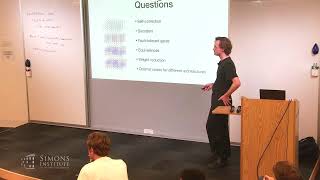
Layer Codes - Advances in Quantum Coding Theory
Explore advanced quantum coding theory with a focus on layer codes, examining their structure and applications in quantum information processing.
Reliable Multi-Cluster Application Architectures with Istio
Explore multi-cluster application architectures using Istio, including zonal, regional, multi-regional, and global patterns. Learn implementation strategies, scaling techniques, and operational considerations.
Building Resilient Services on Kubernetes
Discover best practices for building fault-tolerant applications on Kubernetes, eliminating HTTP 5xx errors, and maintaining high performance during deployments and upgrades.

Enabling Coordinated Checkpointing for Distributed HPC Applications
Explore coordinated checkpointing for distributed HPC applications across multiple Pods and nodes, including new CRIU mechanisms, Kubelet Checkpoint API, and potential Kubernetes scheduler extensions.
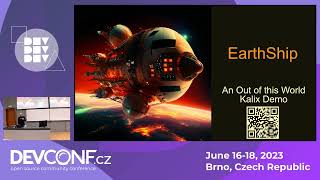
Event-Driven Services as Neural Synaptic Networks
Explore synaptic services: a revolutionary approach modeling components as neurons and connections as synapses for robust, efficient event-driven architectures.
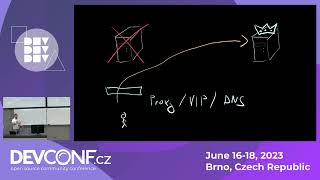
Distributed SQL Transactions
Explore distributed SQL transactions and two-phase commits, learning implementation over PostgreSQL and handling server failures in large-scale data systems.
Reliable Actors with Retry Orchestration
Explore fault-tolerant cloud programming using actors, retry orchestration, and tail calls. Learn key application patterns and failure scenarios for building resilient cloud applications.
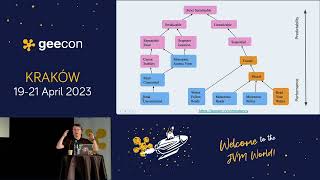
What Can Go Wrong with Distributed Systems - The Hazelcast Experience
Explore common pitfalls in distributed systems through Hazelcast's experiences, gaining insights for building robust architectures.

A Different Flavor of Distributed Transactions
Explore distributed transactions beyond traditional approaches, delving into innovative solutions for managing complex data operations across distributed systems.
Multi-Domain Scenarios and Their Business Impacts in Chaos Engineering
Explore multi-domain scenarios in chaos engineering, their business impacts, and strategies for creating value through technology and cross-domain collaboration.