Quantum Error Correction - Lecture 1
Explore quantum error correction fundamentals, including strategies to protect quantum information from decoherence and errors in quantum computing systems.

Cantor Meets Scott - Semantic Foundations for Probabilistic Networks
Explore semantic foundations for probabilistic networks in software-defined networking. Learn about ProbNetKAT, a high-level language for expressing and reasoning about probabilistic network behaviors.
Achieving Fault Tolerance in Istio with Observability-Driven Load Management
Explore observability-driven load management for Istio, using Aperture to enhance fault tolerance, protect multi-tenant databases, and adaptively schedule traffic in microservices architectures.
SwiftPaxos - Fast Geo-Replicated State Machines
Explore SwiftPaxos, a protocol enhancing geo-replicated state machines with improved latency and throughput, outperforming Paxos in high-contention scenarios through innovative voting mechanisms.
MegaScale - Scaling Large Language Model Training to More Than 10,000 GPUs
Innovative system for training large language models on 10,000+ GPUs, addressing efficiency and stability challenges through full-stack optimization and advanced diagnostic tools.
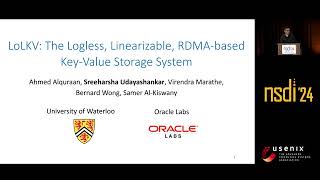
LoLKV - Logless, Linearizable, RDMA-based Key-Value Storage System
Innovative key-value storage system using lock-free design for concurrent updates, achieving higher throughput and lower latency than state-of-the-art alternatives.
The Bedrock of Byzantine Fault Tolerance: A Unified Platform for BFT Protocols - NSDI '24
Unified platform for analyzing, implementing, and experimenting with Byzantine Fault-Tolerant protocols, exploring design dimensions and trade-offs to navigate the complex BFT landscape.
Resiliency at Scale: Managing Google's TPUv4 Machine Learning Supercomputer
Explore Google's TPUv4 supercomputer infrastructure, focusing on fault resiliency, dynamic reconfiguration, and high system availability for machine learning training at massive scale.
High-fidelity and Fault-tolerant Teleportation of a Logical Qubit on a Trapped-ion Quantum Computer
Explore fault-tolerant quantum teleportation using trapped-ion technology, focusing on error correction codes, circuit designs, and real-time decoding for future large-scale quantum devices.
Evidence for the Utility of Quantum Computing Before Fault Tolerance
Explore noise mitigation in quantum computing, demonstrating reliable results from a 127-qubit processor and discussing the potential of pre-fault-tolerant quantum devices.
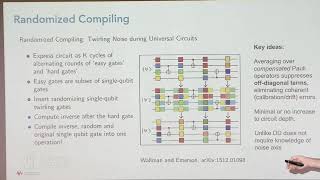
From Randomized Benchmarking to Cycle Error Reconstruction in Quantum Computing
Explore state-of-the-art methods for benchmarking and characterizing errors in quantum computing, from simple gate fidelities to complex circuit structures.
Exploring the Quantum Computing Frontier with Reconfigurable Atom Arrays
Discover cutting-edge quantum computing advancements using reconfigurable atom arrays, focusing on fault tolerance, benchmarking, and potential quantum advantages.
How to Fault-Tolerantly Realize Any Quantum Circuit with Local Operations
Explore a new scheme for transforming quantum circuits into geometrically local ones, preserving fault-tolerance and enabling efficient quantum information processing with local operations.
QEC Demonstrations Leveraging Dynamic Circuits
Explore quantum error correction demonstrations using dynamic circuits, focusing on advancements in fault tolerance and quantum computing applications.
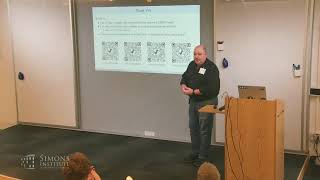
Quantum Lego - Constructing Quantum Error Correcting Codes Using Tensor Networks
Explore quantum error correction using tensor networks, constructing large codes from smaller ones and efficiently computing quantum weight enumerators for exact code distance determination.
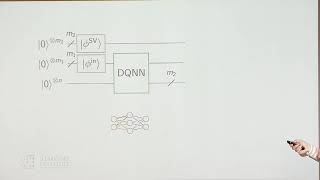
Quantum Neural Networks: Design and Training for Quantum Learning Tasks
Explore dissipative quantum neural networks, their feed-forward functionality, and universal quantum computation capabilities. Learn about training methods and benchmarking for unknown unitary operations.
Failure and Change: Principles of Reliable Systems - YOW! 2018
Explore principles for building reliable systems that withstand failure and change. Learn strategies to implement, understand, and verify robust software in complex environments.
Noise-Adapted Quantum Error Correction and Fault Tolerance
Explores noise-adapted quantum error correction and fault tolerance techniques, focusing on strategies to mitigate errors in quantum systems for improved computational reliability.
Quantum Error Correction - Lecture 4
Explore quantum error correction techniques to protect quantum information from decoherence and noise, enhancing the reliability of quantum computations and communication systems.
Synchronous Consensus with Optimal Asynchronous Fallback Guarantees
Explore optimal consensus protocols balancing synchronous efficiency with robust asynchronous fallback, enhancing blockchain and distributed systems reliability.
Messaging: The Fine Line Between Awesome and Awful
Explore best practices for durable messaging in distributed systems, addressing challenges and pitfalls while leveraging benefits like reliability, scalability, and decoupling.