
Modeling Hierarchies of Sound for Audio Source Separation and Generation - 2024 JSALT
Explore hierarchical sound modeling for audio source separation and generation. Learn about extracting components, controlling models, detecting data memorization, and building interpretable controls.
SHAP and Shapley Values for Interpretable Machine Learning - Kaggle 30 Days of ML Day 18
Explore SHAP and Shapley Values for interpretable machine learning. Learn local interpretation techniques, Python implementation, and visualization methods for explainable AI.
Interpretable Machine Learning Use-Cases - Kaggle 30 Days of ML Day 15
Explore machine learning explainability, interpretability, and use cases for model insights. Learn about feature importance, debugging, and building trust in AI systems.

Enhancing Machine Learning Applications with Wisdom of the Crowd
Explore ensemble techniques to boost ML model performance, explainability, and usability for complex problems by leveraging multiple specialized models.

Simplifying Machine Learning Lifecycle Management in Healthcare
Explore end-to-end ML lifecycle in healthcare using Azure services. Learn data ingestion, model creation, deployment, and visualization for real-time patient predictions and batch scoring.

Beyond Interpretability: An Interdisciplinary Approach to Communicate Machine Learning Outcomes
Explore an interdisciplinary approach to Explainable AI, moving beyond technical interpretations to enhance AI interpretability through socio-technical perspectives and academic-industry collaboration.

Interpretable Machine Learning Approaches for Multi-Year Climate Variability
Explore interpretable machine learning techniques for identifying and understanding predictable multi-year climate variability, focusing on neural networks and explainable AI in climate science research.

Detection of Mesoscale Oceanic Eddies Over Bay of Bengal Using Explainable Deep Learning
Explore deep learning techniques for detecting mesoscale oceanic eddies in the Bay of Bengal, with a focus on explainable AI methods to enhance understanding of eddy dynamics and their impact on regional climate.
Ethics and Explainability in Climate AI - From Theory to Practice
Explore ethical considerations and explainability challenges in applying AI to climate science, featuring insights from leading experts in a thought-provoking panel discussion.
Explainable AI for Climate Science - Opening the Black Box to Reveal Planet Earth
Discover how explainable AI techniques can revolutionize climate science research, from weather prediction to understanding human impacts on Earth's systems through advanced machine learning applications.

The Synthetic Data Advantage - Getting Both AI Privacy and Explainability
Discover how synthetic data revolutionizes AI development by enabling privacy-preserving machine learning, streamlined data access, and enhanced explainability while exploring practical implementation techniques.
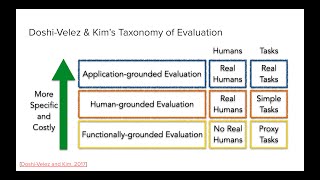
Application-Grounded Evaluations of Explanations in AI Systems
Explore evaluation methods for AI explanations, focusing on simulatability, reliance metrics, and team performance in practical applications for enhanced decision-making.
Introduction to Machine Learning Model Explanations and Interpretability
Explore key concepts in data science explanations, from gradient-based highlighting to contrastive editing, covering essential techniques for understanding and interpreting complex models.
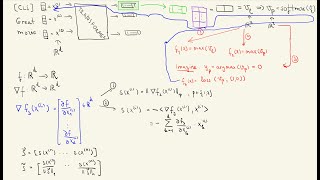
Gradient-Based Input Attribution Methods and Their Applications
Explore gradient-based input attribution methods, from fundamental concepts to practical applications, limitations, and advanced extensions in machine learning model interpretability.

An Overview of Local Explainability Methods and Their Evaluation in AI
Explore key methods and evaluation approaches for local explainability in AI, from confidence scores and input attribution to concept-based explanations and practical applications.

Building Trustworthy AI with Common Sense - Lecture
Explore building trustworthy AI with common sense for robust decision-making, discovery, and misinformation tackling. Learn about CARE principles and neuro-symbolic architectures for explainable, adaptive AI systems.

Pragmatic Interpretability - A Human-AI Cooperation Approach
Explore pragmatic interpretability in machine learning, focusing on human-AI cooperation, selective explanations, and incorporating human intuition to enhance decision-making and model understanding.

Expert-Informed, User-Centric Explanations for Image Classification with Deep Learning
Explore expert-informed, user-centric explanations for image classification using deep learning. Gain insights into diagnostic feature labeling and its applications in various fields.
We Need to Determine Who is Responsible When AI Makes a Mistake
Explore AI accountability, explainability, and regulation in social media analysis, emphasizing teamwork and ethical considerations for future advancements.

Grassroots Responsible AI - Operationalizing AI Ethics
Operationalize responsible AI using ML observability techniques. Implement model transparency, analyze effects of changes, and use explainability to determine issues. Gain insights from thought leaders on ethical AI approaches.
The Next Frontier - Observability in ML Systems
Explore the frontier of ML systems observability, covering key components, challenges, and future trends in various domains including LLMs and computer vision.