
Exoplanets - The Search for New Worlds
Explore the fascinating world of exoplanets, their discovery methods, and implications for finding Earth-like worlds. Learn about the habitable zone, planet formation, and the quest for extraterrestrial life.

Alien Life - Will We Know It When We See It?
Explore the multidisciplinary search for extraterrestrial life, from exoplanet detection to microbial possibilities, with leading scientists discussing cutting-edge techniques and philosophical implications.
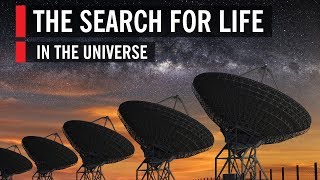
The Search for Life in the Universe
Explore the quest for extraterrestrial life with leading scientists as they discuss Mars exploration, exoplanet detection, and the potential impact of discovering alien life on humanity's perspective.
The Universe, Unfolded - NASA Webb Space Telescope
Explore the groundbreaking discoveries and innovations of the James Webb Space Telescope with NASA engineer Kenneth Harris II, unveiling new insights into our universe and the future of space exploration.
Python-based Web Applications for Modern Astronomy and Exoplanet Research
Discover how Python-powered web applications revolutionize exoplanet research, featuring Filtergraph's visualization tools and their impact on NASA missions and astronomical discoveries.

The Search for Planets Beyond Our Solar System
Explore exoplanets with astronomer Sara Seager as she discusses their prevalence, characteristics, and the cutting-edge technology used to study them, including the search for potentially habitable worlds.
The Climates of G1514 b - AbGradCon 2023
Explore the climates of exoplanet G1514 b through cutting-edge astrobiology research presented by Héctor Delgado Díaz at AbGradCon 2023, fostering interdisciplinary collaboration in planetary science.
Differences in Climates and Transit Spectra of Habitable Planets
Explore differences in climates and transit spectra of habitable planets, focusing on key factors influencing planetary habitability and detection methods for exoplanets.
A Model of Europa's Ice Shell and Its Effect on Ocean Circulation
Explore Europa's ice shell and its impact on ocean circulation through a cutting-edge model presented by Sara Miller at AbGradCon 2023, advancing our understanding of this intriguing Jovian moon.
Earth Detecting Earth: Human Baselines for Technosignatures - AbGradCon 2023
Explore Earth's technosignatures and their potential for exoplanet detection. Gain insights into radio transmissions, laser leakage, and exoplanetary pollutants in astrobiology research.
Long Period Seismology on Titan - AbGradCon 2023
Explore long period seismology on Titan, focusing on NASA's Dragonfly mission, methane clathrates, and seismic wave propagation models to uncover the moon's interior structure.
Rocky Exoplanet Science with Ground-Based Extremely Large Telescopes
Explore rocky exoplanet science using ground-based Extremely Large Telescopes, covering transit spectroscopy, velocity shifts, and detection of water and oxygen.
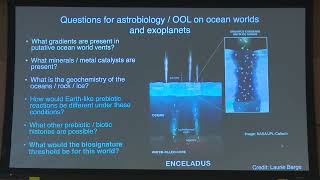
Searching for Life: General Motivation and Approaches
Explore the motivations and methods for searching extraterrestrial life through an expert's perspective from the Jet Propulsion Laboratory.
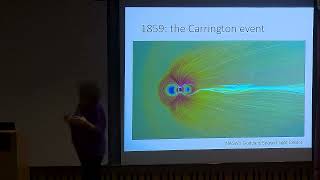
A Surge in Intensity - The Impact of Extreme Space Environments
Explore the effects of extreme space environments on exoplanet evolution with Dr. Antígona Segura's insightful talk on extrasolar space weather.
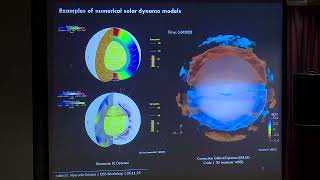
The Fundamentals: Physical Origins of Particles in Circumstellar Space
Explore the physical origins of particles in circumstellar space with Dr. Julián Alvarado-Gómez's insightful lecture on extrasolar space weather and its impact on exoplanet evolution.
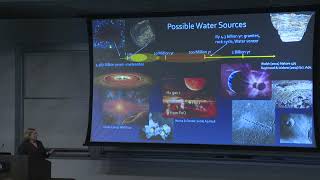
Chemical Fingerprints of the Early Solar System and its Dynamical Evolution
Explore chemical fingerprints of the early Solar System and its dynamic evolution through Karen Meech's insightful presentation at Caltech's space studies short course.

Cold Ocean Worlds
Explore the fascinating realm of cold ocean worlds beyond Earth, uncovering potential habitats for extraterrestrial life.
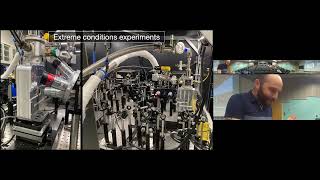
The Abyssal Habitable Zone: Ocean Worlds Near and Far
Explore ocean worlds and their potential for harboring life, examining pressure, ices, and exoplanets through innovative experiments and scientific analysis.
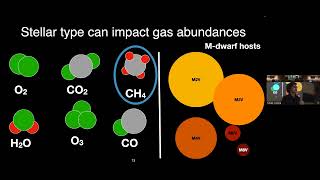
There's More to Life Than O2 - Assessing Biosignatures in Terrestrial Exoplanets
Explore biosignatures beyond oxygen in exoplanet spectroscopy, assessing detectability and environmental context for potential extraterrestrial life.
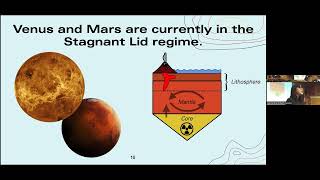
Predicting Outgassing Rates for L 98-59 b with an Interior Model - Astrobiology Research Presentation
Explore interior modeling of L 98-59 b to predict outgassing rates and atmospheric composition, supporting JWST exoplanet observations and characterization efforts.
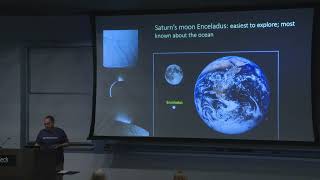
Ocean Worlds and Habitability
Explore ocean worlds and habitability in the solar system with NASA JPL expert Jonathan Lunine at Caltech's space studies short course.