The Exascale Computing Era - Reflections on Progress and Challenges
Explore the dawn of exascale computing, focusing on the Frontier system, its applications, and the challenges overcome in developing exascale-capable software and technologies.
Rapidly Deploying and Delivering a Sustainable National Exascale AI Research Resource - Isambard-AI Case Study
Explore the rapid deployment and sustainability of Isambard-AI, a national Exascale AI research resource in the UK, including its architecture, applications, and impact on AI research.
RADIUSS and HPCIC: Outreach Through Open-Source Software in the Exascale Era
Explore LLNL's open-source HPC software portfolio and learn about collaboration opportunities in the exascale era. Gain insights into innovative tools addressing emerging challenges in high-performance computing.
Exascale Computing: From Shared Memory to GPU Architecture
Explore exascale computing, HPC architectures, and GPU programming with Dr. Meifeng Lin from Brookhaven National Laboratory.
Template Task Graphs: An Introduction to Parallel Programming for Irregular Data Sets
Explore the Template Task Graph programming paradigm for expressing task parallelism in algorithms with irregular data sets. Learn installation and integration techniques.
Investing in Code Reviews for Better Research Software
Explore code review benefits for scientific software: improved quality, teamwork, and knowledge transfer. Learn approaches to facilitate effective reviews.
Lab Notebooks for Computational Mathematics, Sciences and Engineering
Explore lab notebooks' adaptation to computational research, with examples addressing challenges in transitioning from experimental to computational sciences.
Our Road to Exascale: Particle Accelerator and Laser-Plasma Modeling
Explore the journey to exascale computing in particle accelerator and laser-plasma modeling, featuring WarpX's development and the 2022 ACM Gordon Bell Prize.
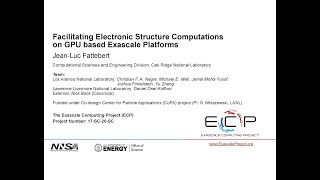
Facilitating Electronic Structure Computations on GPU-based Exascale Platforms
Explore GPU-based electronic structure computations for exascale platforms using PROGRESS and BML libraries. Learn implementation strategies, performance optimization, and scaling techniques.
Infrastructure for High-Fidelity Testing in HPC Facilities
Explore infrastructure and tools for high-fidelity testing in HPC environments, focusing on hardening software for DOE's Exascale Computing Project and future applications.
Secure Software Programming Practices and Development for Scientific Software
Explore secure software development practices to mitigate malicious attacks and protect scientific software integrity, authentication, and sustainability.
Supercomputing at the Exascale and Beyond: Future Trends and Challenges
Explore exascale computing advancements, best practices, and future trends in high-performance computing. Learn strategies for developing portable, performant code and adapting algorithms for heterogeneous architectures.
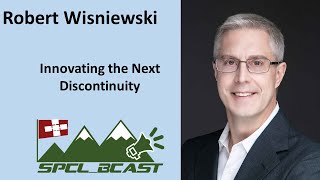
Innovating the Next Discontinuity in HPC and AI Computing
Explore innovative solutions for HPC and AI bottlenecks through Memory Coupled Compute architecture, addressing bandwidth limitations and accelerator efficiency for post-exascale computing.