The Badness of Death - The Deprivation Account - Part II
Explores why death may be bad through the deprivation account, examining how ceasing to exist deprives one of life's pleasures and addressing philosophical questions about when death becomes bad.
How to Live Given the Certainty of Death - Lecture 23
Explore philosophical perspectives on living meaningfully in the face of mortality, examining goal-setting, time constraints, and the pursuit of lasting accomplishments.
Personal Identity and What Matters in Survival - Lecture 13
Explores personal identity theories, focusing on personality and no-branching requirements. Examines metaphysical implications and shifts perspective to what truly matters in survival and identity.

Fear of Death - Emotional Responses and Philosophical Perspectives
Explore philosophical perspectives on death's impact on life, examining fear, anger, and sorrow as emotional responses, and considering how contemplating mortality can shape our behavior and outlook.
Other Bad Aspects of Death - Part II
Explores death's ubiquity, impact on life's value, and whether contemplating mortality enhances or hinders living. Examines the human condition and potential benefits of confronting or avoiding thoughts about death.

The Rationality of Suicide - Part 1
Explores the rationality of suicide, examining circumstances where ending one's life may be considered logical. Discusses intrinsic value of life, euthanasia, and evaluating life's trajectory in decision-making.
The Morality of Suicide and Course Conclusion - Lecture 26
Explores ethical perspectives on suicide, examining utilitarian and deontological views, consequences, and moral considerations. Concludes with a course summary on philosophical approaches to death.

Morality and Emotion - Experts in Emotion Series with Jonathan Haidt - Lecture 11.1a
Explore morality and emotion with Dr. Jonathan Haidt, discussing core themes in his research, future discoveries, and advice for aspiring emotion researchers in this insightful interview.
The Value of Life and Immortality - Part 1
Explores the desirability of immortality and theories of well-being, challenging hedonism through thought experiments to understand what makes life worth living and meaningful.

Don Quixote, Part I: Chapters XXVII-XXXV - Narrative Mastery and Character Development
Explore narrative mastery in Don Quixote through intertwined stories, character development, and the role of memory, examining the theatricality of life and ethical implications in Cervantes' masterpiece.

Biology and History of Abortion - Global Problems of Population Growth
Explores biological, historical, and cultural perspectives on when life begins, examining scientific evidence, religious views, and legal considerations surrounding abortion and the concept of life's origin.
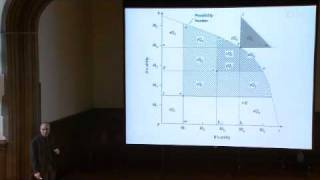
From Classical to Neoclassical Utilitarianism - Moral Foundations of Politics
Explore neoclassical utilitarianism's economic foundations, comparing it with classical utilitarianism. Examine key concepts like Pareto principle and indifference curves, and their implications for redistribution and status quo.

Moral Foundations of Politics - The Trial of Adolf Eichmann and Government Legitimacy
Explore the moral complexities of the Eichmann trial, examining governmental legitimacy and the ethical foundations of political systems through critical analysis and discussion.
Moral Foundations of Politics - Introduction and Course Overview
Introduction to political philosophy course exploring government legitimacy through Enlightenment traditions, anti-Enlightenment thinking, and democratic theory. Covers key concepts and course structure.

Capitalism and Inequality in Aravind Adiga's The White Tiger - Lecture 17
Análisis de "The White Tiger" de Aravind Adiga: desigualdades, corrupción y obstáculos al desarrollo en India. Explora temas como el sistema de castas, la historia religiosa y el espíritu empresarial.

CardioThoracic Systems: A Business Case Study in Medical Innovation
Explore CardioThoracic's business challenges, including competition, customer needs, and stakeholder interests. Analyze market barriers and strategic approaches in the medical device industry.

Introduction to Philosophy of Death - Lecture 1
Explore philosophical questions about death in this Yale lecture, covering metaphysical and value theory aspects. Gain insights into common misconceptions and engage with thought-provoking perspectives on mortality.

New Modes and Orders - Machiavelli's The Prince (Chapters 13-26)
Explore Machiavelli's radical redefinition of virtue and vice in "The Prince," examining his concepts of manliness, fortune, and the ethical dilemmas of political leadership.

Socratic Citizenship: Plato's Crito - Lecture 3
Explore Socratic citizenship through Plato's Crito, examining civil obedience, philosophical reasoning, and the citizen's duty to uphold community laws in ancient Athens and modern contexts.
Socratic Citizenship: Plato's Apology - Introduction to Political Philosophy
Explore Plato's Apology, examining Socrates' defense of philosophy in political life and its implications for free expression and citizenship in ancient Athens.
Death with Shelly Kagan
This course will examine a number of issues that arise once we begin to reflect on our mortality.