The Ghost in the Machine
Explore the nature of mind, consciousness, and reality through an AI perspective, delving into cognitive science concepts and their implications for understanding human intelligence and selfhood.

Qué Vemos Cuando Vemos
Exploración de la percepción y el conocimiento más allá de la dicotomía objetivo-subjetivo, invitando a la responsabilidad en nuestro saber y actuar.
Subjective Thinking Versus Objective Thinking - Lecture 3
Explore materialism, idealism, and the contrast between subjective and objective thinking approaches in philosophical discourse.
What is Science? The Method and Nature of Scientific Truth - Part 2
Explore the scientific method and nature of truth, delving into fundamental concepts that shape our understanding of scientific inquiry and knowledge.
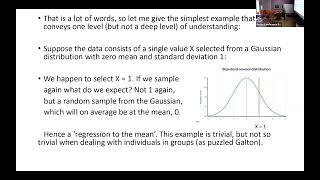
Understanding and Misunderstanding Models - From Linear Regression to Complex Systems
Explore the complexities of scientific modeling, from linear regression to complex systems, examining different levels of understanding and the challenges of explanation in scientific communication.
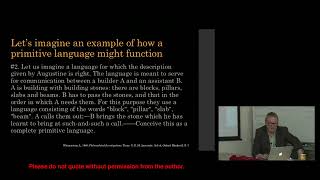
Wittgenstein, Meaning, and the Following of a Rule
Explore Wittgenstein's philosophical perspectives on meaning and rule-following through an in-depth lecture by Prof. Paul Standish from University College London.
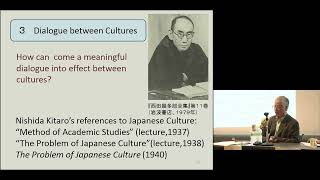
Significance of the Dialogue Between Cultures in the Present Day
Explore Prof. Fujita's insights on bridging cultural divides and fostering cross-cultural dialogue in modern society through epistemological paradigms and human survivability studies.
Idealism Versus Materialism - Lecture 4
Explore the philosophical debate between materialism and idealism, examining subjective and objective thinking approaches in this thought-provoking lecture.

The Philosophy of Architecture
Explore the philosophical underpinnings of software architecture, challenging conventional wisdom and examining why we think and disagree about architectural approaches.
Observing Objects - Revisiting Second-Order Cybernetics
Explore the philosophical intersection of object-oriented and process-oriented ontologies through Glanville's Theory of Objects, examining how observation shapes our understanding of objects and observers.
From Absolute Theories to Creative Experiences - The Many Faces of Interdisciplinarity
Explore how interdisciplinarity transcends problem-solving to offer a holistic understanding of human life, knowledge creation, and complex phenomena like global warming and social inequality.
Using a Myth to Kill a Myth - Cognitive Science and the Myth of the Given in Philosophy of Mind
Delve into philosophical debates around Sellars' "Myth of the Given," exploring cognitive science, mental representation, and the evolution of scientific thinking through expert analysis.
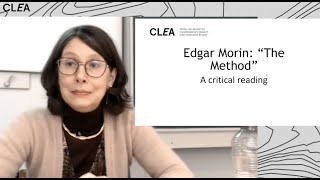
Edgar Morin's The Method: Introduction to Complex Thinking and Critical Analysis
Delve into Edgar Morin's complex philosophical masterwork 'The Method' through an expert analysis of key concepts like dialogic thinking, recursive loops, and constructivist perspectives on reality and perception.
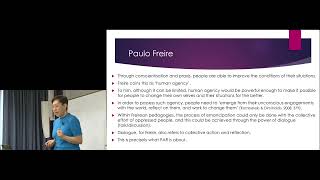
Basic Theory and Methods of Participatory Action Research - Part 2
Explore the theoretical foundations of Participatory Action Research through Paulo Freire's work, feminist perspectives, healing methodologies, and decolonizing approaches to research methodology.
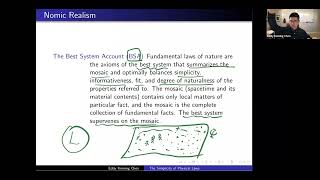
The Simplicity of Physical Laws - Foundations of Physics Seminar
Explore the simplicity of physical laws, their epistemic significance, and implications for Humean and non-Humean perspectives in this philosophical seminar on fundamental physics.
The Essential Role of Philosophy in Cognitive Neuroscience and Psychology
Explore the crucial intersection of philosophy with cognitive neuroscience and psychology, gaining insights into interdisciplinary research and scientific inquiry.
How to Benefit from Uncertainty: An Introduction to Paraconsistent Bayesian Update
Explore how paraconsistent and paracomplete logics enhance Bayesian reasoning, offering new approaches to handle contradictory evidence and uncertainty in scientific and AI applications.
Why Enactivism Entails the Acceptance of Cultural Relativity
Explore the philosophical intersection of enactivism and cultural relativity, examining how context shapes mind and meaning through detailed analysis of Sapir-Whorf hypothesis and enactive cognition principles.
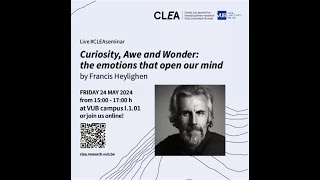
Curiosity, Awe and Wonder - The Emotions That Open Our Mind
Explore how curiosity, awe, and wonder shape our understanding of the universe, driving scientific progress and cognitive growth through emotional engagement with vast, mysterious phenomena and infinite potential.

The Language You’re Fluent in — but Forgot How to Hear | Louis VI | TED
Musical ecologist and rapper Louis VI explores how humans are evolutionarily hardwired to nature's sonic language, like birdsong signaling safety, but modern life has drowned it out. He discusses reconnecting with nature's "chorus of aliveness" and performs an original song incorporating rainforest recordings from the Amazon and Caribbean.

Melancholia jako siła | Marianna Kniat | TEDxWarsaw Youth
Może smutek wcale nie jest wrogiem? Melancholia, często utożsamiana ze słabością, może stać się przestrzenią siły – źródłem wrażliwości, twórczości i głębokiego rozumienia siebie. Marianna opowiada, jak melancholia ukształtowała jej twórczość i życie oraz pokazuje, w jaki sposób to, co wydaje się k