
Feeling the Heat: The Climate and Health Challenge
Experts discuss climate change's dire health impacts, emphasizing equity and resilience-building to address environmental injustice and protect vulnerable populations from escalating threats.

Reinvigorating Clinical Trials - Modernizing Research for Faster, Safer Therapies
Exploring innovative approaches to modernize clinical trials, including biomarkers, genetic testing, and AI, to accelerate therapy development while maintaining rigor, safety, and public trust.
Going Viral - Origin Stories of Passion in the Sciences
Renowned scientists share personal stories of how they discovered their passion for science, exploring the intersections of scientific discovery and storytelling in this unique dialogue.

The Awakened Brain - The Neuroscience of Health, Healing, and Resilience
Explore groundbreaking research on spirituality's impact on brain function, health, and resilience. Learn practical tools for navigating life's challenges and cultivating an inspired, awakened existence.

Hunting the Next Virus: Preventing Future Pandemics
Explore viral threats, human-animal interactions, and pandemic prevention strategies with virologist Nathan Wolfe. Learn about early detection, sustainability, and the importance of global preparedness.

The Second Antibiotic Era
Explore the future of antibiotics and global health with journalist Maryn McKenna as she discusses the challenges and potential solutions in the fight against antibiotic resistance.
Staph Aureus Quick Review - Microbiology and Infectious Diseases
Comprehensive overview of Staphylococcus aureus, covering its microbiology, pathogenesis, clinical manifestations, diagnosis, and treatment strategies for infectious disease management.
Staphylococcus Aureus Mnemonics - Microbiology and Infectious Diseases
Mnemonics for Staphylococcus aureus infections, covering food poisoning, skin infections, osteomyelitis, pneumonia, scalded skin syndrome, and toxic shock syndrome. Aids medical students in memorizing key concepts.

Staphylococcus Aureus Lab - Diagnosis and Treatment - Microbiology and Infectious Diseases
Comprehensive overview of Staphylococcus aureus laboratory diagnosis and treatment methods, covering gram staining, culture techniques, and antibiotic options for healthcare professionals and students.
Staphylococcus Aureus Diseases - Skin, Toxic Shock Syndrome, Food Poisoning - Microbiology
Comprehensive overview of Staphylococcus aureus-related diseases, including skin infections, toxic shock syndrome, and food poisoning. Covers pathogenesis, symptoms, and clinical implications for healthcare professionals.
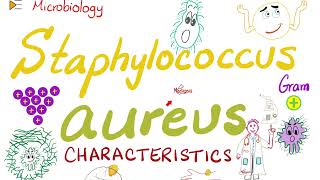
Staphylococcus Aureus Characteristics - Microbiology and Infectious Diseases
Comprehensive overview of Staphylococcus aureus, covering its microbiological features and role in infectious diseases. Ideal for medical students and healthcare professionals.

Picmonic Microbiology - Moraxella Catarrhalis, Neisseria Gonorrheae, Neisseria Meningitidis
Comprehensive overview of Moraxella catarrhalis, Neisseria gonorrheae, and Neisseria meningitidis, covering key characteristics, pathogenesis, clinical presentations, and treatment approaches for these important bacterial pathogens.
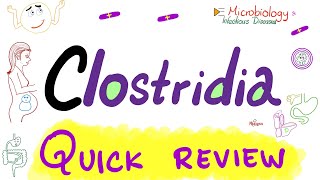
Clostridium Bacteria Review - Difficile, Perfringens, Tetani, and Botulinum
Comprehensive review of Clostridium bacteria, covering difficile, perfringens, tetani, and botulinum. Explores microbiology, infectious diseases, and clinical implications of these important pathogens.
Microbiology with Picmonic - Shigella, EHEC, HUS, Yersinia Enterocolitica & Pestis
Explore key bacterial pathogens: Shigella, EHEC, and Yersinia species. Learn about their characteristics, associated diseases, and clinical implications in this comprehensive microbiology lecture.
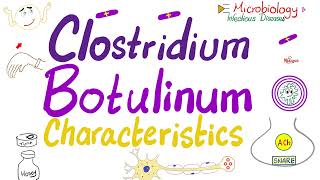
Clostridium Botulinum Characteristics - Microbiology and Infectious Diseases
Explore Clostridium botulinum's characteristics, its role in botulism, and the mechanism of botulinum toxin in inhibiting acetylcholine release, causing flaccid paralysis.
Clostridium Tetani Characteristics - Tetanospasmin- Paralysis - Microbiology and Infectious Disease
Explore Clostridium tetani's characteristics, tetanospasmin's role in causing spastic paralysis, and its impact on infectious disease. Gain insights into this gram-positive rod's pathogenesis and clinical significance.
Gram-Positive Cocci - Quick Review - Microbiology and Infectious Diseases
Comprehensive review of gram-positive cocci bacteria, covering key aspects for medical exams. Focuses on bacteriology, infectious diseases, and clinical relevance for healthcare professionals.
Streptococcus Pneumoniae Diagnosis and Treatment - Microbiology and Infectious Diseases
Comprehensive overview of pneumococcal infection diagnosis and management, covering clinical presentation, laboratory tests, and treatment strategies for various manifestations.
Streptococcus Pneumoniae - Microbiology and Infectious Diseases
Comprehensive overview of Streptococcus pneumoniae, covering microbiology, clinical features, diagnosis, and treatment. Ideal for medical students preparing for USMLE, NCLEX, and other exams.
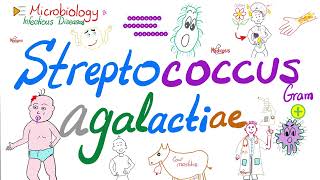
Streptococcus Agalactiae - Neonatal Meningitis, Sepsis, Pneumonia
Comprehensive overview of Streptococcus agalactiae, focusing on its role in neonatal infections like meningitis, sepsis, and pneumonia. Explores pathogenesis, diagnosis, and treatment strategies.
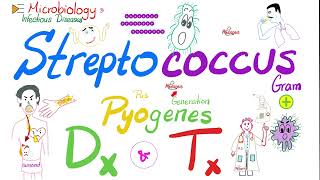
Streptococcus Pyogenes Diagnosis and Treatment - Microbiology and Infectious Diseases
Comprehensive overview of Streptococcus pyogenes, covering diagnosis methods and treatment options for this beta-hemolytic bacterium. Ideal for medical students and healthcare professionals.