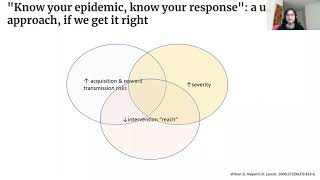
Do No Harm - Terminology, Assumptions, and Interpretation of Epidemic Models in Communities Most Affected
Exploring ethical considerations in epidemic modeling, focusing on terminology, assumptions, and interpretation to avoid stigmatization and promote equitable public health responses.

What the Numbers Say: Delta and the Classroom
Experts discuss Delta variant's impact on classrooms, examining statistics, ventilation, outbreak protocols, and safety measures for unvaccinated children as schools reopen amid the fourth wave.
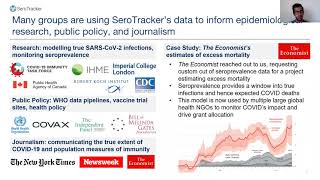
SARA-CoV-2 Seroprevalence Studies for Immunity Modelling
Explore SARS-CoV-2 seroprevalence studies, their impact on immunity modeling, and key considerations in data analysis and interpretation.
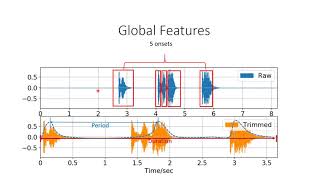
Exploring Automatic Diagnosis of COVID-19 from Crowdsourced Respiratory Sound
Explore automatic COVID-19 diagnosis using crowdsourced respiratory sounds. Learn about data collection, symptom correlation, and detection techniques in this cutting-edge research presentation.
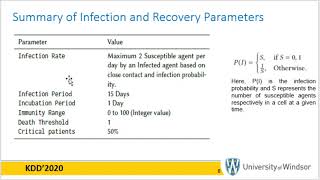
Simulating the Impact of Hospital Capacity and Social Isolation to Minimize the Propagation of Infectious Diseases
Explore simulation models for infectious disease spread, examining hospital capacity and social isolation impacts. Learn strategies to minimize propagation through agent-based modeling and experimental analysis.

An Overview of Fungal Infections
Learn about various fungal infections, their classifications, risk factors, and diagnostic approaches. Explore superficial, mucocutaneous, deep primary, and opportunistic infections caused by different fungi.
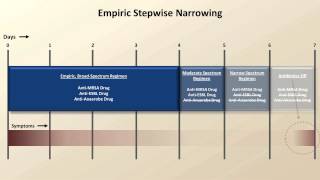
Treatment Duration, Pre-Procedure Prophylaxis, and Antibiotic Lock Therapy
Learn about antibiotic treatment duration, pre-procedure prophylaxis, and antibiotic lock therapy in this comprehensive lecture covering final topics in antibiotic management.

What the Numbers Say - How Can We Get to a Safer Summer?
Experts discuss COVID-19 modelling, public health measures, and strategies for controlling the pandemic in Ontario, offering insights on how to achieve a safer summer through data-driven approaches.
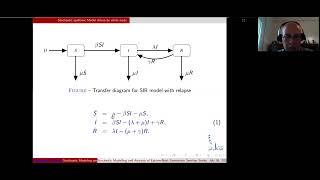
Stochastic Modeling and Analysis for Epidemic Models With Loss of Immunity
Explore stochastic modeling techniques for epidemic analysis, focusing on scenarios involving loss of immunity. Gain insights into advanced mathematical approaches for disease spread prediction.
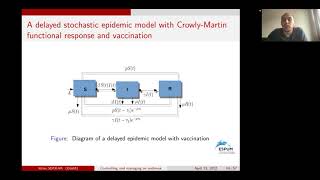
Controlling and Managing an Infectious Disease Outbreak - Stochastic Mathematical Modelling Approach
Explore stochastic mathematical modeling for infectious disease outbreak control and management, focusing on innovative approaches and practical applications in epidemiology.
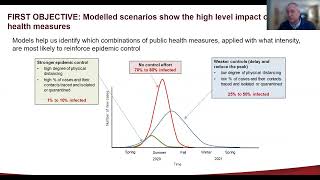
Predicting What Comes Next: Modelling the COVID-19 Epidemic
Explore mathematical modeling techniques for predicting COVID-19 epidemic trends and future scenarios, with insights from public health experts.
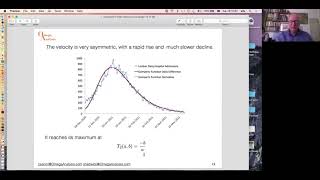
Predicting the Course of Covid-19
Explore mathematical models for predicting COVID-19 trends, analyzing data patterns, and discussing implications for public health strategies and decision-making.
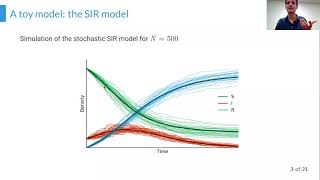
A General Stochastic Framework for Modeling the Spread of Complex Diseases
Explore a stochastic framework for modeling complex disease spread, examining mathematical approaches to understand and predict epidemic dynamics.

Mathematical Modeling of Pandemics, COVID-19, and Social Consequences Across the Americas
Explore mathematical modeling of pandemics, focusing on COVID-19's impact and social consequences in the Americas with experts from University of Miami and Princeton University.
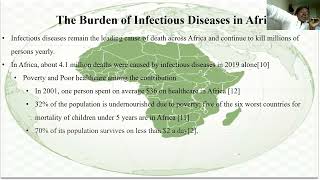
Tutorial Lecture Series on Infectious Diseases Affecting Africa - Part 1
Comprehensive overview of infectious diseases in Africa, focusing on epidemiology, transmission dynamics, and control strategies for major health challenges affecting the continent.

Malware Evolution Epidemiology
Explore the fascinating world of malware evolution through an epidemiological lens, uncovering patterns and trends in cyber threats and their propagation.

Understanding COVID Testing and Prevention: View from a Primary Care Physician
Insights on COVID-19 testing and prevention from a Harvard-affiliated primary care physician, covering real-world experiences, vaccine information, and addressing audience questions.

Metronidazole - Antibiotic Mechanism of Action
Comprehensive exploration of metronidazole's mechanism of action, covering its definition, role of ferredoxin, and chemical reactions involved in this antibiotic's effectiveness against infections.
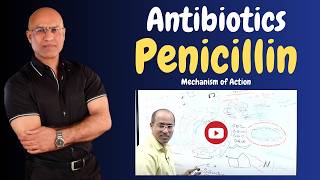
Penicillin - Mechanism of Action and Pharmacology
Comprehensive exploration of penicillin's history, mechanism, uses, and clinical significance. Covers discovery, types, spectrum of activity, and resistance, providing valuable insights for medical professionals and students.
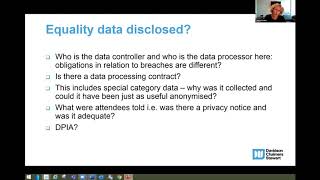
Technological and Privacy Challenges in the COVID-19 Era
Laura Irvine discusses technological and privacy challenges in the COVID-19 era, drawing on her expertise in data protection and information law to explore implications for both public and private sectors.

HIV-AIDS - Symptoms and Treatment - Part 5
Comprehensive overview of HIV/AIDS symptoms and treatment options, covering key aspects of disease progression and management strategies for healthcare professionals and students.