
Leveraging Influence Against Climate Change
Explore how influencers, celebrities, and religious leaders can effectively raise climate change awareness and inspire action through local languages and cultural connections.

Earth and Mars - One Wet, One Dry - Why the Difference?
Explore the divergent paths of Earth and Mars, from their similar beginnings to their vastly different present states, uncovering the factors behind their contrasting evolutions.
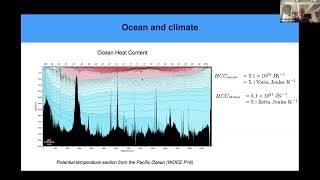
The Abyssal Ocean: Its Dynamics and Role in Climate
Explore the dynamics and climate impact of the abyssal ocean with Prof. Raffaele Ferrari, delving into deep-sea processes and their global significance.
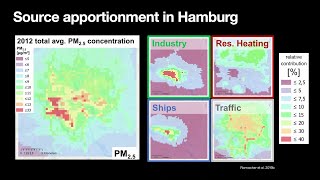
Numerical Air Quality Modeling Systems: From Emissions to Exposure
Exploring high-performance computing in air pollution modeling, from emissions to human exposure. Insights into data challenges, scientific approaches, and policy implications for addressing this global health threat.
A Data-Driven Future for Atmospheric Chemistry, Wildfires, Climate, and Society
Explore data-driven approaches in atmospheric science, focusing on ML models for global chemistry, air pollution sensor networks, and prescribed fire modeling to address climate change and wildfires.
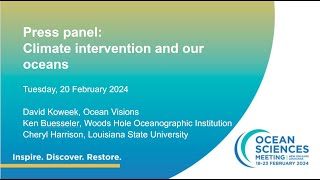
Climate Interventions and Our Oceans - Ask Us Anything
Experts discuss ocean-based climate interventions, including carbon dioxide removal strategies, exploring potential benefits, risks, and regulatory considerations for future oceanic impacts.
Setting the PACE: Scientists Investigate Oceans with New NASA Satellite
Scientists discuss PACE satellite's potential to revolutionize ocean ecosystem monitoring, from studying plankton to identifying harmful algal blooms, using advanced space-based measurements of ocean color.
Discovering the Hidden Secrets of the Ocean - New Era of Ocean Exploration
Explore the ocean's hidden secrets with cutting-edge technology, uncovering new ecosystems, mapping the seafloor, and livestreaming deep-sea discoveries. Learn about innovative marine research and its global impact.
Beyond Greenwashing - Embracing Impact-Based Innovations for Climate Action
Legal Technologist explores impact-based innovations to combat climate crisis, emphasizing legal frameworks, technology, and sustainable practices for genuine environmental sustainability.
The Fingerprint of Environmental Change in the Aeolian Sedimentary Record
Explore how aeolian sedimentary systems record environmental changes, using field, remote-sensing, and modeling approaches to reconstruct past desert environments and predict future responses to climate change.
Advent of the Anthropocene Epoch - Quantifying Drivers and Impacts Since 1950 CE
Explores the Anthropocene epoch's onset around 1950, examining human energy consumption, population growth, and their profound impacts on Earth's systems and stratigraphic record.
Limestones: An Essential User Guide to Sediments That Dissolve, Precipitate and Grow
Explore limestone formation, importance, and applications in climate studies and sustainable solutions. Learn about carbonate sedimentology's role in understanding Earth's history and future environmental challenges.
Teaching Glaciers and Glaciation with AntarcticGlaciers.org - Resources for High School and College Educators
Explore AntarcticGlaciers.org, a comprehensive resource for teaching glaciers and glaciation. Learn how to utilize its content, case studies, and activities to enhance your lessons for high school and college students.

Ecosystem Jenga - What Tiny Fossils Tell Us About a Massive Extinction
Explore the dinosaur extinction debate through microfossil research in Saskatchewan, examining the role of the bolide impact and its implications for understanding modern climate change.
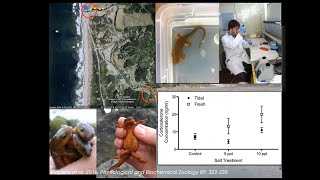
From Salty Salamanders to Bright Bugs - An Evolutionary Perspective on Life in Stressful Environments
Explore rapid evolution in response to environmental stressors like light pollution and water salinization, and its implications for species survival in human-altered ecosystems.
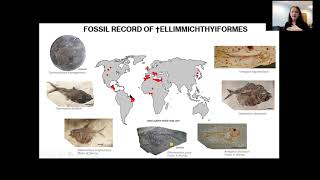
The Fossil Record and Evolution of the Modern Herring - An Evolutionary Success Story
Explore the 130-million-year journey of herrings and related species, from their origins to becoming one of today's most abundant fish groups, surviving extinctions and climate changes.

The North Remembers - Ice Age Fossil Finds from Medicine Hat, Alberta
Explore Alberta's Ice Age fossils, including Canada's only Smilodon fatalis specimen, and discover the rich Pleistocene record beyond dinosaurs in this fascinating paleontological journey.
What Does the Sedimentary Record Tell Us About the Future of Rivers?
Explore how river sedimentary facies serve as proxies for past precipitation patterns, offering insights into future climate-driven changes in river systems.
The Potential of Fluvial Carbonates as Archives of Climate and Environmental Conditions
Exploring fluvial carbonates as sensitive indicators of past climate and environmental conditions, comparing present and past records from various basins to uncover high-resolution multiproxy data.
Paleotempestology - Using Sedimentary Deposits to Reconstruct Storm Impacts over Millennial Timescale
Explore paleotempestology: learn how sedimentary deposits reveal long-term storm impacts and climate patterns, offering insights beyond short-term instrumental records.
Reef Carbonate Production and Measuring Reef-Derived Sediment Generation Rates
Explore recent research on coral reef carbonate production, ecological impacts on reef growth, and challenges in quantifying sediment generation rates for reef-building and coastal environments.