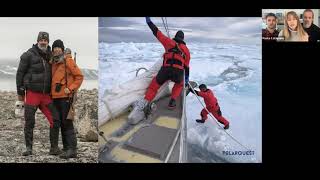
The Scientific Expedition Polarquest 2021 - Save the Arctic White
Expedition to Svalbard's uncharted waters explores Arctic ecosystems and climate change impacts through innovative mapping and sampling techniques, providing crucial data on biodiversity and environmental changes.

Physics for Society - Addressing Climate and Energy Challenges
Explore how physicists can contribute to addressing societal challenges through cross-disciplinary collaborations, focusing on issues like climate and energy.
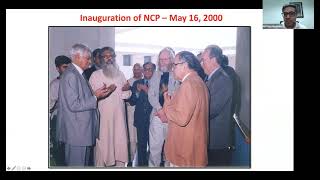
Physics Matters - Fluid Dynamics of Wildfires
Explore the fluid dynamics of wildfires, their environmental impact, and how Computational Fluid Dynamics can model and potentially prevent these destructive natural phenomena.

Aspect Ratio Affects Iceberg Melting - Physical Review Journal Club
Explore how iceberg shape influences melting rates in this insightful discussion with researchers, featuring presentation of results and audience Q&A.
Tackling Climate Change with Open Source and Data-Driven Technology
Explore how open-source and data-driven tech combat climate change through Digital MRV. Learn about edge computing applications and see a live demo of innovative solutions.
Seeding Environmental Sustainability Into the Cloud Native Community
Explore the CNCF Environmental Sustainability Working Group's mission to integrate eco-friendly practices in cloud-native systems, addressing growing computing power demands and fostering a sustainable digital future.
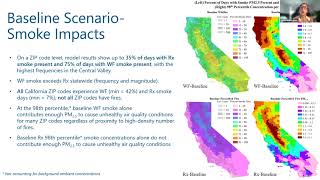
Igniting Early Career Wildfire Studies
Explore cutting-edge wildfire research and career opportunities in this engaging session for early-career scientists interested in fire ecology and management.
Climate Change and Wildfire Risk: Statistical Analysis of Fire Weather in Northern Colorado
Explore statistical analysis of Fire Weather Index data to understand climate's impact on wildfire risk in Colorado, examining factors like heat, humidity, and human activity.
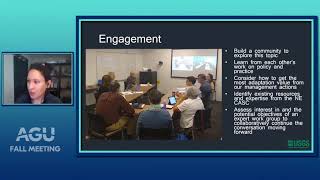
Anticipate and Adapt: Protecting Natural Resources Under Extreme Rainfall
Explore techniques for engaging resource managers, extreme precipitation research, climate adaptation co-production, and decision support activities in the Midwest and Northeast U.S. amid increasing heavy rainfall events.
Earth System Perspectives Inspired by Carl Sagan - AGU Lecture
Explore Earth system perspectives inspired by Carl Sagan's work in this lecture featuring expert discussions, Q&A, and an early career panel, honoring Sagan's contributions to astrobiology and science education.
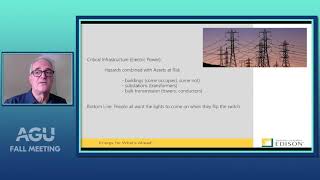
Implementing AGU's "Science for Solutions" to Address Societal Problems
Exploring strategies to apply scientific discoveries to societal challenges, focusing on collaboration with stakeholders and increasing diversity in geosciences for effective problem-solving.
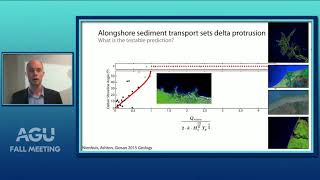
Testing Morphodynamic Theories by Comparing and Contrasting River Deltas
Explore coastal dynamics and river delta morphology, examining the impact of waves, tides, and fluvial forces on delta formation and future changes due to human activities and sea-level rise.
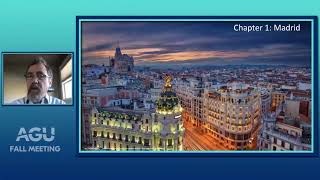
Revisiting the IPCC's "Discernible Human Influence" Finding - History and Lessons Learned
Explores the 1995 IPCC conclusion on human influence on climate, its historical context, subsequent scientific advancements, and personal reflections on lessons learned from this pivotal moment in climate science.
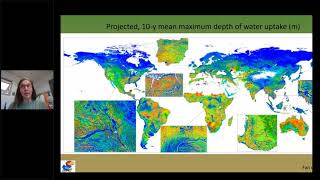
Soil Carbon Sequestration: Increasing Carbon Stocks in Deep Soil - Part 6
Explore strategies for increasing deep soil carbon stocks through historic rooting depth changes and crop breeding, featuring insights from experts on soil development and root characteristics.
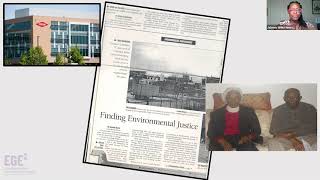
GeoHealth Career Development and Opportunities in Climate Change and Environmental Justice
Dr. White-Newsome discusses transforming communities through people-centered solutions, addressing climate change, public health, environmental justice, and racial equity, with a focus on career development.
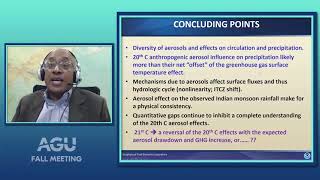
Aerosols and Their Gaming of the Climate System: Microscale Presence to Macroscopic Impacts
Exploring aerosols' impact on climate: from microscopic presence to macroscopic effects. Delves into how these tiny particles influence global climate systems and atmospheric dynamics.
COVID-19 and the Earth System
Explore the impacts of COVID-19 mitigation strategies on emissions, the Earth System, and virus dynamics. Learn about research efforts examining these complex interactions.
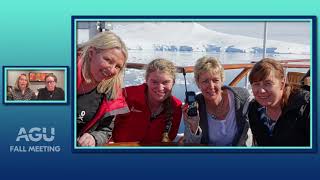
Hearts in the Ice - Climate Change Engagement Project in Spitzbergen
Explore the Hearts in the Ice project, connecting global efforts to address climate change through on-site research in Spitzbergen and engaging diverse stakeholders in Earth science communication.
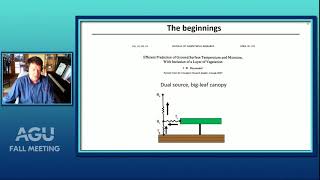
Seeing the Forest for the Trees: Forests, Climate Change, and Our Future
Explores the complex relationship between forests and climate change, tracing historical perspectives and advocating for an interdisciplinary approach to understand and address forest-climate interactions.
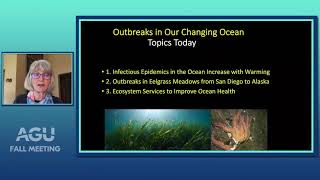
Oceanic Pandemics from Foundation to Keystone Species
Explore oceanic disease outbreaks affecting marine ecosystems, their impact on keystone species, and innovative monitoring techniques. Learn about nature-based solutions for pathogen reduction.
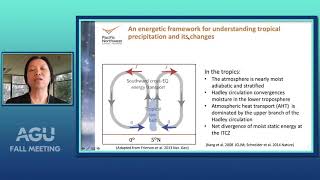
A Quest to Understand and Model Regional Precipitation and Their Future Changes
Explores precipitation from weather and climate perspectives, examining energetic frameworks, aerosol impacts, and extreme events to advance understanding and modeling of regional rainfall patterns and future changes.