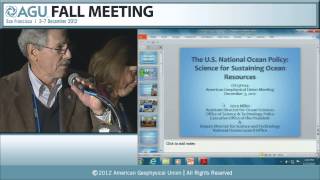
Sustainable Oceans - Fall Meeting 2012
Explore sustainable ocean management strategies addressing climate impacts, human health, pollution, and resource use. Gain insights on coastal ecosystem resilience and policy approaches for a changing Arctic environment.
Ocean Acidification - Impacts, Challenges, and Policy Responses
Experts discuss ocean acidification's impacts on ecosystems, economy, and society, exploring mitigation strategies and policy implications for addressing this critical environmental challenge.
Water Management Strategies for Sustainable Resources - Science Policy Conference 2012
Experts discuss strategies for managing water resources, addressing challenges in infrastructure, and balancing water needs for agriculture, industry, and human consumption.
Decreasing the Economic Toll of Disasters - Science Policy Conference 2012
Experts discuss strategies to mitigate the rising economic impact of natural disasters, emphasizing risk understanding, data analysis, and protective measures for people and property.
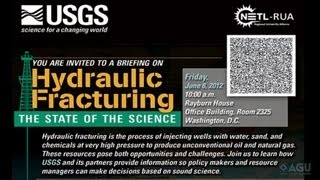
Hydraulic Fracturing - The State of the Science
Explore the science, opportunities, and challenges of hydraulic fracturing with experts from USGS and partners. Learn about unconventional oil and gas resources and their impact on policy and resource management.
From the Mississippi to the Gulf - Water Quality and Security
Experts discuss water quality issues from the Mississippi River to the Gulf of Mexico, including the aftermath of the Deepwater Horizon oil spill and strategies for monitoring and protecting vital waterways.
The Climate Canary: Measuring Change on Antarctica's Pine Island Glacier
Explore Antarctica's Pine Island Glacier, its role as a climate indicator, and methods for measuring glacial change. Learn about ice dynamics, mass balance, and global implications through expert insights and hands-on activities.
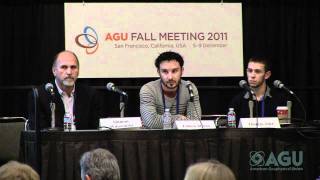
Weather's Influence on Earthquakes - Press Conference
Explore the intriguing connection between weather patterns and seismic activity, featuring insights from experts on monsoons, icecap retreat, and their potential impact on earthquake occurrence.
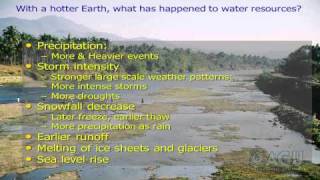
Climate Change: What's Going On and How Will It Affect Us
Explore the science behind climate change, its impacts on Earth systems, and potential future scenarios. Learn about evidence, models, and strategies for addressing this global challenge.
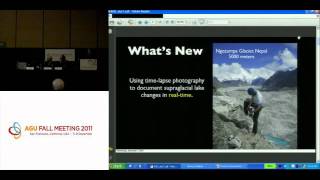
Mountain Glaciers - Dramatic Changes Caught on Film
Time-lapse photography reveals rapid changes in Nepalese glacier lakes, while studies show peak water reached for Western Hemisphere glaciers and concerning predictions for Canadian glaciers.
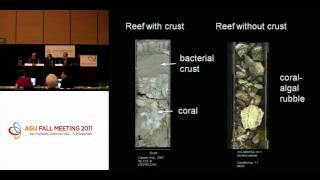
Ocean Acidification Impact on Coral Reefs - Press Conference
Experts discuss ocean acidification's impact on coral reefs, examining natural occurrences, lab simulations, and historical data to understand mechanisms and ecosystem vulnerability.

The Great Mississippi Flood of 2011 - Scientific Findings and Impacts
Explore the impacts of the 2011 Mississippi River flood on sediment distribution and ecosystem restoration efforts, with insights from researchers tracking nutrient movements and assessing restoration strategies.
Ecological Impacts of the Deepwater Horizon Oil Spill - 2011 AGU Fall Meeting
Researchers discuss long-term effects of Deepwater Horizon oil spill on Gulf ecosystems, including heavy metal contamination in oysters, impacts on coastal marshes, and changes in bacterial populations.
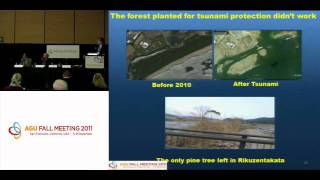
The 11 March 2011 Japan Tsunami - New Insights and Impacts - Press Conference
Insights from the 2011 Japan tsunami: wave behavior, coastal impacts, and global effects. Scientists discuss new findings on tsunami dynamics, damage patterns, and ecological consequences.
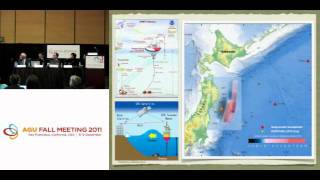
The 11 March 2011 Japan Tsunami - Scientific Assessments and Implications - Press Conference 1
Scientists discuss tsunami forecasting, eyewitness video analysis, and risk awareness implications following the 2011 Japan tsunami. Experts explore lessons for future preparedness and Pacific Northwest seismic risks.
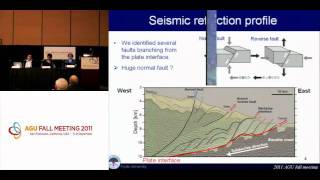
New Views of Japan's 11 March 2011 Tohoku Megaquake
Researchers reveal significant sea-floor changes and unique aspects of the 2011 Tohoku megaquake through submersible dives and seismic imaging, offering new insights into its dual nature and underlying geological factors.
Nonlinear and Scaling Processes in the Atmosphere and Ocean at All Scales
Explore cutting-edge research on nonlinear and scaling processes in atmospheric and oceanic systems, covering climate reconstructions, sensitivity, long-range memory, megadroughts, turbulence, and micro-scale phenomena.
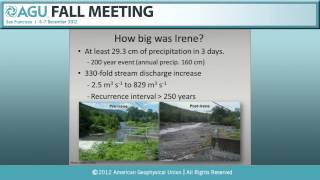
Impacts of Extreme Climate Events and Disturbances on Carbon Dynamics - Part 2
Explore how extreme climate events and disturbances affect carbon dynamics in ecosystems. Analyze impacts of droughts, fires, and other environmental factors on carbon fluxes and forest health across various regions.
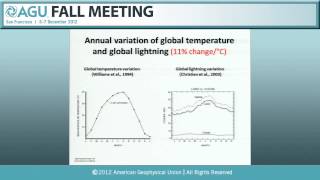
Lightning and Climate - Franklin Lecture 2012
Exploring lightning's role in climate change, its correlation with temperature and water vapor, and its potential as a climate indicator. Discusses challenges in long-term monitoring and the impact of aerosols on lightning activity.
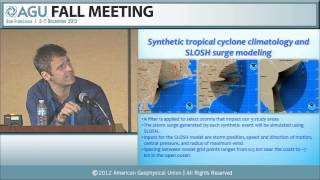
Living on the Edge: Societies on the Front Line of Coastal Change - 2012
Explore coastal resilience strategies, storm surge simulations, and socioeconomic impacts of sea-level rise. Experts discuss innovative approaches to address challenges facing coastal communities worldwide.
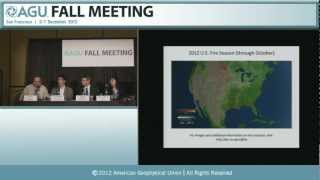
Fire in a Changing Climate and What We Can Do About It
Experts discuss recent trends in U.S. fire activity, climate projections, and potential changes in fire seasons across regions, offering insights into the relationship between climate change and wildfires.