
Building Industry 4.0 Logistics Applications with MicroPython and ESP32 MCUs
Explore how MicroPython and ESP32 MCUs can create innovative Industry 4.0 logistics solutions, focusing on a forklift hailing application. Learn about prototyping, deployment, and live demonstration.

The World's Cheapest, Simplest Plotter
Learn to build an ultra-cheap plotter using a Raspberry Pi Zero, servo motors, and everyday materials. Explore Python-driven robotics with minimal resources and skills, ideal for education and introducing young people to programming.
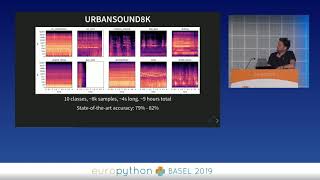
Audio Classification with Machine Learning
Learn to build practical machine learning models for audio classification using spectrograms, CNNs, and techniques like transfer learning and data augmentation with Keras and TensorFlow.
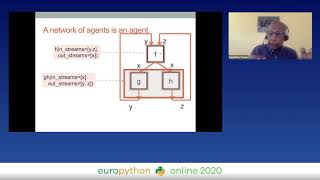
IoTPy - Python + Streams + Agents for Streaming Applications
Explore IoTPy for building concurrent, non-terminating streaming applications in Python, leveraging existing libraries for data analysis and distributed systems.
Interactive Mapmaking with Python
Explore interactive mapmaking using Python and GeoDataframes. Learn to create visually appealing maps with libraries like Folium, Kepler.gl, and Plotly, and discover Geopatra for simplified geodata visualization.
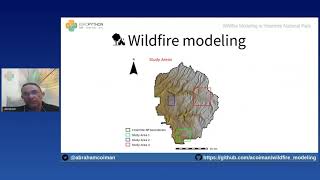
Wildfire Modeling in Yosemite National Park
Explore wildfire simulation in Yosemite using GRASS GIS and Python libraries. Learn to obtain geospatial data, model fire behavior, and create interactive maps with Google Earth Engine and Jupyter Notebook.
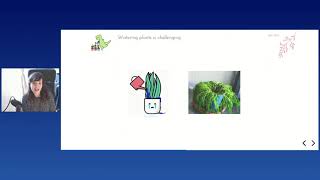
DIY Home Automation with Microcontrollers and CircuitPython
Explore DIY home automation using microcontrollers and CircuitPython. Learn key concepts, use emulators, and see real projects like a robot cleaner and plant monitoring system.
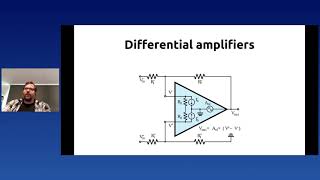
Heartbeats for Hackers
Explore electrocardiography, from heart basics to building an ECG with Arduino. Learn data analysis and machine learning techniques for heart data interpretation.
Predicting Urban Heat Islands in Calgary
Learn to predict urban heat islands using satellite imagery and geospatial Python libraries. Explore spatial regression methods, data processing, and visualization techniques for sustainable urban planning.
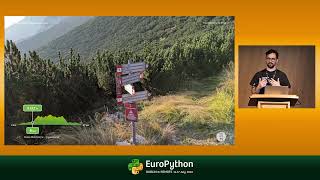
Maps with Django
Learn to create interactive web maps using Django's GeoDjango module, from simple Spatialite-based maps to complex PostGIS-powered solutions, without relying on external services.
Saving Lives with Predictive Geo - AI
Explore geospatial Python libraries for Multi-Criteria Decision making, including imagery dataset processing, overlay analysis, and zonal statistics. Learn to create intuitive geo-visualization portals using vector tiles.
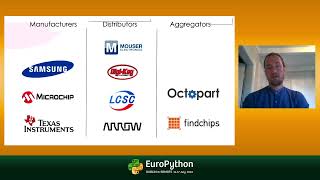
From Circuit Board Design to Finished Product - The Hobbyist’s Guide to Hardware Manufacturing
Comprehensive guide to hardware manufacturing: from PCB design to component selection, assembly, and software integration. Learn from real-world experiences in creating a programmable gamepad for IoT workshops.
Working with Audio in Python - feat. Pedalboard
Explore digital audio processing in Python using Pedalboard, a powerful library that simplifies audio manipulation, file handling, and plugin integration for musicians and developers alike.
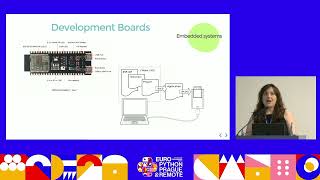
Continue Thinking Small - Next Level Machine Learning with TinyML
Explore TinyML for deploying machine learning on microcontrollers. Learn about hardware options, frameworks, and real-world applications in agriculture, conservation, health, and ecology monitoring.
Vector Data Cubes as a Bridge Between Raster and Vector Worlds
Explore vector data cubes: multi-dimensional arrays with vector geometries. Learn about Xvec, a new Python library built on Xarray, Shapely 2.0, and GeoPandas for efficient geospatial data handling.
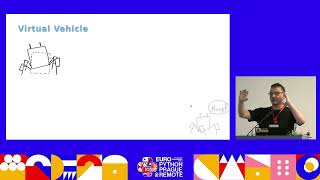
Async Robots
Explore parallel programming for interactive robot control using Python's async features. Learn from experiences with the Fluffbug robot, addressing challenges and solutions in CircuitPython.
We Can Get More from Spatial, GIS, and Public Domain Datasets
Explore spatial data analysis and interpolation techniques using pyinterpolate for insights on rental prices, pollution mapping, and socio-economic factors at various scales.
Spatial Data Analysis in Power BI
Learn to create stunning thematic maps and perform impactful spatial data analysis using Power BI's ArcGIS Maps and MapBox Visual for enhanced data visualization and insights.

Spatial Analysis with SQL Server, R and Power BI
Discover the power of spatial analysis using SQL Server, R, and Power BI. Learn to analyze location-based data, make informed decisions, and create compelling visualizations for real-world applications.
Integrating NICs with Embedded Switches in a Linux Ecosystem
Explore embedded switch features in NICs and their management within Linux environments, focusing on current capabilities and future developments.
Safety Critical Software - Would You Let Linux Drive Your Car
Exploring Linux's potential in safety-critical systems, discussing reliability, traditional approaches, and the challenges of using open-source software in life-dependent applications.