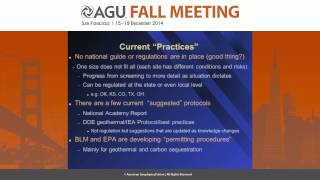
Latest Methods in Best Practices and Mitigation Efforts for Induced Seismicity
Explore cutting-edge techniques for managing and mitigating induced seismicity, focusing on best practices and innovative strategies to minimize earthquake risks associated with human activities.
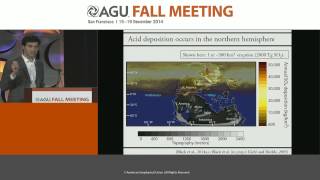
Reconstructing Permian-Triassic Climate during Siberian Traps Magmatism - Lecture U53A-08
Explore climate reconstruction during Siberian Traps magmatism, examining Large Igneous Provinces, volatile budgets, thermal modeling, and CO2 impacts on Permian-Triassic environments.
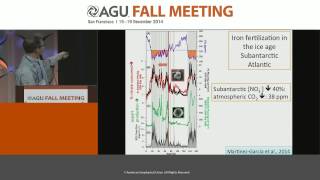
Southern Ocean Biogeochemical Control of Glacial-Interglacial Carbon Dioxide Change
Explore the Southern Ocean's role in glacial/interglacial CO2 fluctuations through Antarctic and subantarctic data analysis, modeling, and deglaciation insights.
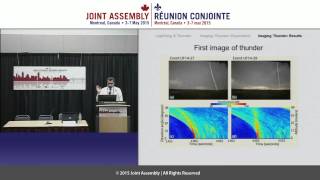
First Images of Thunder - Acoustic Signatures and Lightning Analysis
Explore groundbreaking research on capturing the first images of thunder, including acoustic beamforming techniques and triggered lightning experiments.
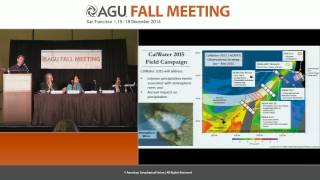
Refilling California's Reservoirs - Fall Meeting 2014 Press Conference
Explore strategies for replenishing California's water reservoirs amid drought conditions, examining innovative solutions and their potential impacts on the state's water security.
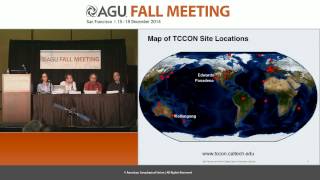
NASA's Orbiting Carbon Observatory Results - Fall Meeting 2014
Discover groundbreaking findings from NASA's Orbiting Carbon Observatory, revealing new insights into global carbon dioxide patterns and their impact on Earth's climate system.
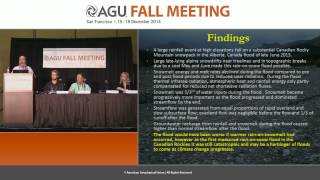
Rain on Snow Floods in a Changing Climate
Explore the impact of climate change on rain-on-snow floods, examining their frequency, intensity, and consequences for water management and ecosystems.
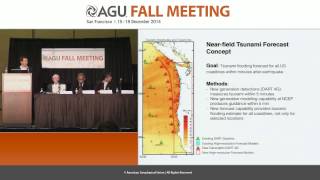
Advances in Tsunami Warning and Forecasting
Explore cutting-edge developments in tsunami prediction and alert systems, enhancing public safety and disaster preparedness through improved forecasting technologies.
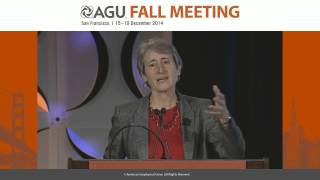
Union Agency Lecture - Climate Change, Data Transparency, and Scientific Integrity
Explore climate change, data transparency, and scientific integrity with Sally Jewell's insights on government agencies, environmental policies, and engaging future generations.
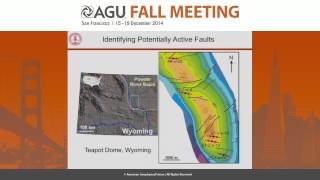
Managing the Risk of Triggered Seismicity - Lecture U34A-05
Learn about triggered seismicity risks, including fault analysis, water injection data, and mitigation strategies like the stoplight system for safer geological operations.
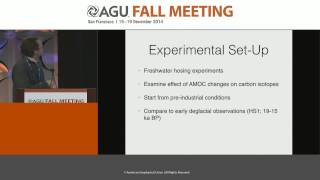
Carbon Isotopes Support Atlantic Meridional Overturning Circulation Decline - Early Deglacial CO2 Rise Trigger
Explore how carbon isotopes provide evidence for Atlantic Meridional Overturning Circulation decline and its role in triggering early deglacial CO2 rise.
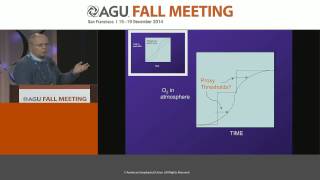
Ocean Ridges and Oxygen: Planetary Fuel Cells and Atmospheric Evolution
Explore ocean ridges' role in Earth's oxygen cycle, from ancient oxidation events to modern atmospheric composition, using schematic reactions and numerical models.
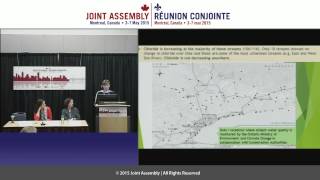
Ontario Water Contamination Study - AGU Joint Assembly 2015
Explore water contamination issues in Ontario, examining causes, impacts, and potential solutions to safeguard public health and environmental integrity.
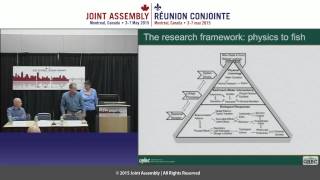
Latest Scientific Results from the Mount Polley Mine Failure
Explore the latest scientific findings from the Mount Polley mine disaster, examining environmental impacts and lessons learned for future mining practices.
The Waters They Are Arising - Sea Level Rise and Climate Change
Rising sea levels and their impacts on coastal communities, ecosystems, and infrastructure. Explores latest research findings and projections for future sea level rise.
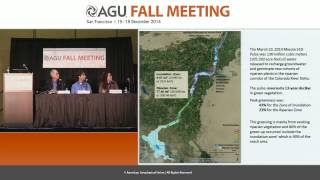
Greening the Colorado River Delta
Explore the ecological restoration efforts in the Colorado River Delta, examining the impact of water releases and conservation initiatives on this vital ecosystem.
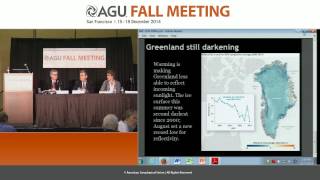
Arctic Report Card 2014 - Fall Meeting Press Conference
Comprehensive analysis of Arctic environmental changes, including sea ice, snow cover, and ecosystem impacts, based on latest scientific data and observations.
The 2014 South Napa Earthquake - Analysis and Impacts
Experts analyze the 2014 South Napa Earthquake, discussing its impact, geological implications, and lessons learned for future seismic preparedness and response strategies.
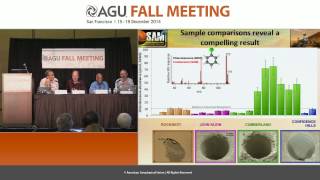
Recent Findings from Curiosity Rover - Mars Exploration Update
Recent findings from Mars Curiosity rover mission, including geological discoveries and atmospheric observations, presented by NASA scientists at AGU Fall Meeting 2014.
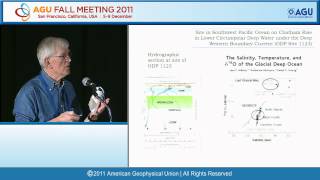
What a Single Celled Organism Can Tell Us About Climate History - A Status Report on Paleocean Proxies
Explore climate history through single-celled organisms in this lecture by Henry Elderfield. Discover paleocean proxies and their role in understanding Earth's past climate changes.
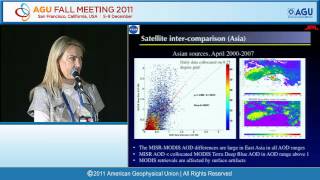
Atmospheric Dust - Interdisciplinary Studies III
Explore interdisciplinary studies on atmospheric dust, examining its impacts, sources, and interactions across various scientific domains. Gain insights into cutting-edge research and findings.