How MS3 Supports 10,000+ Transactions Per Second with Kuma Service Mesh Across VMs and Kubernetes
Explore how MS3 uses Kuma service mesh to handle 10,000+ transactions per second, addressing security and observability across VMs and Kubernetes for efficient cloud-native application delivery.
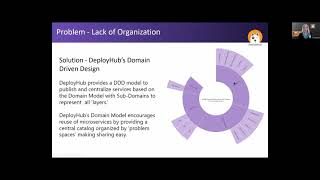
Containing Your Microservice Sprawl
Explore strategies for managing microservice complexity, including domain-driven design, service catalogs, and configuration management to improve organization and visibility.
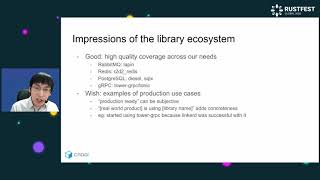
Using Rust in Metal Fabrication
Explore how Rust enhances metal fabrication software, focusing on domain-driven design, enums, compile-time checks, and the library ecosystem. Gain insights on hiring Rust talent for industrial applications.

Domain Driven Design - The Good Parts
Explore key principles of Domain-Driven Design, focusing on practical applications and avoiding common pitfalls. Learn to build quality systems using DDD concepts in modern software development.

Functional Architecture - The Pits of Success
Explore how functional programming naturally leads to best practices in system design, contrasting with object-oriented approaches and highlighting benefits like testability and encapsulation.
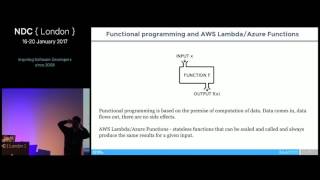
Using AWS Lambda and Azure Functions to Develop Serverless Applications
Explore serverless development with AWS Lambda and Azure Functions, covering deployment pipelines, monitoring, and real-world examples. Gain practical insights and tips for production use.
From Monolith to Serverless
Explore the journey of rewriting a legacy application to AWS serverless, covering challenges, continuous delivery, domain-driven design, and practical tips for deployment and monitoring.
Easy Eventual Consistency with Actor Models + Amazon Web Services
Discover how to achieve strong eventual consistency in distributed systems using actor models and AWS, sidestepping the CAP theorem with simple rules and proven mathematical principles.
Domain Modeling Made Functional
Explore how statically typed functional programming enhances domain modeling, using types to represent business rules and ensure code correctness at compile time, with real-world F# examples.
Domain Modeling Made Functional
Explore domain modeling in functional programming, using types to represent domains, encode business rules, and ensure code correctness at compile time. Learn practical F# examples for effective domain-driven design.

Domain-Driven Design - Hidden Lessons from the Big Blue Book
Uncover hidden insights from Domain-Driven Design for modern digital product development, exploring bounded contexts, core domains, and their impact on team organization and delivery performance.
Implementing Event-Driven Microservices Architecture in Functional Language
Explore event-driven microservices architecture using functional programming, focusing on F#. Learn about domain-driven design, distributed sagas, event sourcing, and evolutionary architecture for scalable web services.
Tackling Complexity in Large-Scale Marketing Systems
Explore DDD's impact on large-scale marketing systems, focusing on strategies for managing complexity, defining context boundaries, and lessons learned from real-world implementation.

Clean Architecture with ASP.NET Core 2.2
Practical guidance on building scalable ASP.NET Core applications using Clean Architecture principles, covering project organization, design strategies, and best practices for maintainable systems.
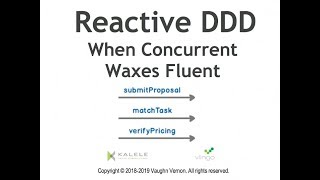
Reactive DDD - When Concurrent Waxes Fluent
Explore Reactive software development for high-performance, scalable solutions. Learn to model business-driven systems with Domain-Driven Design, focusing on fluent, type-safe, and Reactive properties. Guidance on modernizing legacy systems included.
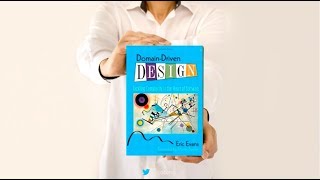
Domain-Driven Design - Hidden Lessons from the Big Blue Book
Explore hidden insights from Domain-Driven Design for modern digital product development, focusing on bounded contexts, core domains, and their impact on team organization and delivery performance.

Getting to DDD - Pragmatic or Principled?
Explore pragmatic approaches to Domain-Driven Design, balancing quick benefits with deeper understanding for evolving software practices and achieving DDD's full potential.
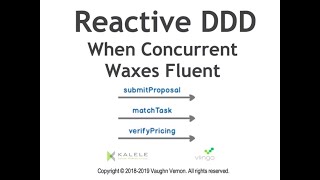
Reactive DDD - When Concurrent Waxes Fluent
Explore Reactive software development for high-performance, scalable solutions. Learn to model business-driven systems with Domain-Driven Design, addressing distribution, concurrency, and latency challenges.
Microservices Without DDD Is Risky Business
Explore how Domain-Driven Design concepts can guide microservices implementation, avoiding distributed monoliths and achieving autonomous, cohesive, and loosely coupled services.
DDD Really Matters
Explore key aspects of Domain-Driven Design, including deep collaboration with domain experts, and discover five essential strategies for achieving excellence in software development.
Laying the Cultural and Technical Foundation for Big Rails
Discover strategies for scaling large Rails applications, including tooling, architecture, and cultural programs to maintain high velocity and manage complexity.