Strategic Domain-Driven Design for Dummies
Practical guide to implementing Domain-Driven Design strategic patterns for improved architecture, team communication, and domain understanding, with techniques to accelerate discovery and overcome challenges.

Accelerating Event-Driven Architecture with Domain-Driven Design
Learn to design and build cloud-native event-driven architectures using domain-driven design. Explore a framework for thinking through, designing, and implementing EDA with practical steps and insights.

Working Effectively with Legacy Code
Insightful discussion on tackling legacy code through testing and refactoring. Experts share strategies for improving code quality, solving real-world problems, and writing clean, maintainable software.

Domain Storytelling
Explore domain storytelling as a collaborative, visual approach to build domain-driven software. Learn how stories can enhance understanding and visualization of project domains from industry experts.

Modern Software Engineering
Explore key insights on modern software engineering practices, focusing on iteration, experimentation, and continuous improvement to enhance your skills and deliver better software.

Principles of Web API Design
Discover key principles for creating effective APIs, including the ADDR process, job stories, and event storming. Learn about minimum viable portals and API boundaries to enhance your API design skills.

So You Want To Be an Actor - Lessons From Implementing The Actor Model
Insights from implementing the Actor Model in production, covering challenges, design decisions, and lessons learned. Explores clustering, persistence, and practical applications of this concurrent programming paradigm.
Architecture Modernization - Aligning Software, Strategy, and Structure
Holistic approach to modernizing legacy architectures by aligning business strategy, product vision, domain boundaries, team organization, and software design for competitive advantage and innovation.

From Domain Boundaries to Software Architecture
Practical guide to mapping business domains, organizing subdomains, and designing loosely-coupled software architecture using Domain-Driven Design techniques like Event Storming and Bounded Context Canvas.
When Customers Don't Share A Language
Explore domain-driven design challenges in creating a healthcare insurance platform for diverse stakeholders. Learn strategies for balancing specificity and genericness in system design.

REST Next Level - Crafting Domain Driven Web APIs
Explore advanced REST techniques for building domain-driven web APIs, enhancing your ability to create robust and scalable API architectures.
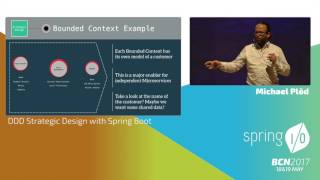
DDD Strategic Design with Spring Boot
Explore strategic DDD concepts like Bounded Context and Context Map, with practical examples using Spring Boot applications for migrating monoliths to microservices.
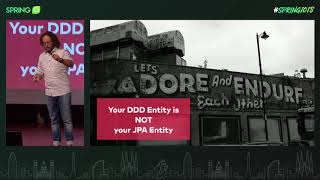
Implementing DDD with the Spring Ecosystem
Explore implementing Domain-Driven Design in microservices using Spring technologies. Learn about Bounded Contexts, Strategic Design, Aggregates, Repositories, and Domain Events with practical code examples.
REST Beyond the Obvious - API Design for Ever Evolving Systems
Explore API design for evolving systems, focusing on REST principles, architectural context, and strategies for creating flexible, durable APIs that can adapt without breaking client functionality.

Getting Modules Right with Domain-Driven Design
Explore Domain-driven Design principles for creating expressive, maintainable domain models and modular applications. Learn strategic and tactical patterns to align business and technical architecture.

The Aggregate Is Dead. Long Live the Aggregate!
Explore alternative modeling approaches to DDD's Aggregate pattern, addressing challenges in consistency and refactoring while maintaining business constraints in system design.
REST Next Level - Crafting Domain-Driven Web APIs
Elevate REST APIs by integrating Domain-Driven Design principles, preserving business intent, and guiding consumers through domain workflows for more expressive and business-oriented web services.
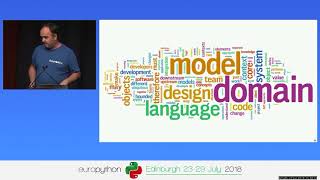
Domain Driven Design Patterns in Python
Explore Domain-Driven Design patterns in Python, learning to model complex domains and implement tactical patterns for robust, maintainable software in large-scale projects.
Working in Units - How to Decouple the Database and Domain Layers in Python
Aprenda a implementar el patrón Unit of Work en Python para separar las capas de dominio y base de datos, mejorando la colaboración entre expertos y desarrolladores.
Domain-Driven Design and Angular
Explore domain-driven design principles for maintainable Angular architecture. Learn strategic and tactical design implementation, using libraries, APIs, facades, and domain events in a monorepo structure.
Sustainable Angular Architecture
Explore strategic Domain-Driven Design for sustainable Angular monorepos. Learn to define criteria, establish communication rules, and implement concepts like bounded contexts and context mapping for large-scale enterprise applications.