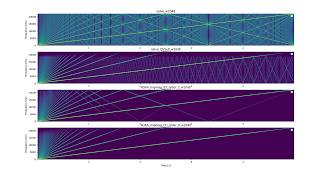
Implementation of an IIR Antiderivative Anti-Aliasing Wavetable Oscillator - Lecture
Explore advanced anti-aliasing techniques for digital audio synthesis, focusing on Antiderivative Anti-Aliasing (ADAA) in wavetable oscillators. Learn implementation, results, and academic research insights.
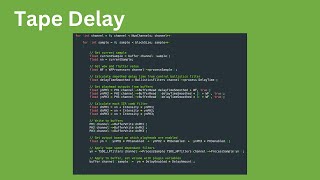
Digital Modelling of the Roland RE-201 - ADC23
Explore digital modelling of the Roland RE-201, analyzing subsystems and challenges in achieving perceptual accuracy in software simulations. Compare various modelling methods for this iconic device.
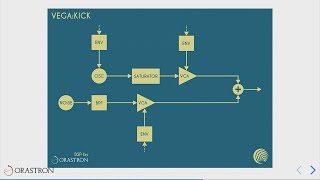
Creating Ubiquitous, Composable, Performant DSP Modules - ADC23
Explore techniques for developing reusable, high-performance DSP modules across platforms. Learn to overcome challenges in creating versatile audio processing algorithms for various applications.
Properties of Chaotic Systems for Audio
Explore chaotic systems for audio generation and transformation. Learn about fixed points, bifurcation, and practical applications with interactive visualizations and code examples.
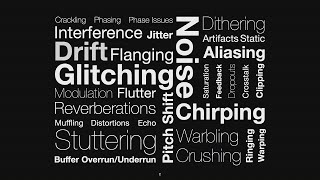
The Sound of Audio Programming - Developing Perfect Glitch - Lecture
Explore common audio programming mistakes, their unique sounds, and techniques to identify and mitigate issues like clipping, discontinuity, aliasing, and buffering problems.
Building a Music Assessment Engine: Requirements, Challenges, and Solutions
Explore requirements, challenges, and solutions for building a music assessment engine, including technical limitations and performance demonstrations on real-life data.
Every Beat Counts - Tempo Sync 101
Explore tempo synchronization in audio plugins, bridging digital audio and musical time. Learn key concepts, real-world implementation, and avoid common pitfalls in this developer-focused guide.
Practical Digital Signal Processing Workshop
Explore digital audio signal processing, from continuous acoustic to discrete digital signals. Learn sampling theory, filtering, and time-frequency domain transformations through practical methods and hands-on exercises.
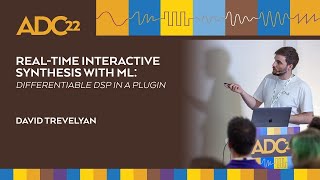
Real-Time Interactive Synthesis with Machine Learning: Differentiable DSP in a Plugin - Lecture
Explore real-time interactive synthesis using machine learning and differentiable DSP. Learn about DDSP implementation, creative expression, testing approaches, and future prospects in audio processing.
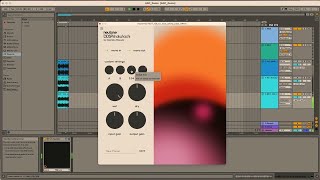
Neutone - Real-time AI Audio Plugin for DAWs
Explore real-time AI audio processing with Neutone plugin. Learn to integrate deep learning models into DAWs, experiment with timbre transfer, and develop innovative audio effects.
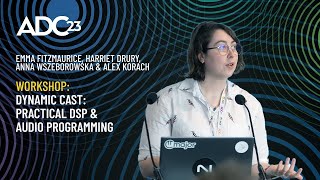
Practical DSP and Audio Programming Workshop: Karplus Strong Synthesis
Explore Karplus Strong Synthesis for physical modeling of plucked instruments. Learn noise generation, delay lines, filters, MIDI messaging, and polyphony using Cmajor platform.
Audio In, MIDI Out: Generating MIDI from Audio Analysis
Explore audio-to-MIDI plugin development, transforming audio input into MIDI events for creative music production workflows. Learn techniques for real-time content analysis and feature extraction.
High-Level Programming of FPGAs for Audio Real-Time Signal Processing Applications
Explore high-level FPGA programming for audio processing using SyFaLa toolchain and Faust language. Learn advantages, applications, and potential in spatial audio and room acoustics control.
LEGOfying Audio DSP Engines
Explore modular approaches to audio DSP development, focusing on code reuse and efficient resource allocation for startups and established companies in the music software industry.

Four Ways to Write a Pitch-Shifter
Explore approaches to pitch-shifting music and time-stretching, from simple overlap-add to FFT-based effects and frequency-domain techniques. Gain insights into designing a polyphonic pitch/time C++ library.
Point to Point Modeling: An Automatic Circuit Solving Library
Explore an automatic circuit solving library for simulating analog audio circuits. Learn to implement and analyze component-level circuits for real-time plugins and mobile apps.
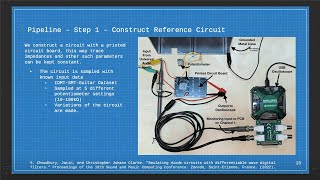
Pipeline for VA Modelling with Physics-Informed Machine Learning
Explore a VA modelling pipeline using Differentiable Wave Digital Filters and neural networks for accurate, real-time circuit modelling, demonstrated with a diode clipper circuit.
Optimizing a Real-Time Audio Processing Library
Optimize real-time audio processing libraries with practical strategies, measurement techniques, and performance-enhancing tricks. Gain tools for confident code optimization across platforms.
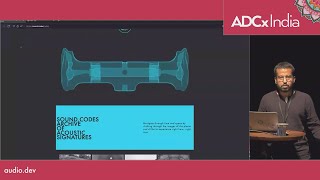
Using Convolution for Archeo-Acoustic Conservation
Explore computational techniques for preserving unique acoustic properties of historical spaces, enhancing heritage conservation through audio technology.
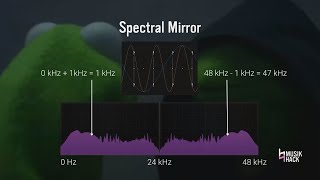
Aliasing and Oversampling for DSP Engineers
Explore aliasing distortion, oversampling techniques, and their impact on audio software development. Learn when and how to implement oversampling effectively.
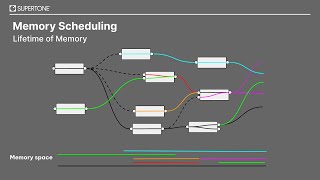
NO MORE CODE: New Graphical Programming Language for Audio Research and Developers
Explore a new graphical programming language bridging AI research and audio software development. Learn about its functional programming concepts, data handling capabilities, and flexible algorithm implementation.