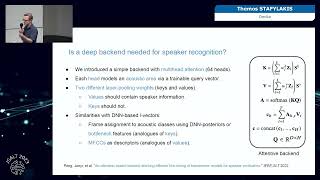
Extracting Speaker and Emotion Information from Self-Supervised Speech Models
Explore techniques for extracting speaker and emotion data from self-supervised speech models, enhancing speech recognition and analysis capabilities.
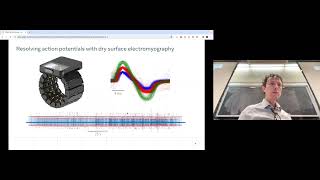
Speech and Audio Processing in Non-Invasive Brain-Computer Interfaces at Meta
Explore non-invasive neural interfaces for AR devices using EMG signals, focusing on speech and audio technologies to enhance human-computer interaction and egocentric machine intelligence.
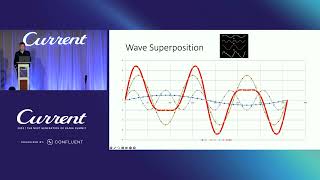
Fast Fourier Transform (FFT) of Time Series in Kafka Streams
Explore digital signal processing with Kafka Streams, transforming time-domain signals to frequency domain using FFT. Learn to build a precise frequency alert system and visualize results in real-time.
Re-interpreting Data - Turning Files into Audio, Images, and Music
Explore unconventional data transformations: hear JPEGs, visualize executables, and convert zip files to music. Learn to manipulate raw bytes and bits in Ruby.

Using Vector Databases with LLMs - Part One
Explore vector databases for LLMs, enhancing audio and visual data processing, recognition, and search capabilities.

Using Vector Databases with LLMs - Part Two
Explore advanced vector database applications for LLMs, enhancing audio/visual recognition and search capabilities.
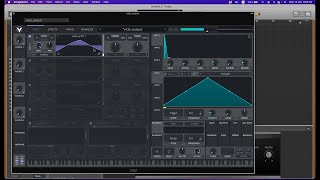
Parameter Inference of Music Synthesizers with Deep Learning
Explore deep learning techniques for parameter inference in music synthesizers, enhancing sound design efficiency and creativity for producers and audio professionals.
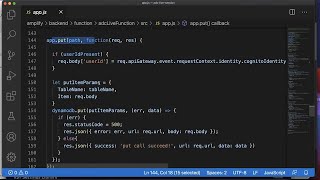
Combining Serverless Functions with Audio VST Plugins - Cloud Storage for VST Parameters
Explore cloud-based VST parameter storage using AWS Amplify, GraphQL, and Cognito. Learn to create a serverless project for accessing and sharing audio settings across devices.
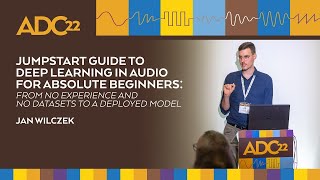
Deep Learning in Audio for Absolute Beginners: From No Experience to a Deployed Model
Jumpstart deep learning in audio: from basics to deploying models. Learn myths, dataset creation, PyTorch training, and real-time plugin deployment for Virtual Analog modeling of audio effects.
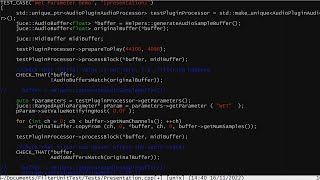
Unit Testing Audio Processors - Lecture
Learn to set up and implement unit testing for JUCE audio plugins, covering practical examples from basic checks to verifying processor output.
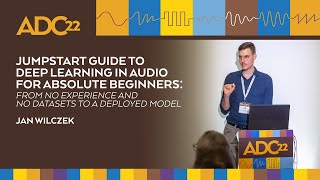
Deep Learning in Audio for Absolute Beginners: From No Experience to a Deployed Model
Jumpstart deep learning in audio: from basics to deploying models. Learn myths, fast techniques, dataset creation, PyTorch training, and real-time plugin deployment for Virtual Analog modeling.
Writing Elegant DSP Code in Rust
Leverage Rust's type system for elegant, concise, and safe DSP code. Explore advanced features, zero-cost abstractions, and various implementation styles for audio processing graphs.
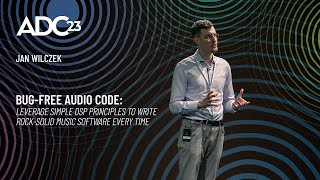
How to Write Bug-Free, Real-Time Audio C++ Code
Discover strategies for writing bug-free real-time audio C++ code. Learn DSP techniques, code reuse, C++/Python interoperability, and real-world examples to enhance confidence and correctness in audio development.
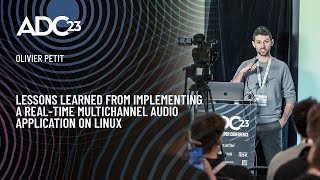
Running High Channel Count Audio Applications on Linux RT
Explore Linux kernel features for real-time audio processing, focusing on performance control and glitch-free output in high channel count applications. Learn from commercial product examples.
Odd Challenges of Using Deep Learning in Designing a Feedback Delay Network Reverb
Explore challenges in optimizing audio effects using deep learning, focusing on Feedback Delay Network reverb design. Gain insights into DSP, machine learning, and innovative approaches to audio processing.
Inference Engines and Audio - Machine Learning in Audio Applications
Explore inference pipelines in machine learning for audio applications, including common engines, their functionality, and creating custom solutions for platforms like Cmajor.
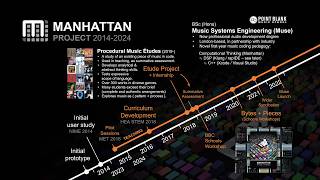
Three RADical Concepts in the Art of C++ Coding - Lecture
Explore innovative C++ concepts for audio programming, including MIDI-inspired languages, built-in audio semantics, and live plugin development in DAWs. Discover new technologies blurring music and code.
Exploration of Strongly-Typed Units: A Case Study from Digital Audio - Lecture
Explore strongly-typed units in digital audio processing, examining real-world examples and the mp-units library for C++. Learn to prevent unit-related errors and enhance code safety.
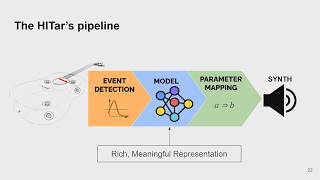
Deep Learning for DSP Engineers: Challenges and Tricks for Audio AI
Explore AI-based musical instrument development from a DSP engineer's perspective. Learn about real-time audio models, dataset creation, and deployment, with insights from HITar and Bessel's Trick projects.
Hugging Face and Ray AIR Integration for Scalable Machine Learning
Explore Hugging Face and Ray AIR integration for scalable model training and data loading. Learn to create end-to-end workflows from data ingest to inference and serving.
Modeling and Simulation of Sampled-Data Systems
Explore modeling and simulation of sampled-data systems, including discrete-time partitions, clocks, and interactions between continuous and discrete components using ModelingToolkit in Julia.