A Programmer's Guide to Sound
Gentle introduction to digital signal processing for audio applications, focusing on live-coding a classic sound synthesizer. Practical DSP theory application culminates in testing against synth classics.
The Story of PulseAudio and Compress Offload
Explore PulseAudio's implementation of compress offload for efficient audio processing on modern SoCs, discussing challenges, tradeoffs, and future possibilities in Linux audio systems.
Changing Live Audio with the Web-Audio-Api
Explore recreating guitar effect pedals using the Web Audio API. Learn to manipulate live audio in real-time, combining music and web development for innovative sound processing.

Beats, Rhymes and Unit Tests
Explore Web Audio's potential for audio transcription through an engaging mix of audio, video, and live performance, blending Hip Hop with unit testing concepts.
AsyncIO and Music
Explore AsyncIO's potential in music production through MIDI processing, covering signal transformations, generative music, and audio processing challenges.
Flowz - Towards an EDSL for Digital Signal Processing
Declarative and composable digital signal processing library for efficient code generation and seamless C++ integration, inspired by Faust language and flownomials algebra.
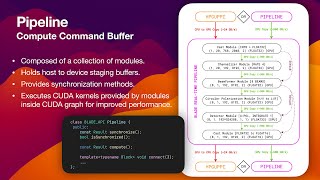
BLADE - The Allen Telescope Array CUDA-Accelerated Real-Time DSP Library
Explore GPU-accelerated real-time DSP for radio astronomy, focusing on BLADE software's innovative techniques for processing massive data streams from the Allen Telescope Array.

What is Low Latency C++? - Part 1
Explore low latency C++ across industries, examining challenges and techniques for efficient programming in time-critical systems like finance, audio, and gaming.
What is Low Latency C++? - Part 2
Explore advanced C++ techniques for low-latency systems, covering CPU caching, data structures, concurrency, and memory management to optimize performance in finance, audio, and gaming.
Generate Buzz with Realtime FM Audio Synthesis
Explore realtime FM audio synthesis in Python, covering signal flow, generators, envelopes, and event loops to create dynamic, multi-note synthesizer sounds.
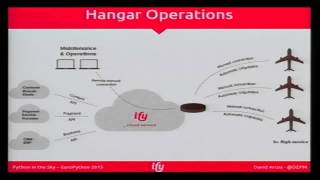
Python in the Sky - In-Flight Entertainment with Python
Explore building a Python-based in-flight entertainment system, addressing unique challenges at 10,000 meters and discussing architecture decisions for eventual connectivity.
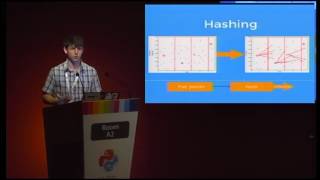
Implementing a Sound Identifier in Python
Explore Python-based sound recognition using DSP techniques. Learn to implement a Shazam-style identifier, covering fingerprinting, challenges, and future steps. Suitable for Python enthusiasts interested in audio processing.
Music Transcription with Python
Explore real-time monophonic music transcription using Python, converting audio to MIDI events through pitch and duration analysis, with potential for live sound manipulation.
Implementación de un Identificador de Sonido en Python
Aprende a implementar un identificador de sonido tipo Shazam usando Python y técnicas de procesamiento de señales digitales. Explora la estructura, desafíos y próximos pasos del proyecto.
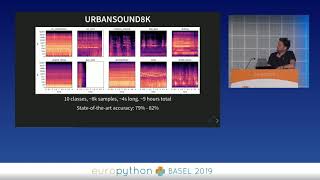
Audio Classification with Machine Learning
Learn to build practical machine learning models for audio classification using spectrograms, CNNs, and techniques like transfer learning and data augmentation with Keras and TensorFlow.
Working with Audio in Python - feat. Pedalboard
Explore digital audio processing in Python using Pedalboard, a powerful library that simplifies audio manipulation, file handling, and plugin integration for musicians and developers alike.

Digital Signal Processing with Swift
Explore digital signal processing in Swift using Apple's Accelerate framework. Learn to detect audio frequencies with Fast Fourier Transforms through an interactive demo on audio sampling rates.

BPM Detection with JavaScript
Explore JavaScript-based BPM detection techniques for audio analysis and rhythm extraction in web applications. Learn implementation strategies and practical use cases.

Using the Web for Music Production and for Live Performances
Explore Web Audio API's potential for music production and live performances, showcasing collaborative environments and a live demo inspired by The Glitch Mob's setup.
Building a Musical Instrument with the Web Audio API
Explore the Web Audio API to create interactive musical instruments in browsers, combining audio manipulation with other web technologies for unique sonic experiences.
Running Zephyr RTOS on Cadence Tensilica HiFi 4 DSP
Explore running Zephyr RTOS on HiFi 4 DSP alongside Linux OS, covering implementation, communication, debugging, and practical examples for optimized audio and voice processing.