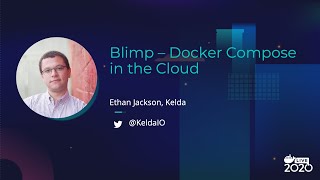
Blimp - Docker Compose in the Cloud
Explore Blimp, a cloud-based alternative to docker-compose that offloads container management, addressing microservices' local development challenges while maintaining familiar workflows.
Best Practices for PaaS, OpenStack, & Cloud Adoption
Explore best practices for PaaS, OpenStack, and cloud adoption with industry expert David Linthicum. Learn about emerging technologies, common pitfalls, and strategies for successful cloud implementation.
Application Centric Packaging with Docker and Linux Containers
Explore application-centric packaging with Docker and Linux containers across Red Hat solutions, including benefits for IT departments, developers, and ISVs in modern IT architectures.
OpenShift Deep Dive - Running a Large, Public PaaS
Explore OpenShift Online's architecture, management, and evolution. Learn about application creation, maintenance, and scaling in Red Hat's public PaaS, with insights on enterprise deployment.
Viewing Images Through Layered SBOMs
Explore software composition analysis through layered SBOMs, gaining insights into package distribution across Docker image layers for enhanced security and transparency.
Extending Docker for Using Web3 - Decentralized Storage
Explore options and challenges in extending Docker for decentralized storage, including containerd extensions, custom push methods, and Docker Desktop extensions.
Architecting .NET Microservices in a Docker Ecosystem
Explore microservices architecture, .NET Core solutions, and Docker containers for cloud-based applications. Learn design principles, implementation approaches, and deployment strategies in Azure.
Docker and Pyrsia - Securing the Software Supply Chain
Explore securing the open-source software supply chain with Pyrsia and Docker. Learn about vulnerabilities, exploits, and innovative solutions to enhance security in modern application development.

Removing Complexity from Integration Tests Using Testcontainers
Simplify integration testing with Testcontainers: Learn to create isolated, repeatable environments for databases, Kafka, and cloud services directly in your test code, enhancing local development and CI pipelines.
Running an AWS Stack on Your Local Machine
Learn to efficiently run an AWS Stack locally using Docker Desktop and Docker Compose, simplifying development setup and avoiding configuration headaches for new team members.
Building Observability for 99% Developers
Discover how to build observability into deployments for efficient software development. Learn about the needs of small teams and explore solutions for better visibility and monitoring in modern applications.
Deploying Machine Learning Models for Forensic Anthropology with Docker and Streamlit
Deploy ML models for forensic anthropology using Docker and Streamlit. Learn to create a web application for skeletal sex prediction, combining archeology, physics, and technology for impactful research in bioarchaeology.
Dynamic Management of Docker Containers in Multi-Cloud and Edge Using MiCADO
Explore MiCADO: an open-source framework for dynamic management of Docker containers across multi-cloud and edge environments, built on Kubernetes. Learn about its components, policies, and applications in various scenarios.
Docker Dieting - Sizing up Your Java Images and Containers
Learn strategies to optimize Java images and containers, reducing size and improving security while maintaining functionality and performance.
Using Linux Primitives to Build Your Own Containers
Explore Linux container fundamentals by building one from scratch, covering namespaces, filesystems, security modules, privileges, and cgroups for a deeper understanding of containerization.
Create Your Own MySQL-as-a-Service That Runs Anywhere Using Kubernetes Operators
Learn to build a MySQL-as-a-Service using Kubernetes Operators, enabling database deployment and management across various environments. Explore architecture, challenges, and best practices for implementing a cost-effective, vendor-agnostic solution.
The Force Awakens - Managing Millions of Kubernetes Clusters at the Edge
Explore managing millions of Kubernetes clusters at the edge, addressing challenges and sharing practical insights for massive cluster management in diverse environments.
Running KubeVirt Workloads with No Additional Privileges
Explore running VMs on Kubernetes without root privileges using KubeVirt. Learn about security practices, SELinux integration, and the journey to achieve rootless VM execution.

Why Kubernetes Applications Require a New Approach to Testing Using Testkube
Explore modern testing approaches for Kubernetes applications using Testkube, addressing challenges in pipeline complexity and restricted access while improving CI/CD workflows.
Docker for Windows Container Development
Learn to develop Windows containers using Docker, integrating with Visual Studio for both .NET Core and legacy .NET Framework apps. Covers basics, Dockerfile creation, Docker Hub, debugging, and enterprise solutions.

Deep Dive into Firecracker-Containerd
Explore firecracker-containerd architecture, challenges in adapting containers to micro-VMs, and the project's goals for OCI image portability with Firecracker's lightweight virtualization.