
Improving Spatial Orientation in Immersive Environments
Explore techniques to enhance spatial awareness in VR, comparing landmarks, 3D minimaps, and waypoint navigation. Learn how these methods impact user experience and productivity in immersive scientific visualization tasks.
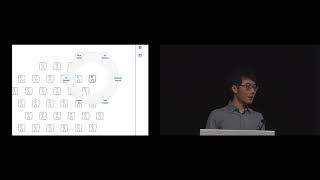
DataInk - Direct and Creative Data-Oriented Drawing
DataInk: A novel system for creating expressive data visualizations through direct pen and touch input, bridging the gap between automated tools and manual sketching for flexible, creative data representation.

MagicFace - Stepping Into Character Through Augmented Reality Mirror
Explore how augmented reality face transformation affects user perception and behavior in cultural settings, examining its potential for educational and immersive experiences.

Desktop Orbital Camera Motions Using Rotational Head Movements
Explore head movements for 3D viewpoint control, comparing yaw and roll techniques. Studies reveal roll's efficiency for orbital camera control, outperforming traditional mouse/keyboard methods by 14.5%.
On Your Feet! Enhancing Self-Motion Perception in Leaning-Based Interfaces through Multisensory Stimuli
Explore enhancing self-motion perception in virtual environments using multisensory stimuli, including auditory, visual, and vibrotactile cues for improved user experience in VR and gaming applications.

A Feminist HCI Approach to Designing Postpartum Technologies - When I First Saw a Breast Pump I Was Wondering If It Was a Joke
Exploring feminist HCI design for postpartum technologies, focusing on improving breast pumps through crowdsourced ideas and addressing environmental, legal, social, and emotional aspects of new motherhood.
All Work and No Play? Conversations with a Question-and-Answer Chatbot in the Wild
Exploring user interactions with HR chatbots, analyzing conversational patterns, and discussing design implications for adaptive conversational agents that balance functionality and playful engagement.
Reverse Engineering and Exploiting Font Rasterizers - The OpenType Saga
Explore critical vulnerabilities in OpenType font handling across popular software, revealing potential for arbitrary code execution and bypassing exploit mitigations. Learn about reverse-engineering techniques and in-depth vulnerability analysis.

Mobile Connect - A Better and Secure User Experience for Online Authentication
Explore Mobile Connect, a secure authentication method leveraging existing standards for seamless deployment. Learn about its architecture, use cases, and how it complements solutions like FIDO for improved online security.

Application Security & User Experience
Explore the intersection of application security and user experience, focusing on balancing robust protection with seamless interactions in software design.

Stop the Insanity and Improve Humanity - UX for the Win
Explore UX principles to enhance security tools, making them more user-friendly and effective for both experts and novices in the field of information security.

The Art of Rebranding
Explore the impact of logos and branding on identities, from corporate rebranding to personal symbols. Discover how these visual elements shape our lives and influence perceptions in various contexts.

Simplicity Sells
Explore how simplicity in technology design enhances user experience, with humorous insights and real-world examples from New York Times columnist David Pogue.

The Hilarious Art of Book Design
Explore the witty world of book cover design with Chip Kidd as he reveals the creative process behind his iconic work, blending humor and deep artistic insight.
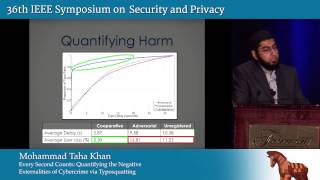
Every Second Counts - Quantifying the Negative Externalities of Cybercrime via Typosquatting
Quantifying harm from typosquatting using intent inference. New metrics and methodology reveal average time cost to users and traffic loss for legitimate sites. Some typosquatters unexpectedly improve latency.
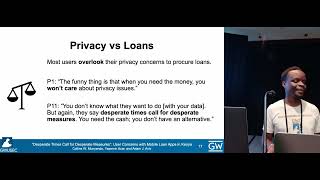
Desperate Times Call for Desperate Measures - User Concerns with Mobile Loan Apps in Kenya
Explore user concerns and challenges with mobile loan apps in Kenya, examining their impact on financial practices and potential risks for vulnerable populations.
Operation Mindfuck Vol. 4
Explore a diverse array of fascinating topics in computers, art, and the world. Discover new and unconventional ideas that inspire curiosity and spark enthusiasm in this engaging presentation.
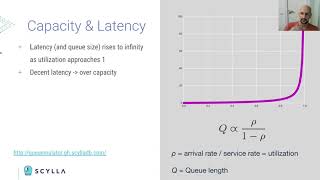
What's the Cost of a Millisecond?
Exploring latency amplification in microservices, this talk reveals how a single millisecond delay can significantly impact user-visible latency, emphasizing the importance of optimizing deep-stack performance.

Did We Lose the Right Direction in Web Development
Exploring the balance between user and developer experience in modern web development, questioning if we've lost focus on core web principles and overused JavaScript.

[VDT19] Cognitive UX Using cognitive science and psychology to drive UX design by Emilia Ciardi [IT]
Esplora come le scorciatoie mentali e i bias cognitivi influenzano la progettazione UX, applicando principi di psicologia e scienze cognitive per creare esperienze utente più efficaci.

Building an Offline Page for theguardian.com
Explore how service workers enable offline functionality for web applications, using The Guardian's website as a case study for delivering content without an internet connection.