
Capitalism Will Eat Democracy - Unless We Speak Up
Economist Yanis Varoufakis explores the shift of power from politics to economics, discussing the impact of mega-rich and corporations on democracy, and proposing a vision for a more balanced economic system.

Media and Democracy - Finding Facts in the Mess of Misinformation
Veteran journalist shares strategies to identify misinformation in news across various media platforms, empowering viewers to protect themselves and make informed decisions in the digital age.
The Centre Must Hold - The Role of Centrist Politics in a Polarized World
Exploring centrist politics as a radical force for good in a polarized world, offering insights on moderates' response to rising populism and the potential of centrism beyond compromise.
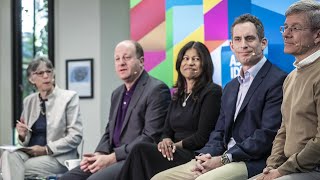
Pushback - The Perils and Power of Corporate Commitments
Exploring the challenges and opportunities for businesses in addressing ESG issues amid political tensions, focusing on executive decision-making and stakeholder expectations.
Beyond the Top of the Ticket - Securing the Republic
Discover the importance of voting rights and civic engagement through Dr. Ted Williams III's compelling insights on constitutional democracy and electoral participation in America.
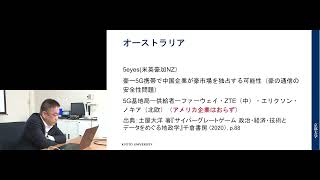
サイバー経済安全保障と民主政・僭主政 - 第11回
Explore サイバー空間における経済安全保障の課題、ファーウェイ問題からグーグルと中国政府の対立まで、民主主義とサイバーセキュリティの関係性を深く考察する講義。
The Electoral Imagination - Literature, Legitimacy, and Rigged Systems
Exploring the intersection of literature, politics, and voting systems, this talk delves into the complexities of elections, their meaning, and public perceptions of legitimacy through diverse literary and theoretical lenses.
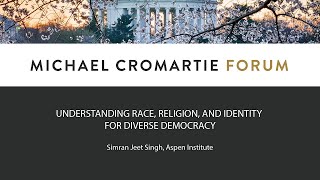
Understanding Race, Religion, and Identity for Diverse Democracy
Explore the intersection of race, religion, and identity in America, examining pluralism, justice, and resilience in challenging times while cultivating hope for a more equitable society.
Experts in Politics - Lessons from Socrates and Aristotle
Explore ancient wisdom on expertise in politics, examining Socrates' and Aristotle's insights on expert credibility, public debate, and the role of expertise in democracy.
Tackling the Infodemic - Misinformation's Impact on Pandemic Response
Explore how online misinformation impacts pandemic response and democratic decision-making. Learn about research on infodemics and crisis management in the digital age.
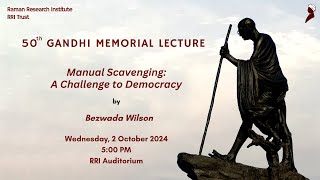
Manual Scavenging - A Challenge to Democracy
Explore the critical discourse on manual scavenging in India, its societal implications, and the fight for human dignity through this powerful Gandhi Memorial Lecture by activist Bezwada Wilson.
民主主義サミットと道義的リアリズム - 国際政治入門 第12回
Explore international politics through value-based diplomacy, examining three types of realism and challenging the notion of democracy as a Western concept in modern global relations.
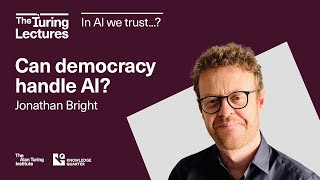
Can Democracy Handle AI? - The Impact of Artificial Intelligence on Political Campaigns and Misinformation
Explore AI's impact on democracy, political campaigns, and misinformation. Learn about deepfakes, fact-checking, and building resilience against AI-generated content in the digital age.

How AI Could Hack Democracy
Explore law professor Lawrence Lessig's critical analysis of AI's current impact on democratic systems and the urgent need for attention to these challenges before reaching AGI.
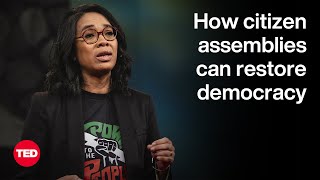
Democracy Is Being Tested - How Citizen Assemblies Can Help Protect Democracy
Discover how citizen assemblies strengthen democracy through the lens of Madagascar's activism, exploring community empowerment, civic engagement, and collective action for democratic preservation.

How to Defend Democracy and Fight Autocracy
Discover a powerful firsthand account of fighting autocracy through the lens of Venezuelan activist Leopoldo Lopez, exploring strategies to unite globally and defend democratic values worldwide.

Is Inviting Everyone to the Meeting Holding Back Global Cooperation? | Qahir Dhanani | TED
International collaboration expert Qahir Dhanani argues for rebuilding public trust in broken institutions through small, focused coalitions that can move faster and act bolder. He presents a hopeful, practical vision for updating diplomacy to address the world's toughest challenges.

Two US Governors — a Democrat and a Republican — on Why There’s Hope for Democracy | On the Spot
Delaware Governor Matt Meyer (Democrat) and Oklahoma Governor J. Kevin Stitt (Republican) discuss rebuilding trust across political divides, leading in polarized times, and governing collaboratively. They share insights on moving from outrage to outcomes and treating each other as neighbors rather than enemies.

Are We Heading Toward World War III? | Heni Ozi Cukier | TED
Political scientist Heni Ozi Cukier analyzes the social, economic, political and military conditions that preceded the last two world wars, revealing how historical patterns and today's geopolitical shifts may be pointing us in a dangerously familiar direction. He connects past and present to challenge us to recognize warning signs and act before it's too late.

Can Math Help Repair Democracy? | Sam Wang | TED
Neuroscientist Sam Wang explains how computer simulations and mathematical models can help fix issues in American democracy, from detecting gerrymandered districts to predicting the impact of alternative election methods like ranked-choice voting.
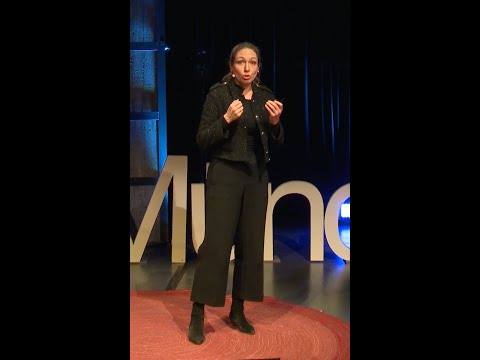
Deutschlands teuerster Irrglaube | Philippa Sigl-Glöckner | TEDxMünchen
Panzer oder Kitas – Deutschland muss wählen, und der Grund ist eine einzige Zahl: 60 Prozent. Sie gilt als unantastbares Naturgesetz der Haushaltspolitik, dabei ist sie das Ergebnis einer knappen Abstimmung, ohne jede Grundlage. Philippa Sigl-Glöckner zeigt, warum wir diesen Irrglauben hinter uns la