
Achieve AI-powered API Privacy Using Open Source
Explore AI-powered API privacy using open-source tools. Learn about Privacy-by-Design, threat modeling, and leveraging deep neural networks to protect customer data in software development.

A Framework for Evaluating and Patching the Human Factor in Cybersecurity
Explore a framework for assessing and improving human-related cybersecurity vulnerabilities, focusing on evaluating and enhancing the human factor in security systems.
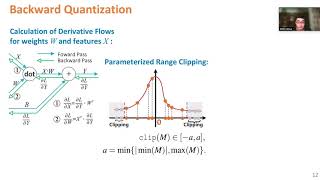
Octo - INT8 Training with Loss-aware Compensation and Backward Quantization for Tiny On-device Learning
Explores INT8 quantization for on-device learning, introducing Loss-aware Compensation and Parameterized Range Clipping to optimize forward and backward passes while preserving training quality.
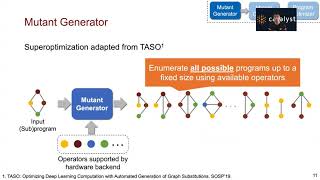
PET - Optimizing Tensor Programs with Partially Equivalent Transformations and Automated Corrections
Optimizing tensor programs with partially equivalent transformations, improving DNN efficiency by up to 2.5×. Introduces PET framework for automated corrections and theoretical foundations for equivalence examination.
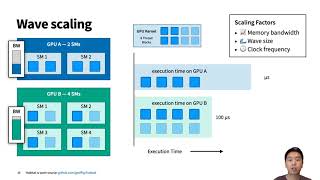
Habitat - A Runtime-Based Computational Performance Predictor for Deep Neural Network Training
Explore a runtime-based technique for predicting GPU performance in deep neural network training, aiding cost-efficient hardware selection for researchers and practitioners.
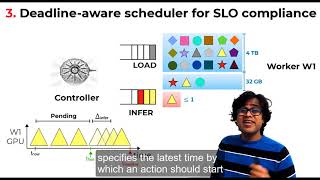
Serving DNNs like Clockwork - Performance Predictability from the Bottom Up
Explore a novel approach to machine learning inference systems that achieves predictable end-to-end performance, supporting thousands of models while meeting strict latency targets and request-level SLOs.
CloudLeak - DNN Model Extractions from Commercial MLaaS Platforms
Explore DNN model extraction vulnerabilities in cloud-based machine learning services, examining security risks and potential countermeasures for MLaaS platforms.

DeepLocker - Concealing Targeted Attacks with AI Locksmithing
DeepLocker: AI-powered targeted attacks using deep neural networks for evasive malware. Explores mechanisms, implications, and defenses against AI-weaponized cybercrime.
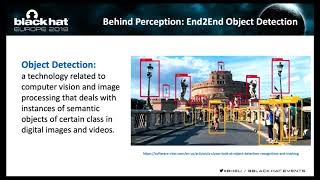
Perception Deception - Physical Adversarial Attack Challenges
Explore physical adversarial attacks on object detection systems, focusing on YOLOv3. Learn tactics to overcome challenges in real-world scenarios and understand implications for AI security.
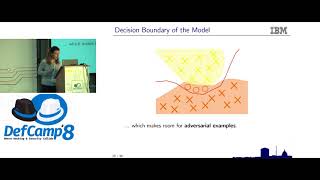
Efficient Defenses Against Adversarial Examples for Deep Neural Networks
Explore efficient defense strategies against adversarial examples in deep neural networks, enhancing the robustness and security of AI systems in critical applications.

An AI Approach to Malware Similarity Analysis - Mapping the Malware Genome With a Deep Neural Network
Explore AI-driven malware similarity analysis using deep neural networks for improved accuracy and adaptability in threat detection and classification.
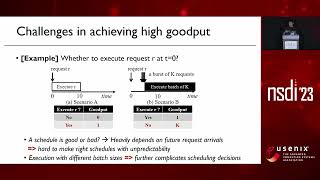
SHEPHERD - Serving DNNs in the Wild
SHEPHERD: A scalable model serving system that optimizes goodput, resource utilization, and scalability for unpredictable workloads, using a two-level design and novel online algorithm for efficient DNN inference.
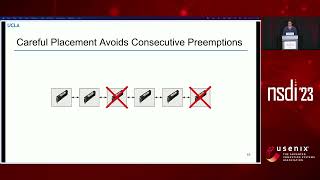
Bamboo - Making Preemptible Instances Resilient for Affordable Training of Large DNNs
Innovative system for cost-effective training of large DNNs using preemptible instances, introducing redundant computations to enhance resilience and efficiency in distributed learning environments.
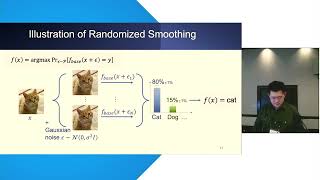
SoK - Certified Robustness for Deep Neural Networks
Explore certified robustness techniques for deep neural networks, enhancing their reliability and security against adversarial attacks and perturbations.
Developing an Intersectional Framework to Analyze Biases in Artificial Intelligence and Deep Neural
Explore an intersectional framework for analyzing biases in AI and deep neural networks, focusing on ethical tech development and mitigating discriminatory outcomes in machine learning.
Secure and Scalable Anomaly-Based Network Intrusion Detection
Presentation on a secure, scalable framework for anomaly-based network intrusion detection, implemented in Go. Explores feature extraction, data collection, and machine learning applications for detecting network threats.
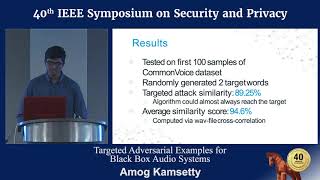
Targeted Adversarial Examples for Black Box Audio Systems
Exploring techniques to generate adversarial examples for audio systems, combining genetic algorithms and gradient estimation to achieve high attack success rates while maintaining audio similarity.

Unleashing the Power of Decompilation for x86 Deep Neural Network Executables
Explore BTD, a decompiler for deep neural network executables, enabling reverse engineering of compiled DL models on various hardware platforms to enhance security and transparency.

AI Without Python - An Intro to Machine Learning for C++ Programmers
Beginner-friendly introduction to AI and deep neural networks for C++ programmers, exploring alternatives to Python for improved performance in machine learning applications.

Neuropots - Realtime Proactive Defense against Bit-Flip Attacks in Neural Networks
Innovative defense strategy against bit-flip attacks in neural networks using "honey neurons" to lure attackers, enabling efficient detection and model recovery in safety-critical AI applications.
Stable 30 Advanced Deception Technology Through Behavioral Biometrics
Explore advanced deception technology using behavioral biometrics and machine learning. Learn about deep neural networks, production ability value, and the promise of deception in cybersecurity.