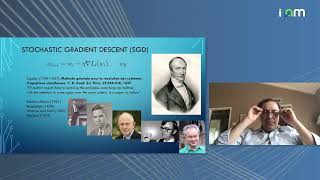
Implicit and Explicit Regularization in Deep Neural Networks
Explores implicit and explicit regularization in deep neural networks, connecting learning algorithms to H-infinity control and explaining convergence behavior in over-parametrized models, offering insights into generalization abilities.
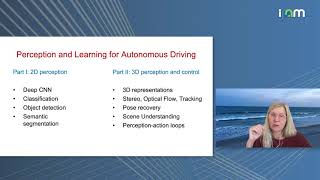
Perception and Learning for Autonomous Driving - Part 1
Explore perception and learning for autonomous driving, covering sensor suites, deep neural networks, and object detection techniques in this comprehensive tutorial.
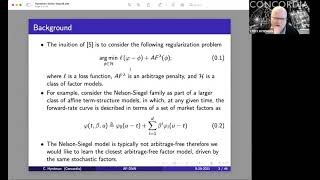
Arbitrage-Free Yield Curve and Bond Price Forecasting by Deep Neural Networks
Explore deep neural networks for arbitrage-free yield curve and bond price forecasting, enhancing quantitative finance strategies and market predictions.
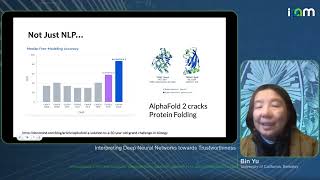
Interpreting Deep Neural Networks Towards Trustworthiness - IPAM at UCLA
Explore techniques for interpreting deep neural networks, including ACD and AWD methods, to enhance trustworthiness in AI applications across scientific domains.
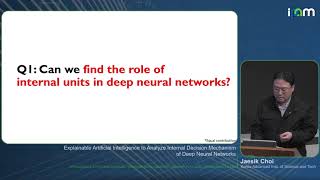
Explainable AI to Analyze Internal Decision Mechanism of Deep Neural Networks
Explore techniques for understanding and improving deep neural networks' decision-making processes, focusing on safety in critical applications and automatic correction of unreliable internal nodes.
From Network Dissection to Policy Dissection - Emergent Concepts in Deep Representations
Explore emergent concepts in deep neural networks, from image classification to reinforcement learning, revealing inner workings and enabling meaningful human-AI interactions for content creation and robotics control.
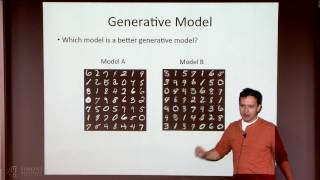
Tutorial on Deep Learning IV
Explore advanced deep learning concepts with Carnegie Mellon expert Ruslan Salakhutdinov, covering cutting-edge techniques and applications in machine learning.
Interpreting Deep Neural Networks
Explore techniques for interpreting deep neural networks, focusing on methods to understand and explain their decision-making processes and internal representations.
Why Deep Learning Works: Implicit Self-Regularization in Deep Neural Networks
Explore the underlying mechanisms of deep learning's success, focusing on implicit self-regularization in neural networks and its impact on model performance.
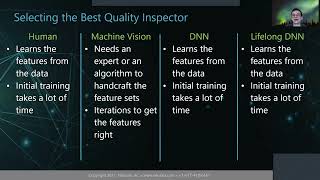
What Kind of AI Can Help Manufacturing Adapt to a Pandemic
Explore how AI, particularly DDNs and L-DNNs, can revolutionize quality inspections in manufacturing, adapting to challenges like COVID-19 and Industry 4.0 for improved efficiency and product quality.
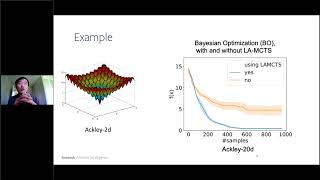
Learning to Optimize High Dimensional Optimization Problems
Explore deep neural networks and reinforcement learning for solving high-dimensional optimization problems, improving performance in job scheduling, neural architecture search, and black-box optimization.

Generalized Pipeline Parallelism for DNN Training - PipeDream System Overview
Efficient multi-accelerator parallelization for DNN training using PipeDream, combining intra-batch parallelism with inter-batch pipelining to improve throughput and overcome challenges in bi-directional training.
Neural Networks with Ensembles for TensorFlow and Keras
Learn to create and evaluate ensemble models using random forests and deep neural networks with TensorFlow, Keras, and scikit-learn. Explore feature importance and perturbation ranking techniques.
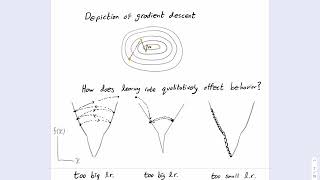
Gradient Descent and Stochastic Gradient Descent
Explore gradient descent and stochastic gradient descent in deep neural networks, covering convergence rates, learning rate effects, and challenges in optimization algorithms.

Adversarial Examples for Deep Neural Networks
Explore adversarial examples in deep neural networks, covering white/black box attacks, real-world scenarios, and defense strategies like adversarial training. Gain insights into various attack methods and their implications.
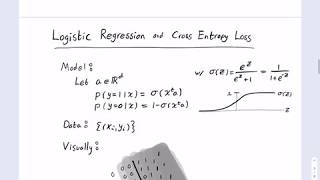
Supervised Machine Learning Review
Comprehensive review of supervised machine learning concepts, focusing on statistical frameworks, loss functions, and the intriguing double-descent phenomenon in neural networks.
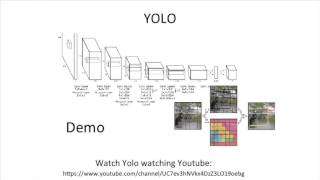
Deja Vu - The Story of Vision & AI
Explore the evolution of computer vision and AI with Ali Farhadi, covering deep neural networks, object detection, visual reasoning, and future predictions in this insightful seminar.
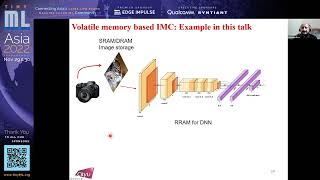
In-memory Computing and Dynamic Vision Sensors for Internet of Video Things
Exploring neuromorphic technologies, dynamic vision sensors, and in-memory computing for energy-efficient IoT video applications, with focus on innovative solutions for intelligent transportation and unattended ground sensors.
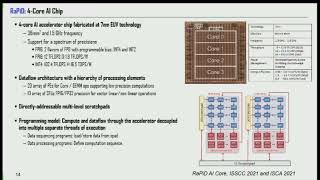
Mastering the Three Pillars of AI Acceleration: Algorithms, Hardware, and Software
Explore IBM Research's holistic approach to AI acceleration, covering low-precision DNN models, scalable hardware techniques, and efficient software methodologies for optimal performance.
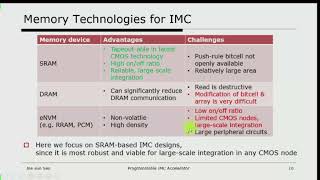
Programmable In-Memory Computing Accelerator with 100 SRAM IMC Macros
Explore programmable in-memory computing accelerators for efficient deep neural network processing, featuring 100 SRAM IMC macros and innovative architecture design for improved energy efficiency.
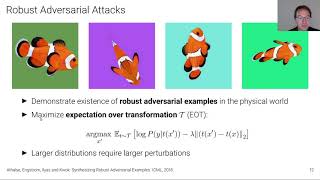
Attacking Optical Flow
Explores adversarial patch attacks on optical flow networks, revealing vulnerabilities in deep learning-based motion estimation crucial for autonomous driving safety.