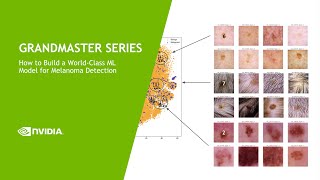
Grandmaster Series - Building a World-Class ML Model for Melanoma Detection
Learn how Kaggle Grandmasters built a world-class ML model for melanoma detection, outperforming average dermatologists. Discover key strategies in model architecture, augmentation, and training for accurate skin lesion classification.
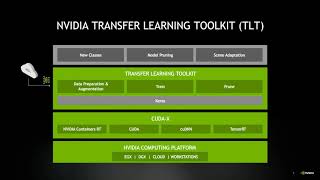
NVIDIA Tools for Training and Deploying Intelligent Vision Applications at the Edge
Discover tools for training, building, and deploying intelligent vision applications at the edge using NVIDIA's suite for video analytics pipelines and IoT devices.
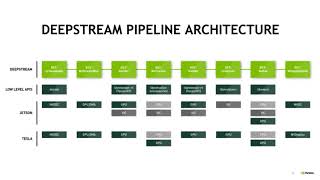
Streamline Deep Learning for Video Analytics with DeepStream SDK 2.0
Explore AI-based video analytics using DeepStream SDK 2.0 for Tesla, transforming video into insights for smart cities with a modular plugin architecture and scalable framework for multi-stream processing and application development.
Applied Deep Learning in Speech Recognition and Collaborative Filtering - Session 5
Explore cutting-edge AI applications in speech recognition and collaborative filtering systems, featuring NVIDIA Research insights from NeurIPS 2018.
Inference and Quantization for AI - Session 3
Explore quantized inference, TensorRT 5, and TensorFlow integration for AI model optimization. Learn about NVIDIA's inference server and techniques to improve model efficiency and performance.
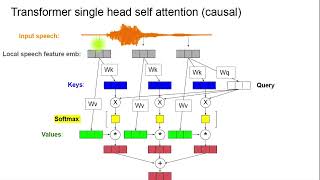
On-Device Speech Models Optimization and Deployment for Mobile Hardware
Explore on-device speech model optimization and deployment, covering streaming-aware design, quantization techniques, and benchmarks for popular speech processing model topologies on mobile platforms.
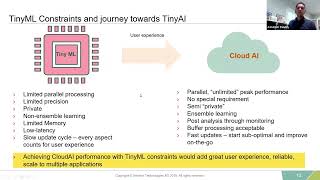
Exploring Techniques to Build Efficient and Robust TinyML Deployments
Explore techniques for efficient TinyML deployments, covering data challenges, quantization, and handling out-of-distribution data for robust edge AI applications.
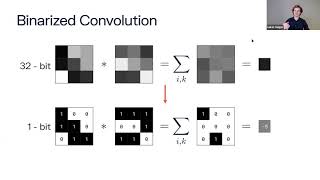
Binarized Neural Networks on Microcontrollers
Explore Binarized Neural Networks for efficient deep learning on microcontrollers, enabling complex tasks with minimal memory and high performance using 1-bit encoding for weights and activations.
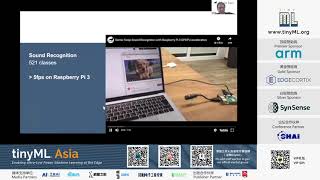
Acceleration of Deep Learning Inference on Raspberry Pi's VideoCore GPU
Explore techniques for accelerating deep learning inference on Raspberry Pi's VideoCore GPU, including optimized tools, libraries, and compilers for enhanced performance without compromising accuracy.
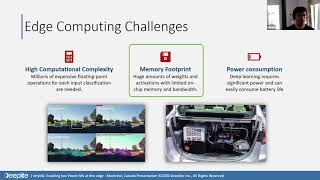
Networks Within Networks - Novel CNN Design Space Exploration for Resource-Limited Devices
Explore novel CNN design for resource-limited devices using "network within network" paradigm. Learn automated method for compressing neural networks while preserving accuracy and meeting size constraints.
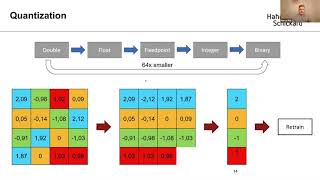
Introduction to Optimization Algorithms to Compress Neural Networks
Explore optimization techniques for compressing neural networks, including pruning and quantization, to enable deployment on resource-constrained devices like smartphones.
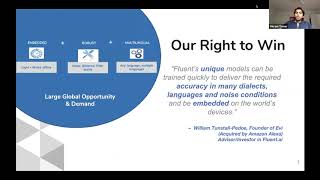
Speech Recognition on Low Power Devices
Explore multilingual speech recognition on low-power devices, covering model optimization techniques, neural network compression, and practical demonstrations for efficient implementation.
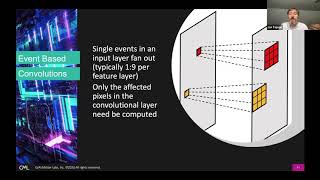
Saving 95% of Your Edge Power with Sparsity to Enable TinyML
Explore sparsity techniques to drastically reduce power consumption in edge ML, enabling real-time processing for tinyML applications with the innovative GrAI Core architecture.
Driving with Attention
Explore innovative sensor fusion techniques for autonomous driving, focusing on TransFuser and NEAT models that leverage attention mechanisms to improve perception and decision-making in complex traffic scenarios.
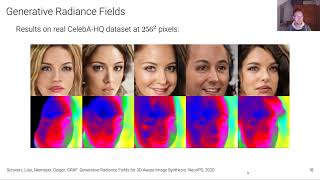
Generative Neural Scene Representations for 3D-Aware Image Synthesis
Explore 3D-aware image synthesis using generative neural scene representations, covering GRAF, GIRAFFE, and CAMPARI models for advanced computer vision applications.
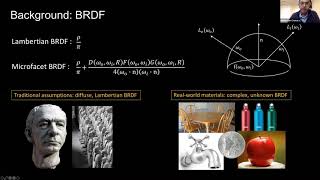
Physically-Motivated Learning of Shape, Material and Lighting in Complex Scenes
Explores physically-motivated learning for shape, material, and lighting recovery in complex scenes using differentiable rendering layers and parsimonious representations, enabling augmented reality applications with single or few images.
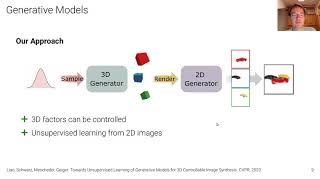
Towards Unsupervised Learning of Generative Models for 3D Controllable Image Synthesis
Explores unsupervised learning for 3D-controllable image synthesis, disentangling latent factors like viewpoint and object pose from raw images to create novel, consistent scenes.
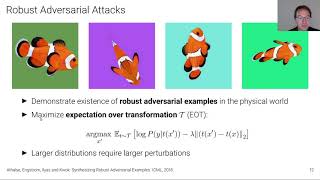
Attacking Optical Flow
Explores adversarial patch attacks on optical flow networks, revealing vulnerabilities in deep learning-based motion estimation crucial for autonomous driving safety.
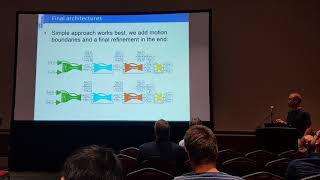
ROB 2018 - Eddy Ilg- Occlusions, Motion and Depth Boundaries with a Generic Network
Explore cutting-edge techniques in computer vision, focusing on occlusions, motion, and depth boundaries using a generic network architecture for improved multiview stereo results.
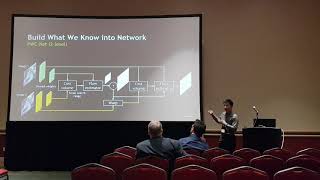
Deqing Sun- PWC Net- CNNs for Optical Flow Using Pyramid, Warping, and Cost Volume
Explore PWC-Net, a CNN-based optical flow algorithm using pyramid processing, warping, and cost volume. Learn its principles, advantages, and limitations for robust motion estimation.

EfficientDet - Scalable and Efficient Object Detection
Explore EfficientDet, a scalable object detection model that improves accuracy and efficiency through innovative techniques like BiFPN and compound scaling.