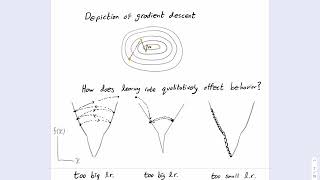
Gradient Descent and Stochastic Gradient Descent
Explore gradient descent and stochastic gradient descent in deep neural networks, covering convergence rates, learning rate effects, and challenges in optimization algorithms.
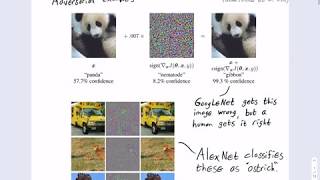
Adversarial Examples for Deep Neural Networks
Explore adversarial examples in deep neural networks, covering white/black box attacks, real-world scenarios, and defense strategies like adversarial training. Gain insights into various attack methods and their implications.
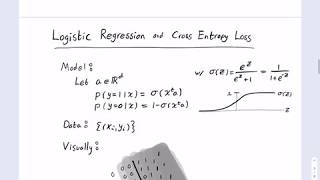
Supervised Machine Learning Review
Comprehensive review of supervised machine learning concepts, focusing on statistical frameworks, loss functions, and the intriguing double-descent phenomenon in neural networks.
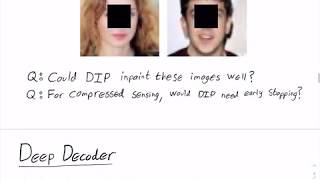
Unlearned Neural Networks as Image Priors for Inverse Problems
Explore unlearned neural networks as image priors for inverse problems in imaging, covering Deep Image Prior, Deep Decoder, and Deep Geometric Prior techniques and their applications.

Diffusion Models - Paper Explanation - Math Explained
Comprehensive explanation of diffusion models, covering theory, architecture, math derivation, algorithms, improvements, and results. Includes comparisons to other methods and references to state-of-the-art applications.
VQ-GAN - PyTorch Implementation
Implement Vector Quantized Generative Adversarial Networks (VQGAN) using PyTorch, covering encoder, decoder, codebook, discriminator, and transformer stages for high-resolution image synthesis.

Transfer Learning Using Keras
Learn to classify car brands using transfer learning with Keras and ResNet50. Hands-on tutorial covers dataset preparation, model configuration, training, and prediction visualization.
Convolutional Neural Networks - Deep Learning Basics with Python, TensorFlow and Keras
Learn to build and train a convolutional neural network for chess piece image classification using Python, TensorFlow, and Keras. Covers dataset preparation, model creation, and prediction testing.
Deep Learning in Weather Images - Using TensorFlow and CNN
Learn to build a CNN model using TensorFlow and Keras to predict weather scenes from images. Covers dataset preparation, model creation, training, and testing.
Cancer Detection in Brain Using Deep Learning
Learn to detect brain tumors using deep learning, CNN, and TensorFlow. Build, train, and test a model for classifying brain images with hands-on coding and practical implementation.

How to Classify Flowers Using Deep Learning
Learn to build a convolutional neural network for flower image classification using TensorFlow and Keras, from dataset preparation to model testing and prediction.
Train StyleGAN with Your Own Images
Learn to train StyleGAN with your own images using Colab, covering image preparation, training setup, and resuming training for both StyleGAN2 and StyleGAN3 models.

Setting Up CUDA, CUDNN, Keras, and TensorFlow on Windows 11 for GPU Deep Learning
Comprehensive guide for setting up GPU-accelerated deep learning environment on Windows 11, covering CUDA, CUDNN, Keras, and TensorFlow installation with step-by-step instructions.
Installing Miniforge and Anaconda/Miniconda Side-by-Side on Mac M1 Monterey
Learn to install and run Anaconda and Miniforge simultaneously on Mac M1, including TensorFlow and Keras setup, with step-by-step guidance and troubleshooting tips.
Training StyleGAN2 ADA PyTorch Images with Low GPU Memory - NVIDIA GEFORCE RTX 3060 Ti
Learn to train StyleGAN2 ADA PyTorch on NVIDIA GEFORCE RTX 3060 Ti with limited GPU memory. Optimize settings, increase swap space, and adjust evaluation metrics for efficient 256x256 GAN training.
Training a GAN from Your Own Images - StyleGAN2 ADA
Learn to create custom GANs using your own images, from setup to training. Covers image collection, Docker setup, TFRecord conversion, and understanding GAN outputs for various projects like FishGAN and MinecraftGAN.
Training a GAN on Your Own Images - StyleGAN2 ADA PyTorch
Learn to install and use NVIDIA StyleGAN2 ADA for PyTorch on Windows 10, including setup, training, and image generation with new Ampere GPUs. Step-by-step guide for both beginners and advanced users.
Introduction to Q-Learning for Game Play - Lecture 12.2
Explore Q-Learning for game AI: build policy tables, suggest optimal actions, and apply Python techniques for environment-based decision-making in this introduction.
Exploring Style GAN2 Latent Vector - Controlling Facial Properties
Dive into StyleGAN2's latent vectors to control facial features in generated images, including a technique for adding glasses to faces.
Face Generation with NVIDIA StyleGAN2 and Python 3
Generate realistic faces using nVidia StyleGAN2 and Python. Learn to utilize pretrained weights, TensorFlow wrapper, and Google CoLab GPU for efficient face generation without extensive training.
TensorFlow 2.0 GPU, Keras, and Python 3.7 Installation Guide for Windows 10 - 2020 Update
Comprehensive guide for setting up TensorFlow 2.0 with GPU support on Windows 10, covering installation of necessary drivers, CUDA, cuDNN, and Anaconda environment configuration.