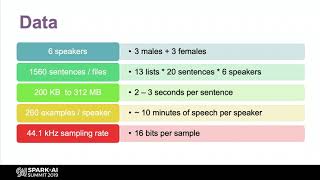
Listening at the Cocktail Party - Deep Neural Networks for Speech Separation
Explore deep neural networks for speech separation, focusing on data preparation, network architectures, and real-time implementation on embedded devices for smart audio applications.

Deep Learning Revolution: Turing Award Lecture by Geoffrey Hinton and Yann LeCun
Pioneers of deep learning discuss breakthroughs, applications, and future prospects of neural networks in AI, from handwriting recognition to medical imaging and autonomous vehicles.
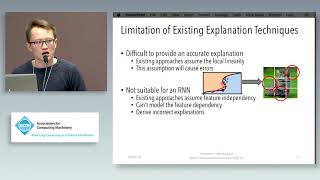
LEMNA - Explaining Deep Learning Based Security Applications
Explore LEMNA, a novel technique for explaining deep learning models in security applications, addressing transparency concerns and improving interpretability for critical decisions.
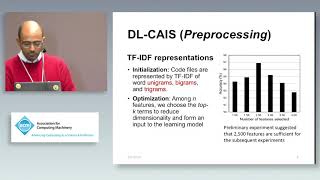
Large-Scale and Language-Oblivious Code Authorship Identification
Explore a Deep Learning-based system for large-scale, language-independent code authorship identification, addressing challenges in extraction and obfuscation resilience.
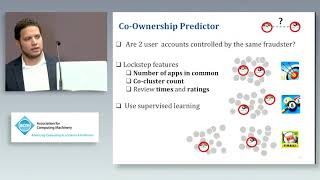
Fraud De-Anonymization for Fun and Profit
Explore innovative techniques for detecting and combating search rank fraud in online systems using deep learning and multi-worker validation approaches.
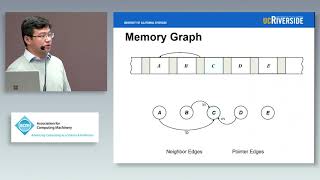
DeepMem: Learning Graph Neural Network Models for Fast and Robust Memory Forensic Analysis
DeepMem: A graph-based deep learning approach for fast and robust memory forensic analysis, using novel memory graph models and neural networks to enhance object detection in raw memory dumps.
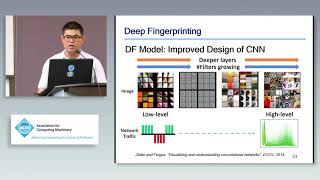
Deep Fingerprinting: Undermining Website Fingerprinting Defenses with Deep Learning
Explore advanced website fingerprinting attacks using deep learning, challenging existing defenses and analyzing their effectiveness against Tor and other protective measures.

Flicker-Free Animations - Stable Diffusion, EBSynth & ControlNet
Learn techniques for creating smooth, flicker-free animations using Stable Diffusion, EBSynth, and ControlNet. Master frame extraction, keyframe selection, image processing, and advanced compositing for professional-quality results.
Materialising Artificial Intelligence - With Wilfred G. van der Wiel
Explore brain-inspired nanosystems and their potential for efficient information processing, discussing technological implications and the future of artificial intelligence in material form.

Questions About Self Driving Cars
Comprehensive overview of autonomous vehicles, addressing 16 key questions on technology, business, insurance, and social implications. Explores future developments and potential impacts.
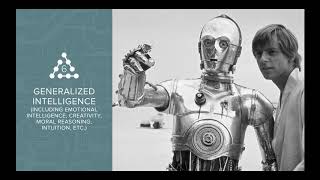
AI, Deep Learning, and Machine Learning - A Primer
Comprehensive overview of AI's evolution, current state, and future potential, exploring neural networks, deep learning applications, and their impact on various industries and human capabilities.
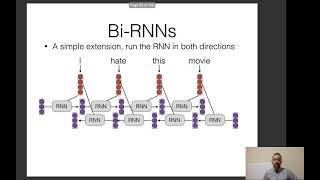
Neural Nets for NLP 2021 - Recurrent Neural Networks
Explore recurrent neural networks, bidirectional RNNs, LSTMs, and their applications in NLP. Learn about vanishing gradients, sentence modeling, and pre-training techniques for improved language processing.
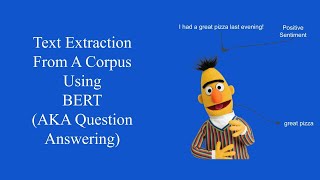
Text Extraction From a Corpus Using BERT - Question Answering
Learn to extract text from tweets using BERT for sentiment analysis. Hands-on tutorial covers data preparation, model implementation, and evaluation for Kaggle competition.
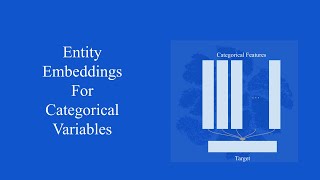
Entity Embeddings for Categorical Variables
Learn to implement entity embeddings for categorical variables using TensorFlow/Keras, with a focus on converting the model to PyTorch. Practical application using Kaggle competition data.
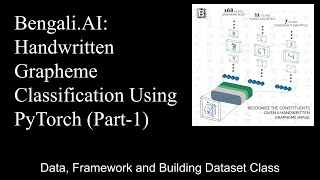
Bengali.AI- Handwritten Grapheme Classification Using PyTorch
Learn to approach Kaggle's Bengali.AI grapheme classification challenge using PyTorch, covering data exploration, framework setup, and dataset creation for multi-label image classification.
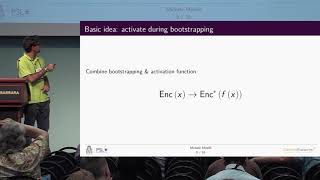
Fast Homomorphic Evaluation of Deep Discretized Neural Networks
Explore fast homomorphic evaluation techniques for deep discretized neural networks, focusing on digit recognition and addressing challenges in activation and dynamic message space.
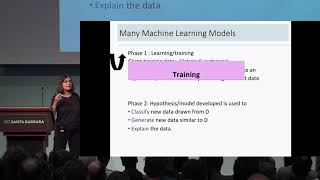
From Idea to Impact, the Crypto Story - What's Next?
Explore the intersection of cryptography and machine learning, examining challenges, impacts, and future directions in digital privacy, adversarial learning, and quantum resilience.
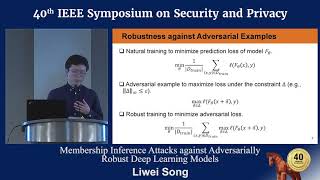
Membership Inference Attacks against Adversarially Robust Deep Learning Models
Explore membership inference attacks on adversarially robust deep learning models, examining the interplay between security defenses and privacy vulnerabilities in AI systems.
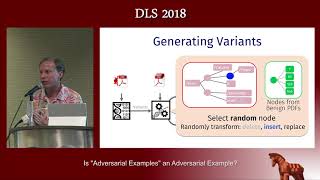
Is "Adversarial Examples" an Adversarial Example?
Explore adversarial examples in deep learning, their implications for security, and strategies for defense in this thought-provoking IEEE keynote by David Evans.
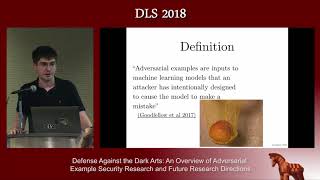
Defense Against the Dark Arts
Overview of adversarial example research in machine learning, exploring attacks, defenses, and future directions for enhancing AI security and robustness against malicious inputs.

Hark: A Deep Learning System for Navigating Privacy Feedback at Scale
Explore Hark, a deep learning system for efficiently processing privacy feedback at scale, addressing user issues and generating themes from large datasets.