Neural Network from Scratch with Python - Part 4
Implement a neural network using Numpy, learning to build deep learning models from the ground up without relying on high-level frameworks.
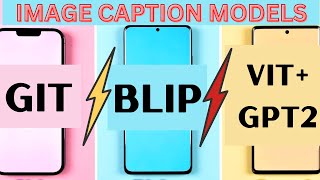
Comparing AI Image Caption Models: GIT, BLIP, and ViT+GPT2
Explore a comparison of three cutting-edge AI image captioning models, analyzing their performance across diverse images and understanding their unique approaches to vision-language tasks.

Stable Diffusion 2.0 Fine-Tuning with DreamBooth on Free Colab
Fine-tune Stable Diffusion 2.0 with DreamBooth on free Google Colab. Create custom AI avatars and profile pictures. Learn data collection, processing, model training, inference, and conversion for Automatic1111 compatibility.
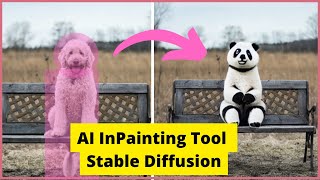
Replace ANYTHING with Stable Diffusion AI InPainting Tool Using Gradio
Learn to create an AI in-painting tool using Hugging Face Gradio and Diffusers, enabling you to replace any element in an image with Stable Diffusion technology.

Real-Time Live Speech-to-Text - Streaming ASR Gradio App with Hugging Face Tutorial
Build a real-time speech-to-text app using Hugging Face Transformers and Gradio. Learn to implement live audio transcription with Facebook's Wav2Vec2 model in this hands-on tutorial.
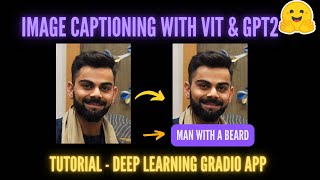
Image Captioning Python App with ViT and GPT2 Using Hugging Face Models - Applied Deep Learning
Learn to create an image captioning app using ViT and GPT2 models from Hugging Face. Build a Gradio interface and deploy it on the Model Hub for easy access and sharing.
PyTorch NLP Model Training and Fine-Tuning on Colab TPU Multi-GPU with Accelerate
Learn to train and fine-tune PyTorch NLP models on Colab TPU using Hugging Face's Accelerate library for efficient multi-GPU/TPU implementation with minimal code changes.
Everything You Need to Know About GPT-4
Comprehensive overview of GPT-4's capabilities, improvements, and potential applications, exploring its advancements in language understanding and generation compared to previous models.
Finetuning Whisper with Huggingface and Pytorch Lightning
Explore fine-tuning Whisper using Hugging Face and PyTorch Lightning for advanced speech recognition. Learn techniques to enhance model performance and adapt it to specific use cases.
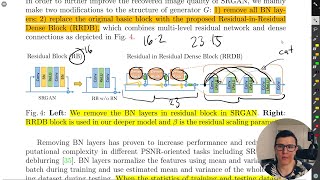
ESRGAN Paper Walkthrough
Detailed walkthrough of the ESRGAN paper, exploring enhanced super-resolution techniques using generative adversarial networks for improved image upscaling and restoration.
ESRGAN Implementation From Scratch
Learn to implement ESRGAN, an advanced image super-resolution technique, from scratch. Gain hands-on experience in deep learning and computer vision through step-by-step coding.

Variational Autoencoder Paper Walkthrough
Comprehensive walkthrough of the Variational AutoEncoder research paper, explaining key concepts, mathematical foundations, and practical applications in deep learning and generative modeling.

Building a Dog Breed Identifier App From Scratch - DogNet
Learn to build a dog breed identifier app from scratch, covering data collection, model training, and deployment to the Google Play Store.
The Misinformation Age - Defending Against Deep Fakes
Explore deepfake technology's impact, current state, and initiatives to combat misinformation, including the Content Authenticity Initiative and hardware-level solutions for trusted content creation.

Batch Normalization in PyTorch - Adding Normalization to Convolutional Neural Network Layers
Learn to implement batch normalization in convolutional neural networks using PyTorch. Explore the benefits, create and compare networks, and optimize performance through hands-on coding and practical examples.

PyTorch Sequential Models - Neural Networks Made Easy
Learn to build neural networks using PyTorch's Sequential class. Explore multiple ways to construct models, set random seeds for reproducibility, and understand the benefits of this approach for creating efficient deep learning architectures.

PyTorch DataLoader Source Code Debugging - Batch Building and Normalization
Debugging session exploring PyTorch DataLoader's inner workings, focusing on data normalization, batch building, and parameter impacts. Insights into efficient data handling for deep learning projects.
PyTorch Dataset Normalization Using torchvision.transforms.Normalize()
Learn to normalize datasets in PyTorch using torchvision.transforms.Normalize(). Explore feature scaling, standardization, and color channel normalization. Understand the impact on neural network training.
Object Detection with Transformers - From Training to Deployment
Explore cutting-edge object detection using transformers, from fundamental concepts to advanced techniques. Learn scalable training with Determined AI and deployment using MLflow.
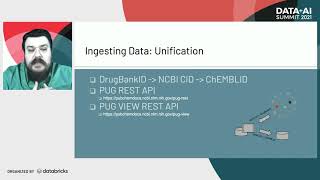
Drug Repurposing Using Deep Learning on Knowledge Graphs
Explore deep learning on knowledge graphs for drug repurposing, covering graph building, latent relationship prediction, and application to existing drugs for new treatments.

PyTorch and COVID-19 Research: Advancements in AI and Data Analysis - Keynotes
Explore PyTorch's advancements in machine learning and learn how AI is helping manage COVID-19 research data, featuring insights on industry adoption and scientific information accessibility.