
Normal Distribution Excel Exercise - Probability and Statistics - Khan Academy
Explore how normal distribution approximates binomial distribution for large trials using Excel. Gain practical insights into probability concepts through hands-on spreadsheet analysis.
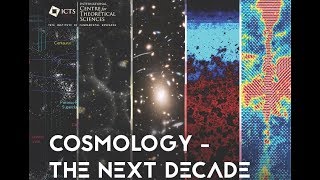
Statistics and Data Analysis for Cosmology - Lecture 1
Explore probability concepts in cosmology, including joint and conditional probability, PDFs, independence, Bayes' theorem, and data modeling for analyzing cosmic phenomena.

Complex Rotation Numbers
Explore complex rotation numbers, their theory, dynamics, and applications in tame geometry and analysis. Delve into bubbles, self-similarity, and normalization concepts.
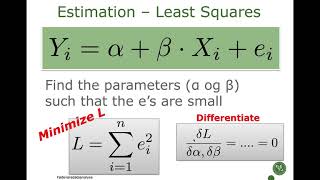
Linear Regression with One X-Variable - Lecture 21
Explore simple linear regression using R, learning its powerful applications and detailed implementation in data analysis.
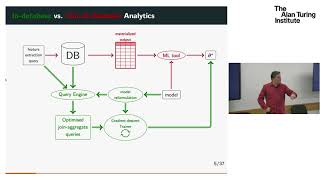
In-Database Factorised Learning - Professor Dan Olteanu
Explore in-database factorised learning techniques for efficient data analysis and machine learning, covering integration approaches, advantages, and practical applications in relational databases.
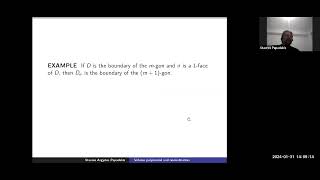
Volume Polynomial and Normalization
Explore unprojection theory's interpretation of the fundamental class, extending beyond geometric inspirations for a deeper mathematical understanding.

Graph Your Game: Strategic Playbooks Unveiled - Mapping Lacrosse Tactics
Explore strategic playbooks in lacrosse using graph theory and Golang. Learn to visualize player and team dynamics, implement knowledge graphs, and leverage CypherQL for data analysis.
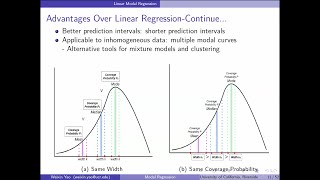
Modal Regression: A New Approach to Modeling Conditional Relationships - Lecture
Explore modal regression, a new tool revealing unique data structures and offering advantages over mean and quantile regressions for outliers, heavy-tailed, and truncated data.
Unraveling the Web of Relationships: Understanding Graph Data
Explore graph theory basics, real-world applications, and the growing importance of graph databases in solving complex data challenges across industries.
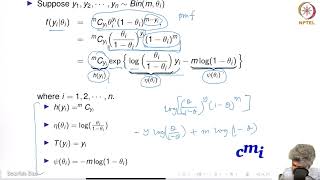
Generalised Linear Models: Introduction to Natural Exponential Family and Binomial Distributions
Explore Generalised Linear Models and Natural Exponential Family, focusing on Binomial Distributions and their applications in statistical modeling.
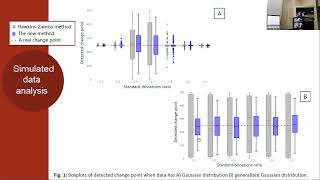
Identification of the Structure Break Point for Independent Data with Changing Variance
Odkryj metody identyfikacji punktu przełamania struktury dla niezależnych danych o zmiennej wariancji w analizie statystycznej.

From Figma to Github Using Anima
Learn to convert Figma designs into functional React apps using Anima, create databases, and build backends. Gain practical skills in working with existing designs and rapidly developing web applications.
Wave Function Evolver - Calculating Expectation Values - Episode 3
Explore wave function calculations, expectation values, and quantum mechanics concepts through interactive coding and visualization techniques.

Stationary States and the Shooting Method in Quantum Mechanics
Explore stationary states in quantum mechanics using computational modeling and the shooting method to solve the Schrödinger equation.
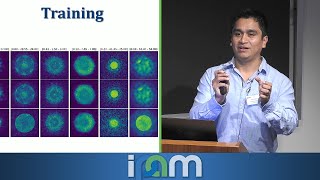
Application of Machine Learning to Electron Microscopy Data - IPAM at UCLA
Explore machine learning applications in electron microscopy, focusing on data modeling and neural networks for distortion compensation in experimental datasets.
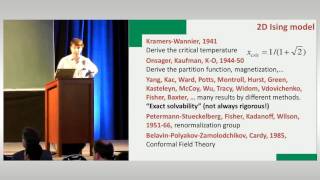
Panorama of Mathematics - Clusters, Loops and Trees in the Ising Model
Explore clusters, loops, and trees in the Ising model with Fields Medalist Stanislav Smirnov, covering topics from conformal field theory to discrete complex analysis and random cost representation.
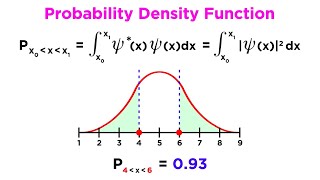
Wavefunction Properties, Normalization, and Expectation Values
Explore quantum mechanics through wavefunctions, normalization, and expectation values. Learn about Hilbert spaces, bra-ket notation, and the superposition principle to gain a deeper understanding of quantum systems.
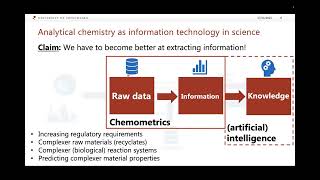
Shift-Invariant Trilinearity and Soft Shift-Invariant Trilinearity in GC-MS Data Analysis
Explore a novel method for shift-invariant non-negative tensor factorization in GC-MS data analysis, offering faster peak resolution and flexible modeling of elution profile changes.
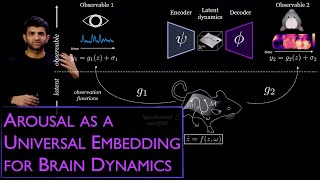
Arousal as a Universal Embedding for Spatiotemporal Brain Dynamics
Exploring how arousal dynamics can reconstruct and model diverse brain measurements, integrating neuronal, metabolic, and behavioral data into a unified framework for understanding brain-wide physiology.
Open-Source Critical Asset Management for Climate Resilience
Explore open-source critical asset management for climate resilience, focusing on the development of CAMS for Dominica's disaster preparation and risk mitigation using knowledge graph technology.
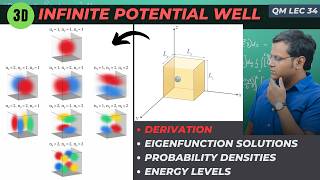
Particle in a 3D Box - Quantum Mechanics Fundamentals
Explore quantum mechanics through the particle in a 3D box problem. Learn about wavefunctions, energy quantization, and their implications for understanding atomic and molecular systems.