Running Vitess on Kubernetes at Massive Scale - JD.com Case Study
Explore Vitess on Kubernetes: JD.com's massive-scale implementation, architecture insights, and future plans for this cloud-ready relational database system.
Deep Dive - Rook
Explore Rook's architecture, Kubernetes extension mechanisms, and cloud-native storage orchestration. Learn about controllers, operators, and automated storage solutions for Ceph, CockroachDB, Minio, and NFS.
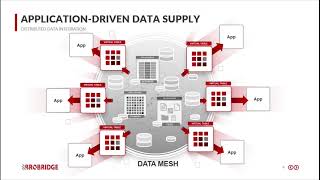
It Is Time to Talk About DataMesh
Explore DataMesh architecture, its benefits over traditional solutions, and practical implementation for efficient cross-cloud data management.
Application Autoscaling Made Easy With Kubernetes Event-Driven Autoscaling
Learn how Kubernetes Event-Driven Autoscaling (KEDA) simplifies application scaling based on external providers like Kafka, Azure, AWS, and GCP. Discover its ease of use and versatility for various scenarios.
First Principles of Cloud Native Technology
Explore core operating concepts, data models, and Cloud Native tools to break down systems, contrast solutions, and make informed decisions for effective problem-solving in cloud environments.
Better Scalability and More Isolation? The Cortex "Shuffle Sharding" Story
Explore Cortex's "Shuffle Sharding" technique for improved scalability and tenant isolation in Prometheus-compatible time series databases, with practical insights and a live demonstration.
Building the Multi-Cluster Data Layer
Explore multi-cluster data layer challenges and solutions for distributed databases. Learn about cross-cluster deployment, service mesh adoption, and addressing global consistency and scalability issues.
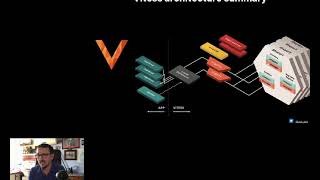
Vitess - A Distributed Scalable Database Architecture
Explore Vitess, a distributed database system for MySQL scaling. Learn about sharding, data distribution, and integration with development frameworks for high-traffic OLTP sites.
What You Need to Know Before Using Local Persistent Volumes
Explore local persistent volumes in Kubernetes, covering provisioning, scheduling, failures, upgrades, and potential issues for running stateful workloads efficiently at scale.
Postgres Extensions in Kubernetes
Explore dynamic loading of Postgres extensions in Kubernetes, addressing challenges with container immutability and introducing innovative solutions like pod-local controllers for efficient extension management.
How We Reduced Write Latency in TiKV
Optimization strategies for reducing write latency in TiKV, focusing on the raftstore module to improve average and tail latency performance in distributed transactional databases.
The Future of Database Observability is Open - SQL Commenter Merges With OpenTelemetry
Explore the merger of SQL Commenter with OpenTelemetry, creating a vendor-neutral standard for database observability. Learn about query tagging, end-to-end tracing, and auto-ORM instrumentation for troubleshooting.
Transactional Event Sourcing Using Slick Audit Log
Explore transactional event sourcing using Slick for SQL databases, covering core concepts, implementation techniques, and benefits over traditional CRUD architectures.
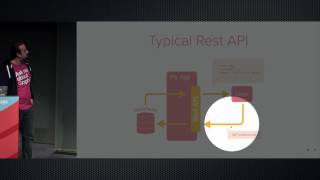
GraphQL - A Type System for Your API
GraphQL introduction: efficient data retrieval, powerful type system, and API design solutions. Learn concepts, benefits, and implementation in Scala using Sangria.
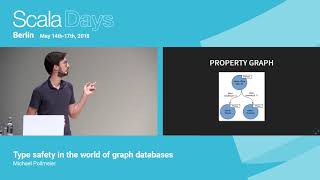
Type Safety in the World of Graph Databases
Explore type safety in graph databases, focusing on SPARQL, Gremlin, and custom DSLs for efficient data traversal and error prevention in Scala.
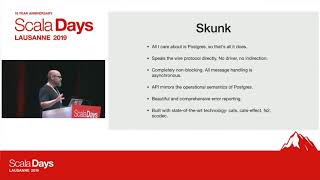
Pure Functional Database Programming Without JDBC
Explore pure functional database programming in Scala without JDBC, focusing on PostgreSQL communication, socket interfaces, and protocol layers for efficient and type-safe database interactions.
Writing a Database in Scala.js
Explore the development of a browser-based database using Scala.js, focusing on fundamental concepts, Scala's unique features, and practical lessons learned in database design and implementation.
Building Billion Node Graphs for Machine Learning
Explore building billion-node graphs for machine learning, covering data ingestion, graph management, and algorithm execution at scale. Learn about challenges and solutions in handling massive datasets for GraphML research.
Tracking COVID-19 with Ruby
Explore how programmers can aid epidemiologists by gathering and analyzing COVID-19 data using Ruby, web tools, and expressive code to make complex information understandable.
The Realities of Running a Rails App Long Term
Explore the evolution of a Rails app over a decade, covering design choices, testing, integrations, and challenges faced in long-term development and maintenance.
Processing Data at Scale with Rails
Strategies for handling large datasets using Rails, covering data ingestion, transformation, and storage with tools like ActiveRecord, Sidekiq, and Postgres.