
Building AI-Powered Web Applications with Momen App - No-Code Full-Stack Development Tutorial
Master no-code web app development with Momen.app, covering front-end design, database setup, AI chatbot integration, and full-stack deployment - all through an intuitive browser-based interface.
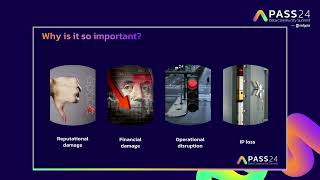
Building Resilient Environments - Incorporating Security and Compliance into Database Monitoring
Discover essential strategies for database security and compliance monitoring, from vulnerability detection to access control implementation and audit processes for maintaining industry standards.

Cloud Native PostgreSQL - Running PostgreSQL on Kubernetes
Discover how to effectively deploy and manage PostgreSQL on Kubernetes, exploring various operators, Neon PostgreSQL implementation, and essential best practices for cloud-native environments.
Bridging the DevOps to Data Divide with a Common Cloud Native Stack
Discover how to apply DevOps practices to data operations using cloud native tools, implementing databases in Kubernetes, and managing data as code through GitOps methodologies and best practices.
Kubernetes as Your DBA - Automating Database Management and Administration
Discover how Kubernetes Operators can automate database management and serve as virtual DBAs, handling deployment, monitoring, high availability, and upgrades in cloud-native environments.

Introduction to Web Application Architecture and System Design
Explore comprehensive web application development, from front-end design to back-end systems, databases, security, and maintenance, focusing on practical architecture decisions and implementation strategies.
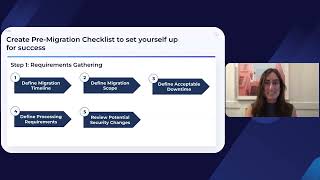
How to Migrate from Apache Kafka to Confluent Cloud with Limited Downtime
Learn essential steps and strategies for migrating from Kafka to Confluent Cloud while maintaining service continuity, with practical guidance on planning, setup, and validation processes.
Secure and Streamline Data Engineering Workloads with Azure Data Factory and Snowflake
Discover how to optimize data engineering workflows using Azure Data Factory and Microsoft Fabric with Snowflake, featuring bi-directional data access through Apache Iceberg for enhanced security and performance.
Improving Accuracy of GenAI Apps with Azure Database for PostgreSQL - Advanced RAG Techniques
Master advanced RAG techniques in Azure PostgreSQL to enhance GenAI app accuracy through vector search, hybrid search, semantic ranking, and GraphRAG implementation for enterprise solutions.
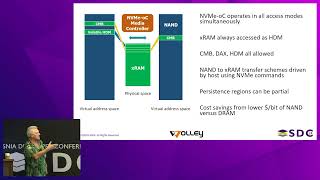
NVMe Over CXL: Virtualizing System Resources for Efficient Data Management
Discover how NVMe over CXL technology revolutionizes data center efficiency by virtualizing system resources, reducing data movement by 97%, and integrating storage, memory, and persistence capabilities for enhanced performance.
Open Standards for Open Lakehouses - Understanding Apache Iceberg, Parquet, Arrow, and Nessie
Discover how open-source standards like Apache Iceberg and Nessie power data lakehouses, enabling flexible and cost-effective data platforms while minimizing vendor lock-in and data movement challenges.
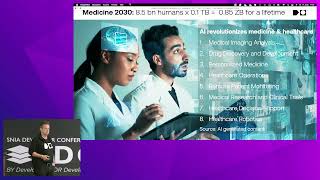
Will AI Stay Dumb for the Lack of Memory and Storage? - Impact of Storage Technologies on AI Development
Explore the critical relationship between AI advancement and data storage limitations, examining how memory constraints could impact AI's future development and potential solutions.

Advancements in pNFS and NFS v4.2 - Modern Data Center and Cloud Computing Solutions
Discover the latest NFS 4.2 enhancements for high-performance computing, including strategies for unified data orchestration across clouds, GPU clusters, and distributed environments.
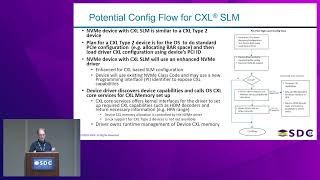
Host Addressable Subsystem Local Memory with NVMe and CXL Integration
Explore the integration of CXL and NVMe protocols, focusing on host addressable Subsystem Local Memory, computational storage benefits, and emerging developments in memory disaggregation.
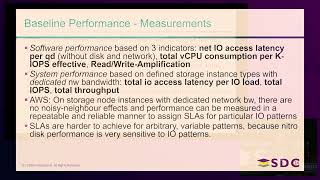
Distributed Data Placement with NVMe-oF - Design and Implementation Challenges
Explore distributed data placement algorithms for cloud storage, focusing on NVMe-oF implementation, scalability challenges, and erasure coding principles in high-performance storage systems.
Project Silica: The Future of Sustainable Archival Data Storage
Explore groundbreaking quartz glass storage technology that revolutionizes archival data preservation, offering sustainable, cost-effective solutions for indefinite data retention in cloud environments.
Standards-based Data Platforms for HPC and AI
Explore how standardized frameworks optimize data platforms for HPC and AI, focusing on interoperability, data movement, and system integration for enhanced performance and efficiency.

Data Redundancy and Scrubbing with RAID Offload Technology
Discover how RAID offload technology optimizes data redundancy solutions, reducing CPU and memory overhead while scaling performance with NVMe SSDs for efficient storage systems.

Intel IPU and NVMe Initiator with SPDK - Introduction to Hardware Integration and Acceleration Framework
Discover how Intel's IPU hardware and SPDK Acceleration Framework optimize storage workflows, enhance data movement, and improve efficiency through hardware offloading capabilities for cloud service providers.

Cloud Storage Efficiency at Scale - Mass Storage Architecture and Innovation
Dive into cloud storage efficiency fundamentals, exploring nanoscale deployment, TCO optimization, and mass capacity systems innovation for enhanced data management and storage architecture.

Reinventing Data Storage for the Yottabyte Era
Explore the future of data storage technology, focusing on ceramic solutions and infrastructure challenges for managing projected 2.5 Yottabyte capacity needs by 2050, with emphasis on sustainability and scalability.