Developing Situated Analytics Applications with RagRug
Learn to create embedded, reactive visualizations for augmented reality using RagRug, an open-source toolkit integrating Unity, Node-RED, and JavaScript for seamless situated analytics development.

Full Stack Reactive with Spring WebFlux and React
Explore techniques for building fully reactive applications using Spring WebFlux and React. Learn to stream data to the UI for constant updates in this live coding session with Q&A.
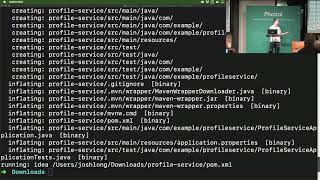
Full Stack Reactive Development with Spring WebFlux and React
Explore full-stack reactive programming using Spring WebFlux and React, with live coding demonstrations and expert insights on streaming data, UI updates, and building resilient systems.

Apache Kafka - Faster with Oracle GraalVM Enterprise
Optimize Apache Kafka performance using Oracle GraalVM Enterprise for enhanced speed and efficiency in Java-based messaging systems.

Extending a High-performance Data Streaming System with WebAssembly
Explore WebAssembly integration in high-performance data streaming, focusing on challenges, solutions, and developer experience in Redpanda's Seastar framework environment.
Deploying Apache Kafka on DC/OS - Best Practices and Challenges
Learn best practices, challenges, and lessons for deploying Apache Kafka on DC/OS. Explore Kafka's role in real-time data pipelines and its integration with microservices in DC/OS environments.
Modernizing Nubank's Kafka Platform for 1 Trillion Messages Per Month - Next 10 Years
Explore Nubank's journey in modernizing their Kafka platform to handle 1 trillion monthly messages, including migration strategies, cell-based architecture, and cluster specialization for optimized workload management.
Partial Multi-Tenancy on Kafka Using Strimzi - Managing Multiple Applications
Explore Strimzi's solutions for partial multi-tenancy in Kafka, including topic creation, least privilege enforcement, and noisy neighbor mitigation. Learn how LittleHorse Cloud leverages Strimzi CRDs for efficient management.
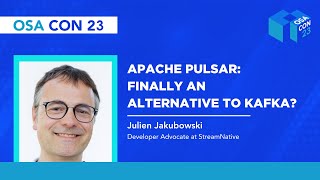
Apache Pulsar - A Cloud-Native Alternative to Kafka for Event-Driven Applications
Discover how Apache Pulsar serves as a scalable messaging platform, offering unified data streaming, multi-tenancy, and seamless integration with container environments - all while providing an alternative to traditional message brokers.
Data Processing at Scale with Knative and Benthos
Explore scalable data processing using Knative and Benthos, focusing on batch processing challenges and solutions for enterprise use cases. Learn about transaction-based resiliency and data transformation techniques.
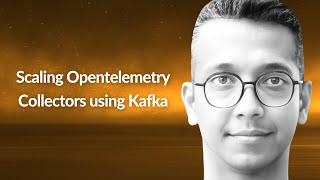
Scaling OpenTelemetry Collectors Using Kafka - Conf42 SRE 2024
Learn to scale OpenTelemetry collectors using Kafka for improved observability in large-scale systems. Explore architecture, implementation, and monitoring techniques for efficient data processing and analysis.
Event-Driven Change Data Capture Pattern
Explore event-driven Change Data Capture patterns and their implementation using Apache Pulsar for efficient, real-time data synchronization in cloud-native environments.

Choosing the Right Platform for Your Event-Driven App - Apache Pulsar Overview
Explore Apache Pulsar's features for event-driven apps: scalability, elasticity, durability, geo-replication, multi-tenancy, and ecosystem compatibility. Learn about its architecture and benefits for data streaming.
Separations and Equivalences Between Turnstile Streaming and Linear Sketching
Explore streaming algorithms, linear sketching, and their equivalences. Learn about turnstile streaming, limitations, and separations in bounded-degree triangle counting and insertion-only algorithms.
Data Mesh and Microservices: Leveraging Trusted Data Events with GoldenGate
Explore Data Mesh principles, microservices architecture, and GoldenGate's role in creating trusted data events for improved business outcomes and distributed data management.
Apache Pulsar - Next Generation Messaging and Queuing System
Overview of Apache Pulsar's architecture, features, and benefits as a scalable messaging system with unified storage, processing, and serverless capabilities for building end-to-end streaming applications.
Observability in ArgoCD and Rollouts Using Streaming ML for Reducing MTTR
Explore real-time anomaly detection in Kubernetes using streaming ML and DAG-based processing. Learn how Intuit reduces outage response time with AIOps and integrates observability into Argo CD.
Connect All the Things - Using NATS to Simplify Communication Everywhere
Explore NATS, an open-source messaging system for simplified, globally scalable communication. Learn about its features, patterns, and applications in building adaptive, multi-cloud systems.
The State of Modern Data Architectures
Explore modern data architectures enabling agile, scalable solutions for IoT streaming, real-time analysis, and machine learning with large, multi-structured datasets in cloud environments.
Graphs and Sensors: The Internet of Connected Things
Explore how graph databases enhance IoT data analysis, enabling real-time insights and better decision-making in industries like oil and gas and transportation.
Dynamic Data and Infinite Possibilities - Exploring Streaming Data in Generative AI
Explore streaming data's role in generative AI, covering applications, model training, and challenges. Learn about real-time data's impact on AI systems' adaptability and contextual relevance.