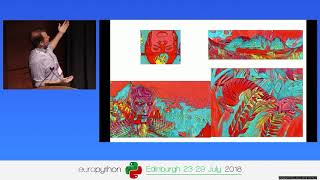
Deep Learning with PyTorch for Fun and Profit
Explore practical deep learning applications using PyTorch, including style transfer, speech generation, and text generation. Learn about data preparation, hardware setup, and creating neural network models for creative projects.
How Can You Use Open Source Materials to Learn Python and Data Science
Discover open-source resources for learning Python and data science, explore community support, and understand the benefits of combining these skills for career growth.
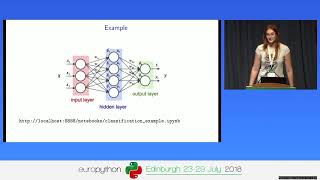
Data Is Not Flat
Explore feature engineering techniques for low-dimensional data to enhance model performance, with a focus on neural network classification and practical examples.
Introduction to Sentiment Analysis with SpaCy
Learn to extract opinions from text using spaCy, covering sentiment analysis basics, topic extraction, and rating consolidation. Includes practical examples in German with English translations.
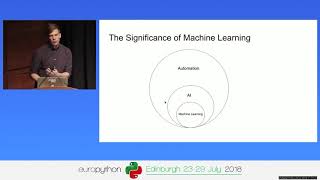
When to Use Machine Learning - Tips, Tricks and Warnings
Discover when and how to effectively apply machine learning, with practical tips and real-world examples from open-source projects and cryptocurrency trading.
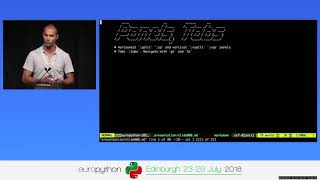
Developing in a Black Hole - Vim, Tmux, Httpie and Jq
Explore vim, tmux, httpie, and jq for a streamlined, keyboard-centric development environment. Boost productivity with powerful terminal-based tools and techniques.
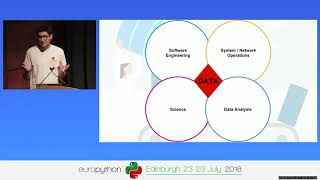
The Rise of Python in the Data Communities
Explore Python's growing influence in data-driven industries, its impact on the ecosystem, and future challenges in scaling for massive data processing.
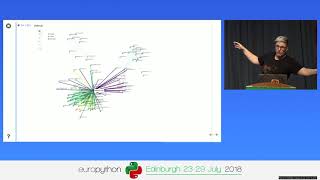
The Web is Terrifying - Using the PyData Stack to Spy on the Spies
Explore online tracking technologies and data visualization using PyData tools. Gain insights into internet privacy, GDPR implications, and the journey of becoming a self-taught data scientist.
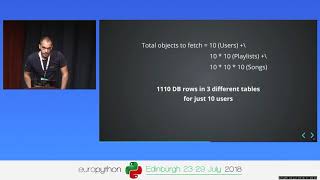
Django Queries Optimization
Optimize complex Django queries by moving selection logic, calculations, and aggregations to the database, improving performance and maintainability of your web applications.
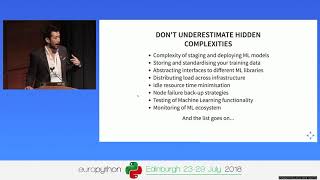
Industrial Machine Learning Pipelines with Python & Airflow
Learn to build scalable, distributed machine learning data pipelines using Airflow with Celery backend. Gain insights on industry challenges, comparisons with other technologies, and practical knowledge for implementation.
Debugging Your Code with Data Visualization
Explore debugging techniques using data visualization tools to understand complex code behavior, illustrated with real-world examples from AWS CLI and boto3 development.
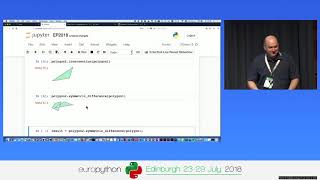
Processing Geodata Using Python and Open Source Modules
Learn to analyze, manipulate, and visualize geospatial data using Python and open-source modules like Shapely, Fiona, rasterio, and GeoPandas. Explore vector and raster data handling, spatial reference systems, and map creation.
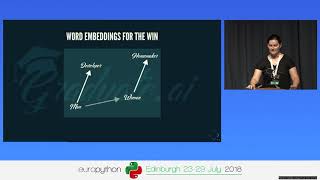
Trust Me, I'm a Data Scientist - Ethics for Builders of Data-Based Applications
Explore ethical pitfalls in data science through a practical example, covering algorithmic fairness, model interpretability, and handling minority classes in AI applications.
Lies, Damned Lies, and Statistics
Explore common statistical fallacies and learn to recognize misleading data interpretations. Gain insights on correlation, bias, and significance to draw accurate conclusions from statistics.
Good Features Beat Algorithms
Explore feature engineering and selection techniques to improve machine learning model accuracy. Learn how to develop an ensemble for measuring feature importance in real-world datasets.
Air Quality & Python - Developing Online Analysis Tools
Explore Python-based online tools for analyzing air quality data, integrating libraries like Pandas and NumPy with Django and Plot.ly to create interactive visualizations and support research and education.
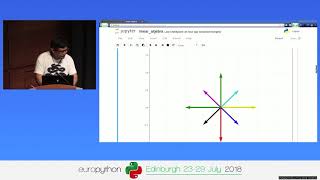
From Linear Algebra to Machine Learning
Explore the mathematical foundations of machine learning, from linear algebra to optimization, with practical Python implementations using NumPy, SciPy, and TensorFlow.
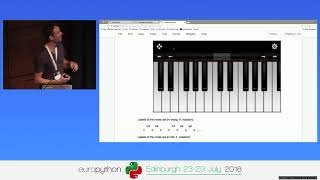
Change Music in Two Epochs
Explore deep learning applications in music: instrument detection, isolation, and generation. Learn to build synthesizers, create datasets, and adapt models for increasing complexity.
Getting Your Data Joie De Vivre Back
Explore data-driven creativity through AI and visualization, from poetry composition to image reconstruction, blending technical skills with artistic expression for fun and learning.
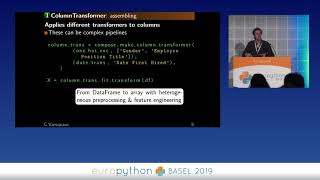
Machine Learning on Non-Curated Data
Techniques for handling missing values and non-normalized categories in machine learning, focusing on practical solutions using scikit-learn and DirtyCat for efficient data analysis without extensive cleaning.
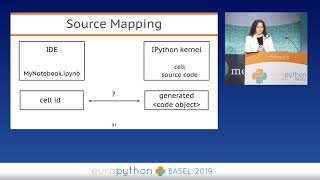
Visual Debugger for Jupyter Notebooks - Myth or Reality?
Explore the challenges and possibilities of implementing a visual debugger for Jupyter Notebooks, including architecture insights and current limitations in existing tools.