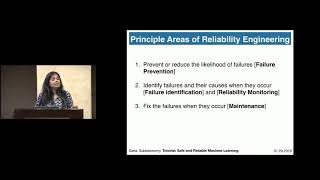
Implications Tutorial - Reasoning About Subtle Biases in Data
Explore subtle biases in data-driven decision support tools, their impact on reliability, and strategies to address dataset shifts for improved generalization and robustness in real-world applications.
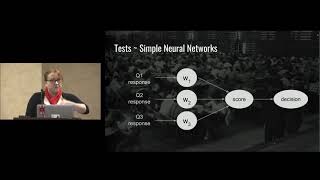
Translation Tutorial - A History of Quantitative Fairness in Testing
Explores historical quantitative fairness definitions in education and hiring, translating 1960s-70s concepts to modern machine learning notation and highlighting challenges for current fairness research.

Law and Policy
Explore ethical and legal challenges in AI, including anthropomorphism, explainability, racial categorization, and algorithmic fairness. Gain insights from experts on crucial issues shaping the future of technology and society.

Content Distribution
Exploring algorithmic biases in content distribution, including microtargeting, truth perception, polarization control, and recommender systems' effects on online news environments.

Popularity and Demographic Biases in Recommender Systems
Exploring popularity and demographic biases in recommender systems, their impact on evaluation and effectiveness, and strategies for ensuring equitable recommendations across diverse user groups.

Runaway Feedback Loops in Predictive Policing
Explore runaway feedback loops in predictive policing, examining assumptions, theory, and potential solutions to address reinforcement issues in law enforcement algorithms.
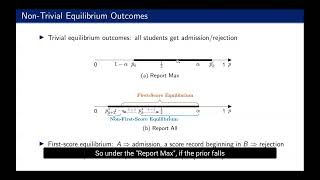
Best vs. All - Equity and Accuracy of Standardized Test Score Reporting
Explore the equity and accuracy implications of different standardized test score reporting methods, examining their impact on fairness and precision in educational assessment.

Epistemic Values in Feature Importance Methods - Lessons From Feminist Epistemology
Explore how feminist epistemology insights can enhance feature importance methods in machine learning, addressing biases and improving interpretability in AI systems.

Building and Auditing Fair Algorithms - A Case Study in Candidate Screening
Explore a case study on building and auditing fair algorithms for candidate screening, focusing on ethical considerations and practical implementation in hiring processes.
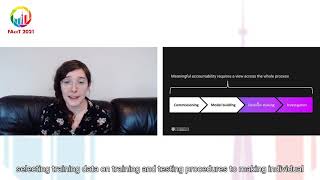
Reviewable Automated Decision-Making - A Framework for Accountable Algorithmic Systems
Explore a framework for accountable algorithmic systems, focusing on reviewable automated decision-making to enhance transparency and fairness in AI-driven processes.
Operationalizing Framing to Support Multiperspective Recommendations of Opinion Pieces
Explore how framing analysis can enhance recommendation systems for opinion pieces, promoting diverse perspectives and reducing bias in information consumption.
Framing and Abstraction
Explore problem formulation, fairness in testing, and sociotechnical systems in machine learning. Gain insights on ethical considerations and challenges in AI development and implementation.

Quantifying and Reducing Gender Stereotypes in Word Embeddings
Hands-on exploration of gender biases in word embeddings, quantifying stereotypes, and implementing techniques to reduce bias in natural language processing applications.

Understanding the Context and Consequences of Pre-trial Detention
Explore the impact of pre-trial detention decisions through legal insights, risk assessment tools, and personal experiences. Gain a deeper understanding of criminal justice data beyond statistics.

Translation Tutorial - A Shared Lexicon for Research in Human-Centered Software Systems
Explore key terms in fairness, accountability, and transparency in algorithmic systems. Learn how different disciplines interpret these concepts to improve cross-disciplinary communication and research in human-centered software.

Auditing Black-box Models
Learn techniques to audit and interpret complex machine learning models, focusing on detecting unintended dependencies and biases using a specialized software library through hands-on examples.
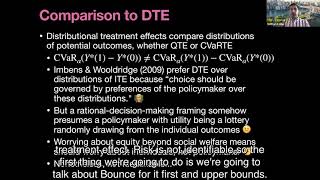
Treatment Effect Risk - Bounds and Inference
Explore bounds and inference in treatment effect risk analysis, focusing on statistical methods for causal inference and risk assessment in experimental studies.
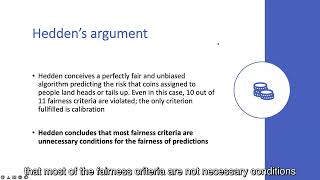
People Are Not Coins - Morally Distinct Types of Predictions Necessitate Different Fairness Constraints
Explore ethical implications of AI predictions and fairness constraints in different contexts, examining moral distinctions and their impact on algorithmic decision-making.
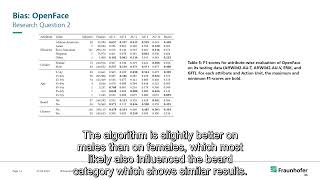
Bias Evaluation on Data and Algorithms for Affect Recognition in Faces
Explore bias in facial affect recognition algorithms, examining data and methods to identify and mitigate demographic disparities in emotion detection accuracy.

Human-Centered AI
Explore Human-Centered AI: combining AI algorithms with user experience design to enhance human performance, emphasizing meaningful control and ethical considerations.
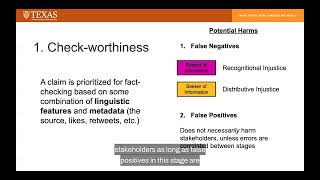
Justice in Misinformation Detection Systems - An Analysis of Algorithms, Stakeholders, and Potential Harms
Explore the ethical implications and potential harms of misinformation detection algorithms, analyzing stakeholder impacts and justice considerations in AI-driven content moderation.