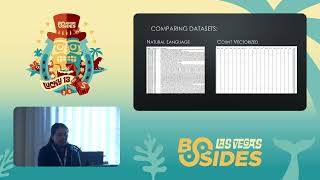
Repurposing Vulnerability Tickets to Predict Severity Levels - An Introduction to Natural Language Processing and Classification Algorithms
Explore natural language processing and classification algorithms to predict vulnerability severity levels using ticket data, enhancing cybersecurity decision-making and resource allocation.

Back to Basics - Using Descriptive Statistics to Study the Shape of the Internet
Explore descriptive statistics to analyze Internet structure, uncovering insights into its shape and characteristics through fundamental data analysis techniques.
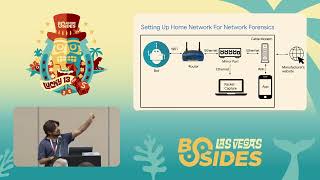
Clean Forensics - Analyzing Network Traffic of Vacuum Bots
Explore network traffic analysis of vacuum bots, uncovering potential security vulnerabilities and data privacy concerns in smart home devices.

Stop and Step Away from the Data - Rapid Anomaly Detection via Ransom Note File Classification
Explore rapid anomaly detection techniques for identifying ransomware threats using innovative file classification methods, enhancing cybersecurity defenses against evolving attacks.

Who Watches the Watchers? - Understanding the Internet's Background Noise
Explore the constant digital surveillance and background noise of the internet, uncovering hidden threats and understanding the implications for online security and privacy.
Something Wicked - Defensible Social Architecture in the Context of Big Data, Behavioral Econ, Bot Hives, and Bad Actors
Explore defensible social architecture in the era of big data, behavioral economics, bot hives, and malicious actors with insights on protecting digital ecosystems.
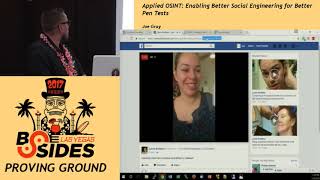
Applied OSINT - Enabling Better Social Engineering for Better Pen Tests
Explore OSINT techniques to enhance social engineering in penetration testing. Learn about Facebook Live, heat maps, password dumps, and persuasion principles for more effective assessments.

Bad Neighborhoods – Data-Driven Detection of Malicious Internet Infrastructure
Explore data-driven techniques for identifying malicious internet infrastructure and detecting "bad neighborhoods" in cyberspace using advanced analytics and threat intelligence.
AI in a Minefield - Learning from Poisoned Data
Explore the challenges and strategies for AI systems learning from compromised or manipulated datasets, focusing on data poisoning threats and mitigation techniques.
Cross-platform Compatibility - Bringing InfoSec Skills into the World of Computational Biology
Explore how information security skills can be applied to computational biology, bridging two diverse fields for innovative problem-solving and research advancements.
Dominating the DBIR Data
Explore data analysis techniques for cybersecurity incidents, covering data collection, processing, and validation. Learn to generate meaningful statistics and uncover novel findings in security datasets.
Automation Plumbing
Explore efficient automation workflows for cybersecurity, covering detection, aggregation, processing, and plumbing solutions using tools like Python, Elastic Search, Splunk, and Log Stash.
The Future of News on Social Platforms
Explore algorithmic amplification's impact on news ranking, misinformation, and fact-checking. Learn about South Korea's COVID-19 misinformation response and the Facts Before Rumors campaign.

It's Not the Data - Weak Tie Algorithmic Sociality and Digital Culture
Explore digital culture, algorithmic sociality, and the impact of networked technologies on Black everyday lives with André Brock's insightful analysis of Western technoculture and Black cybercultures.
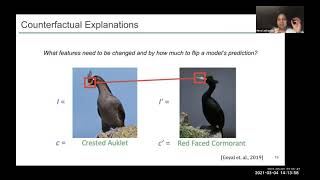
Explainable ML in the Wild - When Not to Trust Your Explanations
Explore the limitations and potential pitfalls of explainable machine learning, focusing on when to be cautious about trusting ML explanations in real-world applications.

How to Achieve Both Transparency and Accuracy in Predictive Decision Making - An Introduction to Strategic Prediction
Explore techniques for balancing transparency and accuracy in predictive decision-making, focusing on strategic prediction methods for ethical and effective data-driven solutions.
Hands on Data and Algorithmic Bias in Recommender Systems
Explore data and algorithmic bias in recommender systems through real-world examples, practical use cases, and mitigation techniques. Gain hands-on experience with Jupyter notebooks using data from actual platforms.
Inking Your Insights - Investigating Digital Externalization Behaviors During Data Analysis
Exploring how analysts externalize thoughts during data analysis, with insights on integrating digital pen input and linking visualizations to enhance the analytical process.

In Praise of Flawed Mathematical Models
Exploring the value of imperfect mathematical models in computing and their impact on decision-making, ethics, and societal implications in technology and data science.
Detecting Discriminatory Risk through Data Annotation Based on Bayesian Inferences
Explore Bayesian inference techniques for detecting discriminatory risk in data annotation, enhancing fairness and accountability in machine learning systems.
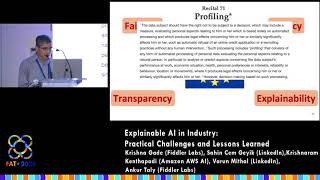
Explainable AI in Industry - Practical Challenges and Lessons Learned
Explore practical challenges and industry insights on implementing explainable AI, featuring expert perspectives from leading tech companies and researchers.